
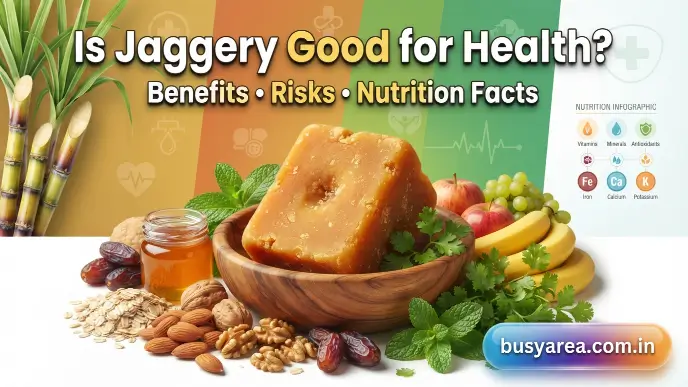
In recent years, natural sweeteners have gained massive attention as people try to reduce refined sugar in their diets. Among them, jaggery has become one of the most talked-about alternatives. Many people believe it is healthier, more natural, and even medicinal compared to sugar. This has led to a common question: Is jaggery good for health in real scientific terms, or is it just a traditional belief passed through generations?
To answer this properly, we need to go beyond myths and look at how jaggery is actually made, what nutrients it contains, and how the body processes it. While jaggery does retain some minerals due to minimal processing, it is still primarily a form of sugar. This means its health impact depends heavily on quantity, frequency, and individual health conditions such as diabetes or weight management goals. In this article, we will break down every aspect in detail so you can clearly understand whether jaggery deserves a place in your diet.
What Is Jaggery?
Jaggery is a traditional sweetener made by concentrating sugarcane juice or palm sap without separating its natural molasses. It is widely known that jaggery is good for health in many traditional discussions, where it is often called gur and considered a more natural alternative to refined sugar. Unlike processed white sugar, jaggery is categorized as an unrefined sugar because it undergoes minimal industrial processing, which helps it retain its natural color, flavor, and trace nutrients. It is commonly used in sweets, beverages, and everyday cooking as a natural sweetener across South Asia and other tropical regions.
How jaggery is made
Jaggery is produced by extracting juice from sugarcane or sap from palm trees, which is then filtered to remove solid impurities. The liquid is slowly boiled in large iron or steel pans until most of the water evaporates, leaving behind a thick, golden-brown syrup. This syrup is continuously stirred until it reaches a semi-solid consistency, after which it is poured into molds and allowed to cool and harden into blocks or cones.
Because no bleaching agents or heavy refining processes are used, jaggery retains its natural molasses content and characteristic flavor. This minimal processing is one reason people believe jaggery is good for health, as it is perceived as closer to its natural state compared to refined sugar. However, even though it is less processed, it still remains a concentrated form of sugar and should be consumed in moderation like other sweeteners.
Types of jaggery
Jaggery is available in different forms depending on the raw material used and the method of preparation. The most common types include sugarcane jaggery, palm jaggery, and organic jaggery. Each type falls under the category of natural sweeteners and shares a similar nutritional profile, although its taste, color, and aroma may vary slightly.
Even though these varieties differ in appearance and flavor, they all contain high amounts of natural sugars. This means that regardless of type, jaggery should be consumed carefully, especially by individuals monitoring their sugar intake or managing conditions like diabetes.
Nutritional Value of Jaggery

To properly understand whether jaggery is good for health, it is important to look beyond its “natural sweetener” image and analyze what it actually contains. In terms of jaggery nutrition, jaggery is essentially a concentrated form of sugar with small amounts of naturally occurring minerals and plant compounds that remain after minimal processing. This is why it is often perceived as healthier than refined sugar.
However, when studied closely, its nutritional value shows a clear pattern: it is energy-dense but nutrient-light. This means it provides quick calories but only trace amounts of beneficial nutrients like minerals and antioxidants. So while it may be slightly better than white sugar, it is still not a health food in the true sense.
Calories
Jaggery is highly calorie-dense because it is made almost entirely of natural sugars, mainly sucrose. On average, it provides around 380–390 calories per 100 grams, which is almost the same as white sugar. This makes it a fast source of energy but also a potential contributor to excess calorie intake if consumed without control. Even small quantities add up quickly. For example, a single teaspoon contains about 19–20 calories, which may seem small but become significant when used multiple times a day in tea, desserts, or snacks. This is why moderation is essential, especially for individuals managing weight or blood sugar levels.
Although jaggery is often promoted as a healthier alternative, its calorie content shows that it behaves very similarly to other forms of sugar in the body. It raises blood glucose levels and provides energy but does not offer sustained satiety or long-term nutritional benefits.
Vitamins and minerals
One of the main reasons people assume jaggery is good for health is that it contains small amounts of essential minerals. These include iron in jaggery, along with potassium and magnesium, which are naturally retained from sugarcane juice or palm sap during minimal processing.
Iron is often highlighted the most, especially in traditional diets, where jaggery is believed to help with anemia. While it does contain iron, the quantity is too low to significantly improve iron levels unless consumed in very large amounts. The same blog applies to other minerals like potassium and magnesium; they exist, but not in meaningful dietary concentrations. This creates an important misconception: people may believe jaggery is a good source of minerals, but in reality, whole foods such as leafy greens, lentils, nuts, and seeds provide far higher and more bioavailable nutrients without the added sugar load.
Antioxidants
Jaggery does contain small amounts of natural antioxidants because it is less refined than white sugar. These antioxidants are plant-based compounds that may help reduce oxidative stress in the body and support general cellular health. This is one of the reasons jaggery is sometimes labeled as a “better” sweetener.
However, the antioxidant content in jaggery is relatively minor when compared to antioxidant-rich foods like fruits, berries, vegetables, and green tea. While it contributes slightly to overall intake, it is not enough to produce measurable health benefits on its own. So, even though antioxidants are present in jaggery, relying on it as a source of health protection is not scientifically justified. Its role remains primarily as a sweetener rather than a functional food with strong therapeutic effects.
Nutritional table (per 100 g and per teaspoon)
A closer look at jaggery nutrition helps clarify its true nature. Below is a detailed breakdown of its average nutritional values, which highlights its high sugar content and minimal micronutrient contribution.
| Nutrient | Per 100 g | Per 1 tsp (5 g) |
| Calories | 380–390 kcal | 19–20 kcal |
| Carbohydrates | 95–98 g | ~5 g |
| Sugars | 90–95 g | ~5 g |
| Protein | <1 g | 0 g |
| Fat | 0 g | 0 g |
| Iron | Trace amounts | Very minimal |
| Potassium | Trace amounts | Very minimal |
| Magnesium | Trace amounts | Very minimal |
This table clearly shows that jaggery is overwhelmingly composed of carbohydrates in the form of sugar. While it does contain trace minerals like iron, potassium, and magnesium, their quantities are too small to make a meaningful nutritional difference in daily diets.
In simple terms, jaggery should be understood as a natural sweetener with slightly better nutrient retention than refined sugar, not as a significant source of vitamins or minerals. This distinction is important when evaluating whether jaggery is good for health, because its benefits are often overstated in traditional beliefs.
Jaggery vs Sugar – Which Is Better?
When comparing jaggery vs sugar, many people assume jaggery is automatically the healthier choice because it is less processed and retains some natural minerals. While it is true that jaggery is more traditional and undergoes minimal refining compared to white sugar, both are still forms of added sugar that primarily provide calories without significant nutritional value. Understanding the differences between them is essential for deciding which one is better for your diet, especially if you are concerned about weight management, blood sugar levels, or overall health. Although jaggery is often marketed as a natural sweetener and white sugar as a refined product, their impact on the body is more similar than many people realize. Both raise blood glucose levels and should be consumed in moderation. The key difference lies in processing, taste, and trace nutrient content rather than any major health advantage.
Jaggery vs Sugar Comparison Table
| Feature | Jaggery | White Sugar |
| Processing | Minimally processed, boiled sugarcane or palm sap | Highly refined and bleached |
| Composition | Mainly sucrose with trace minerals | Pure sucrose |
| Nutrients | Small amounts of iron, magnesium, and potassium | No significant nutrients |
| Calories | ~380–390 kcal per 100g | ~400 kcal per 100g |
| Glycemic Impact | High (slightly lower than sugar in some cases) | High |
| Taste | Rich, caramel-like flavor | Pure sweet taste |
| Color | Brown to dark brown | White |
| Usage | Traditional sweets, tea, desserts | Baking, beverages, processed foods |
| Health Perception | Considered a natural sweetener | Considered refined sugar |
| Effect on Blood Sugar | Raises blood sugar levels | Raises blood sugar levels |
| Overall Verdict | Slightly better due to minimal processing, but still sugar | No nutrients, fully refined sugar |
Is Jaggery Safe for Everyone?
When evaluating whether jaggery is good for health, it is important to move beyond traditional beliefs and look at how it affects different people in real life. Jaggery is often described as a natural sweetener, which creates the impression that it is harmless or suitable for everyone. However, its safety depends on individual health conditions, lifestyle, and how much is consumed daily. Although jaggery does contain trace minerals like iron in jaggery, it is still primarily sugar. This means it behaves similarly to refined sugar in the body, raising blood glucose levels and contributing to calorie intake. Because of this, certain groups need to be especially cautious when including it in their diet.
People with diabetes
For individuals with diabetes, jaggery is not considered a safe sugar alternative. Despite its natural image, it contains a high amount of sucrose, which breaks down into glucose and fructose in the body. This leads to rapid spikes in blood sugar levels, making glucose management more difficult.
Many people mistakenly believe that jaggery is safer than white sugar because it is less processed. However, from a metabolic perspective, both have a similar effect on blood glucose. Therefore, diabetics are generally advised to avoid jaggery or consume it only under strict medical supervision, if at all. Even small portions used in tea or sweets can affect daily sugar balance. For better control, low-glycemic foods and fiber-rich diets are much more effective in maintaining stable blood sugar levels.
During pregnancy
During pregnancy, nutrition plays a crucial role in supporting both maternal health and fetal development. Jaggery is often recommended in traditional diets because it is believed to increase energy and improve iron levels. This belief comes from the small content of iron in jaggery. However, the actual iron content in jaggery is too low to significantly meet the increased nutritional demands during pregnancy. While it can be consumed occasionally as part of a balanced diet, it should not be relied upon as a nutritional supplement or medicinal food.
Pregnant women should focus on nutrient-dense foods like leafy greens, fruits, legumes, dairy, and doctor-prescribed prenatal supplements. Jaggery can be used as a mild natural sweetener, but moderation is essential to avoid excess sugar intake.
Children
Children often enjoy jaggery in traditional sweets, snacks, and homemade foods. Parents sometimes prefer it over refined sugar because it is seen as a more natural sweetener. However, its nutritional benefits are often overstated.
While small amounts are generally safe, excessive intake can contribute to tooth decay, unhealthy sugar habits, and a preference for overly sweet foods later in life. Since children are still developing eating patterns, it is important to limit all forms of added sugar, including jaggery. Instead of relying on jaggery as a “healthy treat,” it is better to focus on whole fruits and naturally sweet foods that also provide fiber, vitamins, and long-lasting energy.
Weight-loss diets
For individuals trying to lose weight, jaggery is often mistakenly considered a diet-friendly sweetener. While it is less processed than white sugar, it still contains almost the same number of calories per gram, making it equally impactful on weight gain when overused. Even small daily additions in tea, coffee, or desserts can quickly increase total calorie intake without providing satiety. This makes it difficult to maintain a calorie deficit, which is essential for weight loss.
Instead of relying on jaggery, weight-loss diets should prioritize foods rich in fiber, protein, and healthy fats. These foods help control hunger and improve metabolism, while jaggery only adds quick energy without lasting fullness.
People with anemia
Jaggery has long been associated with treating anemia because it contains trace amounts of iron in jaggery. In traditional medicine, it is often combined with other foods to support blood health and energy levels.
However, from a scientific perspective, the iron content in jaggery is too low and not highly bioavailable, meaning the body cannot absorb enough from it to correct iron deficiency. Relying on jaggery alone for anemia can delay proper treatment. People with anemia should prioritize iron-rich foods such as spinach, lentils, beans, meat, and fortified products, along with medical supplements if prescribed. Jaggery can be included occasionally for taste, but it should not be considered a therapeutic option.
How Much Jaggery Can You Eat Per Day?
Understanding the right quantity is essential when deciding whether jaggery is good for health, because even natural sweeteners can become harmful when consumed in excess. Although jaggery is often promoted as a healthier alternative to refined sugar and considered a natural sweetener, it still contains a high amount of sucrose and provides nearly the same calories as sugar. Therefore, its daily intake should be carefully controlled based on age, activity level, and overall diet quality to avoid negative effects on blood sugar, weight, and metabolic health over time.
Recommended daily intake guidelines
- Limit intake to 10–20 grams daily, depending on age, activity level, and overall dietary sugar consumption, and balance carefully.
- Avoid using jaggery multiple times daily in tea, coffee, desserts, or snacks to prevent excess sugar accumulation.
- People with diabetes should avoid jaggery completely unless specifically advised by a healthcare professional for medical reasons.
- Children should consume only small, occasional portions as part of a balanced diet rather than a daily sweetener habit.
- Adults with a sedentary lifestyle should keep their intake lower due to reduced calorie burning and a higher risk of fat storage.e
- Active individuals may consume slightly more but still must treat jaggery as added sugar, not a health food source.
- Do not combine jaggery with other high-sugar foods in the same meal to avoid sudden glucose spikes in the bloodstream.
- Replace jaggery with whole fruits when possible to gain fiber, vitamins, and more sustained energy release benefits.
- Pregnant women should limit intake and rely on nutrient-dense foods instead of jaggery for iron or energy needs.s
- Always prioritize moderation because jaggery is still sugar, despite being less refined and marketed as a natural alternative.e
Is Jaggery Good for Health?
When evaluating whether Is Jaggery Good for Health, it is important to understand both its nutritional value and the way it is perceived in traditional diets. Jaggery is widely promoted as a natural sweetener and is often considered healthier than refined sugar because it is less processed and retains trace nutrients. However, despite this reputation, it is still primarily composed of sucrose, meaning it behaves similarly to sugar in the body and must be consumed in moderation. In terms of health benefits of jaggery, it does offer some minor advantages over refined sugar, but these should not be overestimated. Most of its positive image comes from traditional use rather than strong scientific evidence. To make an informed decision, it is important to clearly separate actual nutritional benefits from cultural beliefs and jaggery myths that often exaggerate its effects.
Potential health benefits
One of the reasons people believe jaggery is good for health is that it retains small amounts of minerals that are lost during sugar refining. These include iron, magnesium, potassium, and calcium, which are naturally present in sugarcane juice or palm sap. Because of this, jaggery is often viewed as a more nutrient-rich alternative to white sugar. However, the amounts of these minerals are very small in typical servings. This means jaggery cannot be relied upon as a meaningful source of essential nutrients in a balanced diet, even though it does have a slightly better nutritional profile than refined sugar.
Jaggery also contains small amounts of natural antioxidants, which are plant-based compounds that may help reduce oxidative stress in the body. These compounds are preserved because jaggery is not heavily processed or chemically refined. Despite this benefit, the antioxidant levels are far lower than those found in fruits, vegetables, and whole grains. So while jaggery contributes marginally to antioxidant intake, it does not provide significant protective health effects on its own.
Health claims that need caution
Despite its popularity, several claims about jaggery lack strong scientific backing. One of the most common jaggery myths is that it detoxifies the body. In reality, detoxification is handled naturally by the liver and kidneys, and jaggery does not enhance this process. Similarly, many people believe jaggery boosts immunity, often referring to jaggery for immunity. However, there is no reliable clinical evidence that it directly strengthens the immune system or prevents infections.
Another widespread claim is that jaggery helps treat anemia due to its iron content. While it does contain small amounts of iron, the quantity is too low to significantly improve hemoglobin levels or treat iron deficiency. Finally, jaggery is sometimes promoted as a weight-loss-friendly sweetener. In reality, it contains almost the same calories as sugar and can contribute to weight gain if consumed excessively. Claims that it supports fat loss or metabolic boosting are not scientifically proven and should be viewed with caution.
Best Ways to Include Jaggery in Your Diet
When considering whether jaggery is good for health, it is also important to understand how it can be used wisely in everyday eating patterns. Jaggery is often seen as a natural sweetener and is commonly added to foods and beverages as a replacement for refined sugar. However, since it still contains high levels of sucrose, its benefits depend largely on portion control and frequency of use. Including it in a balanced diet means using it occasionally in small amounts rather than as a daily essential ingredient in large quantities across multiple meals consistently.
Best ways to include jaggery in your diet
- Add small jaggery pieces to warm milk for traditional flavor and mild sweetness without refined sugar usage daily.
- Use jaggery in tea or coffee instead of sugar, but limit frequency to avoid excess calorie intake buildup.p
- Mix grated jaggery in oatmeal or porridge to enhance taste while maintaining moderate sweetness levels in breakfast meals
- Prepare traditional Indian desserts using jaggery instead of sugar, but consume only occasional small portions for balance.
- Combine jaggery with nuts and seeds to make healthy energy balls for quick snacks and natural energy boosts.
- Add melted jaggery to chutneys for a sweet-tangy flavor profile in homemade meals and traditional recipe preparation.
- Use jaggery in baking recipes as a substitute for sugar while reducing the overall quantity for healthier outcomes.
- Mix jaggery with lemon water occasionally for traditional drinks, but avoid daily overuse to control sugar intake.
- Include jaggery in festive foods only, ensuring it remains an occasional treat rather than an everyday dietary staple choice.e
- Pair jaggery with fiber-rich foods to slow sugar absorption and reduce rapid blood glucose spikes after consumption.
Frequently Asked Questions
Is jaggery healthier than sugar?
Jaggery is slightly better than refined sugar because it is less processed and retains small amounts of minerals. However, when evaluating whether jaggery is good for health, it is still important to remember that it is basically a form of sugar and provides almost the same calories.
Can diabetics eat jaggery?
No, diabetics should avoid jaggery because it can raise blood glucose levels quickly. Even though it is considered a natural sweetener, it still contains high amounts of sucrose.
Does jaggery help with iron levels?
Jaggery contains small amounts of iron in jaggery, which is why it is often linked to improving hemoglobin levels. However, the quantity is too low to make a significant difference.
Is jaggery good for weight loss?
No, jaggery is not helpful for weight loss. It contains nearly the same calories as sugar and can contribute to weight gain if consumed in excess.
Can we eat jaggery daily?
Yes, jaggery can be eaten daily, but only in very small amounts. When considering whether jaggery is good for health, moderation is the key factor.
Conclusion
When we ask whether jaggery is good for health, the answer is balanced rather than absolute. Jaggery is a less refined alternative to white sugar and contains small amounts of minerals and antioxidants, which is why it is often considered a natural sweetener. However, these benefits are relatively minor and do not make it a superfood or a therapeutic ingredient.
The most important takeaway is that jaggery still behaves like sugar in the body. It provides nearly the same calories and can raise blood glucose levels if consumed in excess. Therefore, it should be used in moderation, especially by individuals managing diabetes, weight, or metabolic health. Ultimately, jaggery can be included occasionally as a better alternative to refined sugar, but it should not replace nutrient-dense whole foods in a healthy diet.
