
Choosing which oil is best for health is not as simple as picking a popular brand or following social media trends. In reality, cooking oils play a major role in overall nutrition because they directly affect heart health, cholesterol levels, metabolism, and inflammation in the body. Since oil is used daily in almost every household, even small differences in quality and composition can have long-term health consequences.
The confusion usually comes from conflicting information about healthy cooking oils, heart-healthy fats, and the best oil for cooking. Some people prefer olive oil, others recommend coconut oil, while many rely on refined vegetable oils without understanding their impact. The truth is that each oil behaves differently depending on its fat structure, processing method, and cooking temperature. This is why understanding the science behind oils is more important than following general assumptions. To make an informed choice, it is essential to understand how healthy fats like monounsaturated and polyunsaturated fats support the body, while saturated and trans fats may contribute to health risks when consumed in excess. Additionally, factors such as oxidation stability, nutrient retention, and cooking suitability also determine whether an oil is truly healthy or not.
What Makes a Cooking Oil Healthy?
Understanding what makes a cooking oil healthy is essential when deciding which oil is best for health. Not all oils affect the body in the same way, and their nutritional value depends mainly on their fat composition, processing method, and how they behave during cooking. To make a smart choice, it is important to look beyond marketing claims and focus on science-based factors like fat types, stability, and heat resistance. Many people assume that all oils are similar, but in reality, differences in healthy cooking oils and their chemical structure can significantly impact heart health, cholesterol levels, and inflammation. This section explains the two most important factors that determine whether an oil is truly healthy or not.
Types of Fats Explained Simply
The health impact of cooking oils mainly depends on the type of fats they contain. Some fats support heart health, while others may increase health risks if consumed in excess. Understanding these differences helps you choose better oils for everyday cooking.
Another important point is that no single fat type is completely “good” or “bad” in isolation. The overall balance of fats in your diet determines long-term health outcomes. Oils rich in heart-healthy fats are generally preferred for daily cooking, while those high in saturated or trans fats should be limited.
- Monounsaturated fats (best for heart health): Help reduce bad cholesterol and support cardiovascular health. Common in olive and avocado oil.
- Polyunsaturated fats (omega-3 and omega-6 balance): Essential fats that support brain function and reduce inflammation when balanced properly. Found in sunflower and flaxseed oil.
- Saturated fats (limit intake): Can raise cholesterol levels if consumed in excess. Found in coconut and palm oil.
- Trans fats (avoid completely): Artificial fats are linked to heart disease and should be eliminated from the diet.
Smoke Point vs Stability
Many people believe that the healthiest oil is simply the one with the highest smoke point, but this is not entirely true when deciding which oil is best for health. While smoke point indicates the temperature at which oil starts to burn, it does not fully represent how stable or nutritious the oil remains during cooking.
In reality, the best oil for cooking depends more on oxidative stability than just smoke point. Some oils break down faster when exposed to heat, light, or air, leading to nutrient loss and harmful compounds. This is why understanding oil stability is more important than focusing only on temperature limits.
- Why smoke point is NOT the only factor: Smoke point shows when oil starts smoking, but oxidation can occur even before that point.
- Oxidation and nutrient breakdown: Heat, light, and air can degrade oils, reducing nutrients and forming harmful compounds over time.
- Best oils for high heat vs low heat: Stable oils like avocado oil are better for frying, while delicate oils like flaxseed oil are best used raw.
Choosing oils based on both stability and fat composition ensures better long-term health benefits compared to relying only on smoke point values.
Read also: which oil is best for health
Ranking the Healthiest Cooking Oils
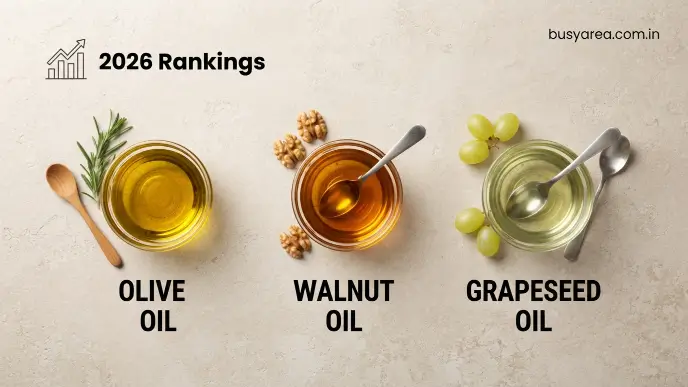
When deciding which oil is best for health, it is important to understand that cooking oils are not equal in their nutritional quality or in how they affect the body. Some oils are naturally rich in protective compounds like antioxidants and healthy fats, while others are more processed and may contribute to inflammation or cholesterol imbalance if used too often. This is why experts do not recommend a single “perfect” oil, but instead suggest choosing based on usage, fat composition, and stability. In everyday life, people often rely on oils without realizing how deeply they influence long-term health outcomes such as heart disease risk, weight management, and metabolic balance. Understanding healthy cooking oils helps you make smarter choices in the kitchen, whether you are frying, baking, or preparing raw meals like salads. Below is a science-based ranking that explains each oil in detail so you can choose confidently.
Extra Virgin Olive Oil (Best Overall)
Extra virgin olive oil is consistently ranked as the top answer to which oil is best for health because it is one of the least processed and most nutrient-rich cooking oils available. It contains a high amount of monounsaturated fats, which help reduce LDL (bad cholesterol) while supporting HDL (good cholesterol). It is also packed with antioxidants called polyphenols, which protect the body from oxidative stress and inflammation.
One of the most important reasons olive oil is considered superior is its strong connection to the Mediterranean diet, one of the most researched eating patterns in the world. Studies show it is linked to lower rates of heart disease, improved brain function, and longer lifespan. Because of this, it is often described as one of the best sources of heart-healthy fats in nutrition science.
Avocado Oil (Best for High Heat)
Avocado oil is another excellent option when evaluating which oil is best for health, especially for people who cook at high temperatures. It has a very high smoke point, which means it remains stable during frying, roasting, and grilling without breaking down into harmful compounds. This makes it safer for high-heat cooking compared to many other oils.
Nutritionally, avocado oil is very similar to olive oil because it is also rich in monounsaturated fats, which support heart health and cholesterol balance. Its neutral taste makes it extremely versatile in cooking, allowing it to be used in both savory and mild dishes without altering flavor. For this reason, it is often recommended as one of the most practical oils for cooking in modern kitchens.
Canola Oil (Affordable Healthy Option)
Canola oil is one of the most commonly used household oils due to its affordability and availability, making it a practical option when considering which oil is best for health on a budget. It is low in saturated fat and contains a moderate amount of unsaturated fats, which makes it relatively heart-friendly compared to many heavily processed oils.
Although it does not contain as many antioxidants or natural compounds as olive oil, canola oil is still considered a reasonable option when used in moderation. It is widely used for frying, baking, and general cooking because of its neutral taste and stable performance. In discussions about healthy cooking oils, it is often viewed as a balanced everyday choice rather than a premium nutritional oil.
Flaxseed Oil (Omega-3 Rich)
Flaxseed oil is unique because it is one of the richest plant-based sources of omega-3 fatty acids, which are essential for reducing inflammation and supporting heart and brain health. When discussing which oil is best for health, flaxseed oil stands out not for cooking performance but for its powerful nutritional profile.
However, this oil is extremely delicate and cannot withstand heat, which means it should never be used for frying or cooking. Instead, it is best consumed raw in salads, smoothies, or cold dishes. When used correctly, it significantly boosts intake of heart-healthy fats, especially for people who do not consume fish or animal-based omega-3 sources.
Sesame Oil (Flavor + Antioxidants)
Sesame oil is widely used in Asian cooking and offers a combination of flavor and nutritional benefits. It contains natural antioxidants such as sesamol and sesamin, which help protect cells from damage and may support heart health when consumed in moderation. While it is not the top choice for which oil is best for health, it still has value in a balanced diet.
Its strong aroma and rich flavor make it more suitable as a finishing oil or seasoning rather than a primary cooking fat. It is commonly used in stir-fries, marinades, and dressings. In the category of healthy cooking oils, sesame oil is appreciated more for its culinary contribution than its primary health ranking.
Oils Ranked Lower
Some oils are less ideal for regular daily use when evaluating which oil is best for health, mainly due to their higher saturated fat content or heavy processing. While they are not completely unhealthy, their nutritional profile makes them less favorable compared to oils like olive or avocado oil.
Coconut oil, for example, contains a high amount of saturated fat, which may raise LDL cholesterol if consumed frequently. Palm oil is also high in saturated fat and often used in processed foods, raising concerns about both health and environmental impact. Similarly, blended vegetable oils are often highly refined, meaning they lose many natural nutrients and may become unstable when repeatedly heated. This is why they are generally placed lower in the list of healthy cooking oils.
Healthy Oils Comparison Table
Choosing which oil is best for health becomes much easier when you compare oils side by side based on their fat composition, cooking use, and health benefits. Each oil has unique strengths, so the “best” option depends on whether you are focusing on heart health, high-heat cooking, or everyday nutrition. This table gives a clear and simple comparison of the most commonly used oils to help you make a better daily choice and understand healthy cooking oils more clearly.
Comparison Table
| Oil | Best Use | Main Fat Type | Heat Stability | Key Health Benefit |
| Extra Virgin Olive Oil | Salads, light cooking | Monounsaturated fats | Medium | Strong heart protection, rich in antioxidants |
| Avocado Oil | Frying, roasting, grilling | Monounsaturated fats | High | Supports cholesterol balance, very stable |
| Canola Oil | Everyday cooking, baking | Low saturated + mixed fats | Medium | Affordable, heart-friendly option |
| Flaxseed Oil | Cold use only (salads, smoothies) | Omega-3 fatty acids | Very low | Strong anti-inflammatory benefits |
| Sesame Oil | Stir-frying, seasoning | Mixed healthy fats | Medium | Contains antioxidants and flavor compounds |
| Coconut Oil | Occasional cooking | Saturated fats | High | Quick energy source, but high in saturated fat |
| Palm Oil | Processed foods | Saturated fats | High | Stable but less favorable for heart health |
| Vegetable Oil (Blended) | General cooking | Mixed refined fats | Medium-High | Cheap, but often highly processed |
Common Mistakes When Choosing Cooking Oil
When deciding which oil is best for health, many people make simple but important mistakes that can negatively affect their long-term nutrition and overall well-being. The confusion usually comes from misleading marketing, incomplete information, or focusing only on one factor, such as price or smoke point. In reality, choosing the right oil requires understanding fat quality, processing level, and cooking method. Ignoring these aspects can lead to poor dietary choices, increased inflammation, and reduced heart health benefits from otherwise balanced meals and healthy cooking oil selection.
Common Mistakes
- Choosing Mixed oil only based on price instead of nutritional quality and fat composition balance.
- Assuming all vegetable oils are healthy without checking the processing level or the refinement method used.
- Relying only on the smoke point instead of considering oil stability and oxidation risk during cooking.
- Reusing cooking oil multiple times, which increases harmful compounds and reduces nutritional value significantly.
- Ignoring the difference between refined and cold-pressed oils in terms of health benefits.
- Overheating delicate oils like olive or flaxseed oil beyond their safe temperature limits.
- Believing coconut oil is universally healthy despite its high saturated fat content profile.
- Using the same oil for all cooking methods instead of matching the oil to the purpose.
- Not storing oils properly leads to oxidation and nutrient loss over time.
- Following social media trends without scientific evidence about heart-healthy fats and real nutrition facts.
Oils You Should Avoid or Limit
When understanding which oil is best for health, it is equally important to recognize oils that should be limited or avoided in daily cooking. Many of these oils are heavily processed or contain fat structures that do not support long-term heart health, cholesterol balance, or inflammation control. While some may still be used occasionally, relying on them as primary cooking oils can reduce the benefits of an otherwise healthy diet and lower the effectiveness of healthy cooking oil choices overall. Over time, frequent use of low-quality oils can negatively affect metabolic health and increase the risk of cardiovascular issues. The key is not just avoiding “bad” oils completely in every case, but understanding how often and in what form they are used in your diet. Below are the main categories of oils that should be used with caution.
Trans Fat Oils (Worst for Health)
Trans fat oils are considered the most harmful category when evaluating which oil is best for health because they contain artificial fats that disrupt normal cholesterol levels in the body. These fats increase LDL (bad cholesterol) while lowering HDL (good cholesterol), which significantly raises the risk of heart disease over time.
They are commonly found in fast food, packaged snacks, and foods that use repeatedly heated or partially hydrogenated oils. Even a small, regular intake can gradually impact heart health, making it one of the least recommended sources of healthy cooking oils in any diet. Partially hydrogenated oils are the primary source of industrial trans fats and are widely recognized as unsafe for regular consumption.
Highly Processed Vegetable Oils
Highly processed vegetable oils are often considered misleading in health discussions around which oil is best for health because they undergo heavy refining that removes natural nutrients and antioxidants. Although they are widely available and inexpensive, their nutritional quality is significantly lower compared to less processed oils.
Another concern is their high omega-6 content, which can become problematic when not balanced with enough omega-3 intake. This imbalance may contribute to inflammation in the body over time, especially when these oils are used frequently in fried and processed foods instead of more balanced, healthy cooking oils. Excess omega-6 imbalance in the diet may disturb the body’s natural fat ratio, especially when omega-3 intake is low. Inflammation concerns arise when these oils are consumed daily without moderation or dietary balance from whole food sources.
Coconut and Palm Oil Debate
Coconut oil and palm oil are often debated when discussing which oil is best for health because they have both positive and negative nutritional aspects. Coconut oil contains medium-chain triglycerides that may provide quick energy, but it is also very high in saturated fat, which can raise cholesterol levels if consumed in excess.
Palm oil is stable for cooking and widely used in processed foods, but its high saturated fat content makes it less favorable for daily use compared to unsaturated fat-rich healthy cooking oils. Additionally, environmental concerns surrounding palm oil production also influence its overall evaluation in modern nutrition discussions. The main takeaway is not complete avoidance but moderation. Both coconut and palm oil can be used occasionally, but they should not replace healthier oils like olive or avocado oil as primary cooking fats in a balanced diet.
Expert Tips for Using Cooking Oils Safely
When understanding which oil is best for health, it is not only about selecting the right type of oil but also about how you use, store, and heat it in daily cooking. Even the healthiest oils can lose their nutritional value or become harmful if they are overheated, reused too many times, or stored incorrectly. Proper usage plays a major role in preserving healthy cooking oils’ benefits, maintaining nutrient quality, and reducing the formation of harmful compounds that may affect heart health and overall long-term wellness outcomes.
Expert Tips for Using
- Choose oil based on cooking method, matching heat level with oil stability for better nutrition and safety balance.
- Avoid overheating oils beyond their smoke point to prevent harmful compound formation and nutrient degradation during cooking.
- Store oils in dark, cool places to protect them from oxidation, light damage, and quality loss over time.
- Prefer cold-pressed or extra virgin oils for higher nutrient content and better natural antioxidant preservation benefits.
- Do not reuse frying oil multiple times, as it increases unhealthy compounds and reduces overall oil quality significantly.
- Use olive oil for light cooking and avocado oil for high-heat cooking to maintain health benefits effectively.
- Keep bottle caps tightly closed to reduce air exposure and slow down the oxidation process in cooking oils.
- Check oil freshness regularly to avoid using rancid oils that may harm taste and nutritional value.
- Rotate different healthy oils in your diet to ensure balanced intake of fats and essential nutrients daily.
- Avoid mixing old and new oil batches, as it reduces quality and increases the risk of contamination issues.
Frequently Asked Questions
Which oil is healthiest for daily cooking?
When deciding which oil is best for health, extra virgin olive oil is the top choice for daily use due to its antioxidants and heart-healthy fats. It supports cholesterol balance and overall wellness.
Is olive oil safe for frying?
Yes, olive oil is safe for light to medium frying if not overheated. It remains stable enough for regular cooking. For high-heat frying, avocado oil is a better option among healthy cooking oils.
Which oil is best for heart patients?
Extra virgin olive oil and avocado oil are best for heart health because they support good cholesterol and reduce inflammation. They are commonly recommended when choosing which oil is best for health in heart-focused diets.
Are vegetable oils unhealthy?
Not all vegetable oils are unhealthy, but highly refined ones should be limited. Processing reduces nutrients and may affect fat balance. Choosing minimally processed healthy cooking oils is always a better option.
What is the best oil for weight loss?
No oil directly causes weight loss, but using olive oil in moderation can support a healthy diet. The key is portion control and choosing healthy cooking oils over processed fats.
Conclusion
Choosing which oil is best for health ultimately depends on understanding how different oils affect the body and how they are used in daily cooking. There is no single perfect oil for every situation, but some options clearly stand out based on science, fat quality, and stability. Extra virgin olive oil remains the most recommended choice due to its strong antioxidant content and proven benefits for heart health and long-term wellness.
At the same time, avocado oil is an excellent option for high-heat cooking, while other oils like canola, sesame, and flaxseed oil can be used strategically based on dietary needs. The key takeaway is balance and awareness—selecting the right healthy cooking oils for the right purpose helps improve nutrition, reduce health risks, and support a healthier lifestyle over time.
