

The question of whether is beer good for health has become increasingly common as people try to balance lifestyle enjoyment with long-term wellness. Beer is often seen as a casual social drink, but at the same time, it has been linked in some studies to possible health effects of alcohol, including both positive and negative outcomes. This conflicting information creates confusion, especially for those who want clear, science-based guidance rather than myths or marketing claims.
To understand this topic properly, it is important to look beyond assumptions and examine what beer actually does inside the body. While it contains small amounts of nutrients and compounds that may influence beer’s health benefits, such as heart-related markers or digestion, it also includes ethanol, which is directly responsible for alcohol’s effects on liver health, metabolism, and brain function. This means the impact of beer is not universal—it depends heavily on quantity, frequency, and individual health conditions. In the sections below, we will break down both sides in detail so you can clearly understand where beer stands in terms of real health impact.
What Is Beer Made Of?
Understanding what beer is made of is essential before evaluating whether beer is good for health, because its ingredients directly influence both its nutritional value and its effects on the body. Beer is created through a natural fermentation process where simple ingredients are transformed into an alcoholic beverage with distinct flavor, aroma, and strength. The basic components of beer include water, barley, hops, and yeast. These core elements determine its taste profile and also contribute to what is commonly searched for as beer ingredients. While the composition seems simple, the interaction between these ingredients during brewing plays a major role in defining the final quality and characteristics of beer.
Water, barley, hops, yeast
Beer is made up primarily of water, which accounts for most of its volume and acts as the base for all other ingredients. Barley provides the fermentable sugars needed for alcohol production, while hops add bitterness and aroma and act as a natural preservative. Yeast is the microorganism responsible for fermentation, converting sugars into alcohol and carbon dioxide. Together, these form the foundation of traditional brewing.
From a production perspective, the quality of each ingredient influences the final product significantly. Variations in barley type or hop selection can change flavor intensity, bitterness, and aroma. This is why different breweries produce unique styles, even when using the same basic brewing process. Despite its simplicity, this combination is what makes beer one of the most widely consumed alcoholic beverages worldwide.
Alcohol content (ABV levels)
One of the most important factors in beer is its alcohol strength, measured as Alcohol by Volume (ABV). This determines how strong the beer is and how it affects the body. Most regular beers contain around 4% to 6% alcohol, although craft beers and stronger variants can go much higher. The ABV level is a key indicator when evaluating alcohol content and its potential impact on health.
Higher ABV means a stronger physiological effect, including faster intoxication and increased strain on the liver. This is why understanding ABV is essential when considering whether beer is good for health, as even moderate consumption can vary greatly depending on strength. Different countries also regulate alcohol labeling differently, making it important for consumers to check ABV before drinking.
Carbohydrates and calories
Beer contains carbohydrates that come from malted barley, and these contribute significantly to its calorie content. A standard serving of beer can contain a noticeable amount of energy, which is why it is often associated with weight gain when consumed frequently. These calories primarily come from alcohol and residual sugars left after fermentation, which is important when analyzing calories in beer.
From a dietary perspective, beer is not a nutrient-dense beverage despite its calorie content. While it provides energy, it lacks essential macronutrients in meaningful amounts. Regular consumption without balancing the overall diet can contribute to fat accumulation and metabolic imbalance. This is why understanding its carbohydrate and calorie profile is crucial when evaluating its role in health and lifestyle choices.
Read also: beer is good for health
Nutritional Profile of Beer
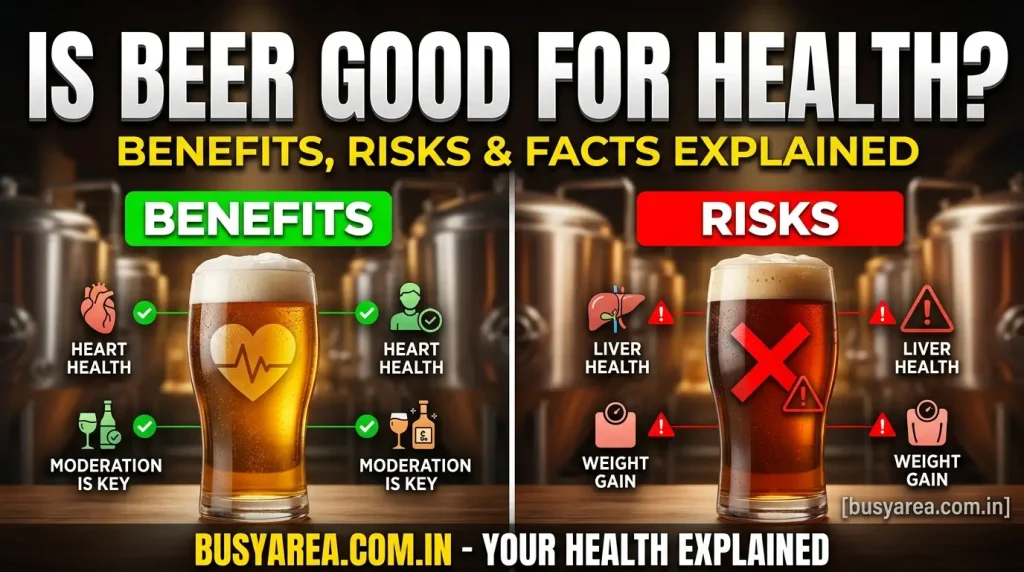
When evaluating whether beer is good for health, it is important to first understand its nutritional profile. Beer does contain certain nutrients, but they appear in small quantities and are often overshadowed by its alcohol and calorie content. While it may seem similar to other food-based beverages in composition, its overall nutritional value is limited and should be interpreted carefully in the context of beer nutrition facts. From a dietary standpoint, beer is considered an energy-containing alcoholic beverage rather than a nutrient-rich drink. It provides calories primarily from alcohol and carbohydrates, but it does not supply meaningful amounts of essential nutrients needed for daily health. This distinction is crucial when comparing beer with actual functional foods or beverages designed to support health.
Calories per pint/bottle
A standard pint or bottle of beer typically contains between 140 and 220 calories, depending on its strength and brewing style. These calories mainly come from alcohol and residual sugars left after fermentation. This is an important factor when analyzing calories in beer, especially for individuals monitoring weight or metabolic health.
Although these calories may not seem excessive in isolation, they can add up quickly with regular consumption. Unlike nutrient-dense foods, beer provides “empty calories,” meaning it delivers energy without significant vitamins, minerals, or protein. This is why frequent intake can contribute to weight gain without providing substantial nutritional benefits.
Small amounts of B vitamins
Beer does contain small traces of B vitamins, including niacin, riboflavin, and folate, which are derived from barley and yeast used in brewing. These nutrients are part of what is often highlighted in discussions about beer nutrients, although their quantities are not sufficient to meet daily dietary requirements.
However, relying on beer as a source of vitamins is not recommended because the alcohol content outweighs any potential nutritional contribution. A balanced diet with whole foods provides far more effective and safer sources of B vitamins without the associated risks of alcohol consumption. Therefore, while present, these nutrients do not make beer a meaningful dietary supplement.
Trace minerals (magnesium, potassium)
Beer also contains trace amounts of minerals such as magnesium, potassium, phosphorus, and silicon. These come from the grains used in brewing and contribute slightly to the beverage’s overall composition. In discussions of trace minerals in beer, these elements are often mentioned as minor nutritional positives.
Despite their presence, the quantities are extremely low and not enough to influence overall mineral intake in a meaningful way. A person would need to consume unsafe amounts of beer to meet daily mineral requirements, which is not advisable due to alcohol-related health risks. As a result, beer cannot be considered a reliable source of essential minerals.
Why is it not considered a “health drink”
Despite containing some nutrients, beer is not classified as a health drink because its alcohol content introduces risks that outweigh any minor nutritional benefits. Alcohol affects the liver, brain, and metabolism, making it unsuitable as a daily wellness beverage. This is a key reason why beer is good for health, which is generally answered with caution or limitation.
In addition, the concept of a “health drink” implies consistent nutritional support without harmful side effects, which beer does not provide. While moderate consumption may be socially acceptable, it does not deliver the balanced vitamins, minerals, and hydration benefits found in true health-focused beverages. This distinction is essential for making informed dietary choices.
Potential Health Benefits of Beer
When exploring whether beer is good for health, it is important to separate scientific evidence from common myths and overgeneralizations. Beer is often discussed in terms of its possible health benefits, especially when consumed in very small and controlled amounts. Some Business research suggests that certain compounds in beer, such as antioxidants and trace minerals, may have limited positive effects on the body, but these outcomes are highly dependent on moderation and overall lifestyle habits.
Potential Health-Related Points
- May slightly improve heart health by increasing good HDL cholesterol levels when consumed in moderation.
- Contains antioxidants from hops that may help reduce oxidative stress in the body over time.
- Silicon content may contribute to improved bone density and long-term skeletal strength support.
- Light alcohol intake may promote temporary relaxation and stress reduction in some individuals.
- Some studies suggest modest improvements in cardiovascular markers with low alcohol consumption patterns.
- Beer may support social well-being by encouraging social interaction and reducing isolation behaviors.
- Fermentation compounds may have mild digestive stimulation effects when consumed occasionally and responsibly.
- Low to moderate intake may have minimal impact on blood sugar compared to stronger alcoholic beverages.
- Certain nutrients in beer may contribute trace dietary support, but not replace balanced nutrition intake.
- Occasional consumption may enhance relaxation, but must always remain within safe drinking limits recommended.
Is Beer Really Healthy or Just a Myth?
When evaluating whether beer is good for health, it is essential to separate scientific facts from popular beliefs that often circulate in the media and everyday discussions. Many people assume that beer may be beneficial because of certain compounds it contains, but modern research shows a far more complex picture. In reality, most claims about beer’s health benefits are either overstated or misunderstood, especially when alcohol’s negative effects are not fully considered. Scientific evidence today suggests that beer should not be viewed as a health-promoting beverage. While some earlier studies hinted at possible advantages of moderate consumption, more recent and comprehensive research highlights that alcohol intake carries inherent risks regardless of quantity.
Scientific consensus: no safe “healthy alcohol”
The current scientific consensus is that there is no completely safe or beneficial level of alcohol consumption. While beer contains certain compounds that may appear beneficial in isolation, the presence of ethanol introduces health risks that cannot be ignored. This is why modern health organizations are increasingly cautious when discussing alcohol safety guidelines.
Even small amounts of alcohol can affect liver function, brain activity, and long-term disease risk. As a result, beer cannot be classified as a health drink under medical standards. The potential risks outweigh any minor benefits, leading experts to conclude that alcohol should not be consumed for health purposes.
Misinterpretation of studies
Many claims suggesting that beer is healthy come from misinterpreted or incomplete scientific studies. Often, these studies compare moderate drinkers with non-drinkers without accounting for lifestyle factors such as diet, exercise, or socioeconomic conditions. This leads to misleading conclusions about alcohol research findings.
In reality, when more controlled and long-term studies are considered, the supposed benefits of beer largely disappear. This shows that correlation does not equal causation. People who drink moderately may also follow healthier lifestyles overall, which can falsely attribute health benefits to beer itself rather than other habits.
Importance of moderation vs justification of drinking
Moderation is often used as a justification for alcohol consumption, but it is important to understand the difference between controlled use and perceived health benefits. While small amounts of beer may reduce certain risks in specific cases, this does not mean it improves overall health. This distinction is central when analyzing moderate alcohol consumption.
Using moderation as a reason to label beer as “healthy” can be misleading. Instead, it should be viewed as a harm-reduction approach rather than a wellness strategy. Responsible drinking means limiting risk, not gaining health benefits, which is an important clarification when discussing whether beer is good for health.
Risks and Side Effects of Beer Consumption
When analyzing whether beer is good for health, it is crucial to understand that the risks and side effects of beer consumption are significantly more impactful than its limited benefits. Beer contains alcohol, which directly affects multiple organs in the body, including the liver, brain, heart, and digestive system. Regular or excessive intake can lead to both short-term impairment and long-term health complications. In discussions around beer side effects, medical research consistently highlights that frequency, quantity, and individual tolerance play a major role in determining the severity of these effects. While occasional consumption may seem harmless, repeated exposure increases the likelihood of chronic health issues over time.
Compression Table
| Risk / Side Effect | Impact on Body | Severity Level |
| Liver damage | Can cause fatty liver, inflammation, or cirrhosis over time | High |
| Weight gain | High-calorie content leads to fat accumulation | Medium to High |
| Addiction risk | Alcohol dependence and withdrawal symptoms | High |
| Brain function impairment | Reduced memory, focus, and decision-making ability | High |
| Heart complications | May increase blood pressure and irregular heartbeat | Medium |
| Sleep disruption | Poor sleep quality and disturbed sleep cycles | Medium |
| Digestive issues | Irritation of the stomach lining and acid imbalance | Medium |
| Mental health effects | Increased anxiety and depression risk | Medium to High |
| Increased cancer risk | Linked to several types of cancers with long-term use | High |
| Dehydration | Alcohol causes fluid loss and electrolyte imbalance | Low to Medium |
How Much Beer Is Safe to Drink?
When discussing whether beer is good for health, one of the most important factors is understanding how much beer, if any, can be consumed safely. Safety in alcohol consumption is not about finding a “healthy dose,” but rather about limiting harm and reducing long-term risks. Beer contains alcohol, which directly affects the liver, brain, and metabolism, so even small amounts can have physiological effects. In discussions around safe alcohol consumption limits, experts emphasize that moderation does not eliminate risk but only reduces it to a lower level compared to heavy or frequent drinking. Because beer affects individuals differently based on body weight, health status, and drinking habits, there is no universally safe amount that applies to everyone. Health organizations provide general guidelines, but these are not recommendations to drink—they are upper limits intended to minimize harm.
Standard drink definitions
A standard drink is a way to measure alcohol intake consistently across different beverages. In most health guidelines, one standard drink of beer is typically considered to be around 330 ml of beer with approximately 5% alcohol by volume (ABV). This measurement helps people understand how much alcohol they are actually consuming, especially when comparing beer with wine or spirits. This is commonly referenced in standard drink measurements used in public health education.
However, it is important to recognize that many commercial beers vary significantly in strength and serving size. Craft beers or stronger variants may contain much higher alcohol levels, meaning one bottle could equal more than one standard drink. This makes it easy to unintentionally exceed recommended limits, especially when consumption is not carefully tracked.
WHO recommendations overview
The World Health Organization (WHO) does not promote alcohol consumption for health benefits and instead focuses on reducing alcohol-related harm. According to global health guidance, there is no completely safe level of alcohol consumption, as even low intake can increase certain health risks over time. This perspective is central to the WHO alcohol guidelines and modern public health policy.
While older recommendations suggested moderate drinking limits, updated research has shifted toward emphasizing risk reduction rather than safe thresholds. This means that even when beer is consumed within “moderate” ranges, potential health impacts still exist. The focus is now on minimizing frequency and quantity rather than encouraging routine alcohol use.
Differences by gender and body type
Alcohol affects individuals differently based on biological factors such as body weight, metabolism, and enzyme activity. Generally, people with lower body mass or higher body fat percentage may experience stronger effects from the same amount of beer. Gender also plays a role, as hormonal differences and body composition influence alcohol processing. These variations are commonly discussed in research on alcohol metabolism differences.
Because of these differences, health guidelines often suggest lower limits for women compared to men. However, these are not personalized safety guarantees but general population-based estimates. Individual tolerance can vary widely, making it important for people to understand their own limits rather than relying solely on generalized charts.
Occasional drinking vs daily consumption”
Occasional drinking refers to consuming beer infrequently, such as during social events or special occasions. This pattern is generally associated with lower long-term risk compared to daily drinking. However, even occasional intake still introduces alcohol into the body, which can have short-term effects such as dehydration or impaired judgment. This distinction is important in discussions around drinking frequency effects.
Daily consumption, even in small amounts, increases cumulative exposure to alcohol and raises the risk of long-term health issues such as liver stress, dependency, and metabolic changes. Over time, habitual drinking can also normalize alcohol intake behavior, making it harder to recognize early signs of overuse. For this reason, reducing frequency is often considered more important than focusing only on quantity.
Healthier Alternatives to Beer
When considering whether beer is good for health, many people eventually look for safer and more beneficial alternatives that provide refreshment without the negative effects of alcohol. While beer may offer social enjoyment, it does not support long-term wellness due to its alcohol content and empty calories. Exploring healthier substitutes can help reduce health risks while still maintaining taste, hydration, and relaxation benefits in daily life and social settings.
Healthier Alternatives to Beer
- Non-alcoholic beer offers a similar taste without alcohol-related liver and brain health risks and dependency issues.
- Sparkling water with lemon provides hydration, refreshment, and zero calories for daily consumption and social occasions.
- Kombucha contains probiotics that support gut health while offering a mildly fizzy, flavorful drink alternative.
- Herbal teas help relaxation, reduce stress, and support overall wellness without alcohol or calorie intake concerns.
- Fresh fruit-infused water delivers vitamins, hydration, and natural flavor without any harmful alcohol-related side effects.
Beer vs Other Alcoholic Drinks
When evaluating whether beer is good for health, it is helpful to compare it with other common alcoholic beverages such as wine and spirits. Each drink contains ethanol, but they differ in alcohol concentration, calorie content, serving size, and overall impact on the body. Beer is often perceived as a “lighter” option because of its lower alcohol percentage, but this can be misleading since larger serving sizes can still lead to significant alcohol intake. In discussions around alcohol comparison health effects, experts emphasize that no alcoholic drink is truly safe for regular consumption, and the overall health impact depends more on total alcohol intake than the type of beverage chosen.
Compression Table
| Beverage Type | Alcohol Content (ABV) | Calories per Serving | Typical Serving Size | Health Consideration |
| Beer | 4%–6% | 140–220 kcal | 330–500 ml | Lower ABV but easy to overconsume due to volume |
| Wine | 12%–15% | 120–150 kcal | 150 ml | Contains antioxidants, but still alcohol-related risks |
| Spirits | 35%–45% | 90–110 kcal | 30–45 ml | High alcohol concentration, faster intoxication |
| Cocktails | Varies (10%–25%) | 150–300+ kcal | Varies | Often high sugar and calorie content |
| Cider | 4%–8% | 180–250 kcal | 330–500 ml | Similar to beer, often higher sugar content |
Tips for Safer Beer Consumption
When evaluating whether beer is good for health, it is important to understand that safety depends more on drinking habits than the beverage itself. Beer contains alcohol, which can affect the liver, brain, and overall metabolism even in small amounts. Therefore, adopting safer drinking habits can significantly reduce health risks while still allowing occasional enjoyment. In discussions around responsible alcohol consumption, experts emphasize moderation, hydration, and awareness of personal limits as key factors.
Tips for Safer Beer
- Drink beer slowly to allow your body time to process alcohol and reduce the effects of intoxication effectively.
- Always stay hydrated by drinking water between beers to prevent dehydration and reduce hangover severity.
- Avoid drinking beer on an empty stomach to slow alcohol absorption and protect digestive health naturally.
- Limit consumption to moderate levels recommended by health guidelines for a safer long-term lifestyle balance overall.
- Choose lower-alcohol beers when possible to reduce total ethanol intake and minimize liver stress exposure.
- Avoid mixing beer with other alcoholic beverages to prevent rapid intoxication and unpredictable health effects.
- Take regular alcohol-free days each week to give your body time for recovery and detoxification.
- Be aware of your personal tolerance level and avoid exceeding it to prevent harmful overconsumption risks.
- Do not drink beer when feeling stressed or emotional to avoid dependency-based drinking habits developing over time.
- Plan transportation to avoid drinking and driving risks and ensure safety in social situations.
Frequently Asked Questions
Is beer good for daily consumption?
Daily beer consumption is not recommended because even small amounts of alcohol can build up health risks over time. Regular intake increases strain on the liver, affects metabolism, and may lead to dependency.
Does beer have any real health benefits?
Beer may contain small amounts of antioxidants and trace nutrients, but these are minimal compared to whole foods. Any potential benefits are limited to very moderate intake and do not outweigh the risks associated with alcohol.
Can beer cause weight gain?
Yes, beer can contribute to weight gain due to its calorie content and carbohydrates. Regular consumption adds “empty calories” that do not provide essential nutrients. Over time, this can lead to fat accumulation, especially around the abdominal area, commonly known as a beer belly.
Is non-alcoholic beer healthy?
Non-alcoholic beer is generally a safer alternative because it removes or greatly reduces alcohol content. However, it still contains calories and sugars, so it should be consumed in moderation.
How much beer is safe per week?
There is no completely safe level of alcohol consumption, but general guidelines suggest limiting intake to moderate levels if drinking occurs.
Conclusion
When answering the question of whether beer is good for health, the overall evidence shows a clear and balanced picture. Beer contains small amounts of nutrients and may show limited benefits in very controlled, moderate consumption, but these effects are often overstated and not strong enough to classify it as a health-promoting drink. The presence of alcohol remains the most important factor influencing its impact on the body.
Regular or excessive beer consumption is linked to several health risks, including liver damage, weight gain, and long-term metabolic and mental health issues. While occasional drinking may be socially acceptable for some individuals, it should always be approached with caution and awareness of personal limits. Ultimately, for better long-term well-being, reducing alcohol intake or choosing alcohol-free alternatives is a safer and healthier approach.
