
As the health minister of India, you are likely seeking the latest information on the person overseeing the country’s healthcare system and public health policies. The Health Minister plays a crucial role in shaping India’s medical infrastructure, managing nationwide health programs, and ensuring that citizens have access to quality healthcare services. As the head of the Ministry of Health and Family Welfare, the minister is responsible for implementing healthcare reforms, coordinating with state governments, and addressing major public health challenges across the nation.
Understanding who the health minister of India is is important because this position directly influences the direction of the country’s public health policy, the healthcare system in India, and various welfare initiatives. From managing large-scale vaccination campaigns to overseeing programs such as Ayushman Bharat and the National Health Mission, the Health Minister’s decisions impact millions of people every day. In this article, you’ll learn about the current Health Minister of India, their background, responsibilities, key achievements, and the significance of the role within the Indian government.
Quick Answer: Current Health Minister of India
For readers searching for who the health minister of India is, the current Union Health Minister is Jagat Prakash Nadda. He heads the Ministry of Health and Family Welfare, the central government body responsible for healthcare policies, disease prevention programs, medical infrastructure development, and public health initiatives across the country. As a senior cabinet member, he plays a vital role in shaping India’s healthcare landscape and ensuring the effective implementation of national health programs.
Name and Designation
The current answer to who is the health minister of India is Jagat Prakash Nadda, who serves as the Union Minister of Health and Family Welfare. This position places him at the forefront of India’s healthcare administration, where he is responsible for overseeing policies and programs that affect millions of citizens across the country.
As the head of the Ministry of Health and Family Welfare, he supervises various departments and agencies involved in healthcare delivery, medical education, disease control, and family welfare initiatives. His leadership is crucial in ensuring that healthcare services remain accessible, affordable, and effective for India’s growing population.
Political Party and Cabinet Role
Jagat Prakash Nadda is a prominent leader of the Bharatiya Janata Party (BJP), one of India’s largest political parties. For those looking to understand who the health minister of India is, it is important to know that he is also a key member of the Union Cabinet, where major national policies and decisions are discussed and implemented.
In his cabinet role, he works closely with other ministers and government departments to address healthcare challenges and improve the country’s public health policy. His position allows him to influence decisions related to healthcare funding, medical infrastructure, health insurance schemes, and nationwide welfare programs.
Tenure Overview
Jagat Prakash Nadda assumed charge as the Union Health Minister following the formation of the new central government in 2024. Since taking office, he has been responsible for guiding the country’s healthcare priorities and advancing several initiatives aimed at strengthening the healthcare system in India.
During his tenure, the ministry has focused on expanding healthcare accessibility, improving hospital infrastructure, promoting digital health services, and supporting preventive healthcare measures. His leadership continues to play an important role in shaping the future of healthcare and addressing the evolving needs of India’s population.
Read Also: Who is the health minister of India
About the Ministry of Health and Family Welfare
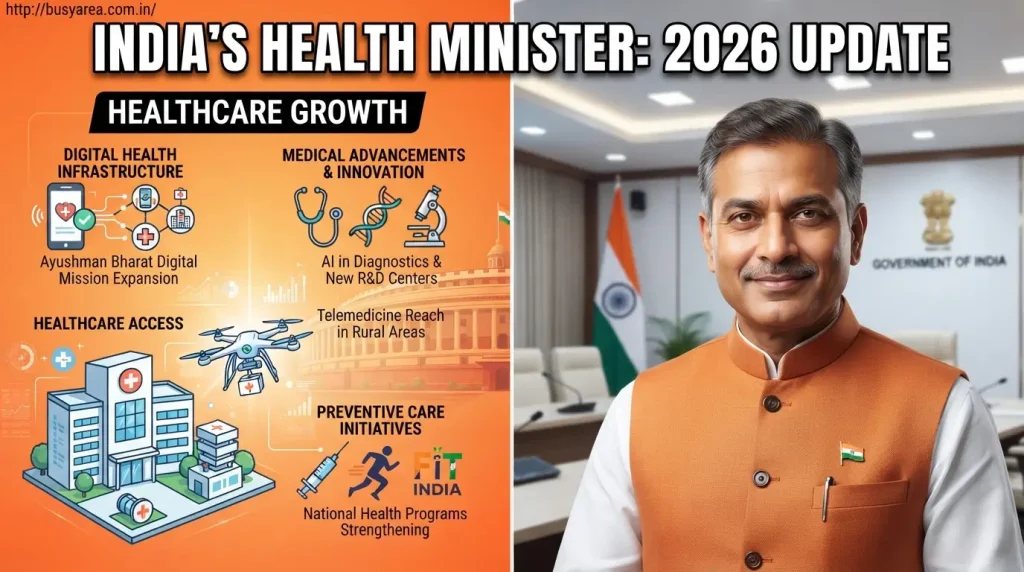
When discussing who the health minister of India is, it is equally important to understand the organization he leads. The Ministry of Health and Family Welfare is the central authority responsible for planning, implementing, and monitoring healthcare policies throughout the country. It works to improve public health standards, expand healthcare access, and ensure that citizens receive quality medical services through various national programs and initiatives.
Role of the Ministry
The primary role of the Ministry of Health and Family Welfare is to formulate and implement healthcare policies that support the well-being of India’s population. Through the Ministry of Health and Family Welfare (India), the government addresses critical issues such as disease prevention, maternal and child health, vaccination programs, and healthcare infrastructure development.
In addition to policy-making, the ministry oversees the execution of numerous national health schemes and coordinates with state governments to ensure effective healthcare delivery. Its efforts play a major role in strengthening the healthcare system in India and improving health outcomes across both urban and rural regions.
Key Departments Under It
The Ministry of Health and Family Welfare operates through several departments that focus on different aspects of healthcare administration and research. These departments help implement government initiatives and ensure that health services reach people throughout the country in an organized and efficient manner.
Among the most important divisions are the Department of Health and Family Welfare and the Department of Health Research. Together, these bodies support medical research, healthcare planning, disease surveillance, and the implementation of public health policy. They also work closely with national institutions, healthcare professionals, and research organizations to strengthen India’s healthcare capabilities.
Importance in India’s Governance
The Ministry of Health and Family Welfare holds a central position within India’s governance framework because healthcare directly affects the quality of life and economic productivity of the population. Its policies influence everything from disease control and emergency response to medical education and healthcare accessibility.
For anyone searching for who the health minister of India is, understanding the ministry’s importance provides valuable context about the responsibilities associated with the role. The ministry not only safeguards public health but also contributes to national development by supporting initiatives such as Ayushman Bharat, preventive healthcare programs, and long-term healthcare reforms that benefit millions of citizens.
Key Responsibilities of the Health Minister
The responsibilities associated with being the health minister of India extend far beyond managing healthcare facilities. As the head of the Ministry of Health and Family Welfare, the Health Minister is responsible for developing national healthcare policies, overseeing public health programs, strengthening medical infrastructure, coordinating with state governments, and responding to health emergencies. The minister also plays a crucial role in improving healthcare accessibility, promoting preventive care, regulating medical institutions, supporting research initiatives, and ensuring the successful implementation of major schemes that enhance the overall healthcare system in India.
Key Responsibilities
- Formulates national healthcare policies to improve public health outcomes and ensure equitable access to medical services nationwide.
- Oversees implementation of government health schemes, ensuring efficient delivery of healthcare benefits to eligible citizens.
- Coordinates with state governments to strengthen healthcare infrastructure and improve service quality across regions.
- Supervises disease prevention and control programs to reduce the spread of infectious and non-communicable diseases.
- Manages emergency health responses during pandemics, epidemics, natural disasters, and other public health crises.
- Promotes medical education standards and supports the development of skilled healthcare professionals throughout India.
- Enhances hospital infrastructure by encouraging modernization, expansion, and accessibility of healthcare facilities nationwide.
- Supports healthcare research initiatives to advance medical innovation, treatment methods, and evidence-based policymaking.
- Collaborates with international health organizations to address global health challenges and adopt best practices.
- Monitors public health indicators and develops strategies to improve overall healthcare outcomes for the population.
Major Health Initiatives in India
To fully understand who the health minister of India is, it is important to examine the major healthcare initiatives implemented under the leadership of the Ministry of Health and Family Welfare. These programs are designed to improve healthcare accessibility, strengthen medical infrastructure, expand insurance coverage, and enhance the overall quality of healthcare services. Through various national missions and reforms, the government continues to address the healthcare needs of millions of citizens while modernizing the healthcare system in India.
Ayushman Bharat Scheme
The Ayushman Bharat Scheme is one of the most significant healthcare initiatives launched by the Government of India. It aims to provide financial protection to economically vulnerable families by offering health insurance coverage for hospitalization and medical treatment. This initiative has helped reduce the burden of healthcare expenses for millions of beneficiaries across the country.
For those researching who the health minister of India is, the scheme represents a major component of India’s healthcare reform efforts. As part of the broader public health policy framework, Ayushman Bharat focuses on expanding access to quality healthcare while promoting affordable treatment options for underserved populations. The program continues to play a crucial role in strengthening healthcare accessibility nationwide.
Digital Health Mission
The Digital Health Mission was introduced to transform healthcare delivery through technology and digital innovation. The initiative seeks to create a connected healthcare ecosystem where patients can securely access and manage their medical records while healthcare providers can deliver more efficient services.
Under this initiative, digital health IDs, electronic health records, and integrated healthcare platforms have become important tools for improving patient care. Understanding who the health minister of India is also involves recognizing the government’s efforts to modernize the healthcare system in India through digital solutions that enhance transparency, efficiency, and accessibility.
Vaccination Programs
India operates one of the largest vaccination programs in the world, covering millions of children and adults every year. These programs aim to prevent the spread of infectious diseases and improve overall public health through widespread immunization campaigns.
The success of vaccination initiatives demonstrates the importance of effective healthcare leadership and planning. Through the guidance of the Ministry of Health and Family Welfare, national immunization efforts continue to protect communities from preventable diseases. For anyone exploring who the health minister of India is, these programs highlight the ministry’s commitment to safeguarding public health and promoting preventive healthcare measures.
Rural Healthcare Development
Rural healthcare development remains a top priority for India’s healthcare administration, as a significant portion of the population resides in villages and remote areas. The government has invested in strengthening primary health centers, community health centers, and healthcare outreach services to improve access to medical care in underserved regions.
Efforts to enhance rural healthcare include expanding medical infrastructure, increasing healthcare workforce availability, and promoting telemedicine services. These initiatives support the broader goals of the public health policy framework and contribute to a more inclusive healthcare system in India. As a result, rural communities are gaining better access to essential healthcare services and improved health outcomes.
Importance of the Health Minister in India’s System
Understanding who the health minister of India is goes beyond knowing the name of the current office holder. The Health Minister occupies one of the most influential positions in the Union Cabinet because healthcare affects every citizen, community, and sector of the economy. As the head of the Ministry of Health and Family Welfare, the minister is responsible for guiding national health priorities, addressing public health challenges, and ensuring that healthcare services remain accessible and effective. Through policy-making, program implementation, and coordination with various stakeholders, the Health Minister plays a vital role in strengthening the healthcare system in India and improving the overall well-being of the population.
Role in Crisis Management
The Health Minister plays a critical role during public health emergencies, including pandemics, disease outbreaks, and natural disasters that affect healthcare delivery. During such situations, the minister coordinates with state governments, healthcare institutions, and emergency response agencies to ensure that resources, medical supplies, and healthcare services are available where they are needed most.
Effective crisis management requires quick decision-making, strategic planning, and clear communication with the public. For those researching who the health minister of India is, it is important to recognize that the minister serves as a key leader during health emergencies, helping to protect citizens and minimize the impact of nationwide health threats through strong public health policy measures.
Healthcare Reforms Impact
Healthcare reforms introduced under the leadership of the Health Minister can significantly influence the quality, accessibility, and affordability of medical services across the country. These reforms often focus on expanding healthcare coverage, improving hospital infrastructure, strengthening medical education, and adopting innovative healthcare technologies.
The long-term impact of these reforms extends to millions of citizens who benefit from improved healthcare services and better health outcomes. Understanding who the health minister of India is also means understanding the role the minister plays in shaping the future of the healthcare system in India through policies designed to address evolving healthcare needs and challenges.
Public Welfare and Policy Influence
The Health Minister has a direct influence on public welfare because healthcare policies affect the daily lives of people throughout the country. Decisions related to disease prevention, maternal health, child healthcare, vaccination programs, and health insurance schemes can significantly improve the quality of life for millions of families.
Through the development and implementation of effective public health policy, the minister helps create a healthier and more productive society. For anyone seeking information about who the health minister of India is, understanding this policy influence provides valuable insight into how healthcare decisions contribute to national development, social welfare, and long-term public health improvements.
Frequently Asked Questions
Who is the current Health Minister of India?
The answer to who is the health minister of India depends on the latest Union Cabinet structure. The Health Minister is a senior government leader responsible for managing the Ministry of Health and Family Welfare and overseeing national healthcare policies and programs.
What does the Health Ministry do in India?
The Ministry of Health and Family Welfare handles public healthcare planning, disease control, medical education, hospital infrastructure, and national health schemes that improve the healthcare system in India.
Who appoints the Health Minister in India?
The Health Minister is appointed by the Prime Minister of India as part of the Union Cabinet. The selection is based on political structure, leadership roles, and government formation after general elections.
Why is the Health Minister important?
The Health Minister is important because they shape public health policy, manage healthcare reforms, and respond to health emergencies that affect millions of people across India.
Which schemes come under the Health Ministry?
Major schemes like Ayushman Bharat, vaccination programs, and rural healthcare initiatives fall under the Ministry of Health and Family Welfare, improving healthcare access nationwide.
Conclusion
The health minister of India is, the current Union Health Minister is Jagat Prakash Nadda, who leads the Ministry of Health and Family Welfare and plays a vital role in shaping the nation’s healthcare policies. From overseeing major initiatives such as Ayushman Bharat and the Digital Health Mission to managing public health programs and healthcare reforms, the minister’s responsibilities have a direct impact on millions of citizens across the country.
Understanding the health minister of India also provides valuable insight into how India’s healthcare system is governed and improved. Through strategic leadership, effective public health policy, and a commitment to strengthening the healthcare system in India, the Health Minister helps ensure better healthcare access, improved medical infrastructure, and enhanced health outcomes for the population. As healthcare challenges continue to evolve, the role remains one of the most important positions within the Indian government.
