
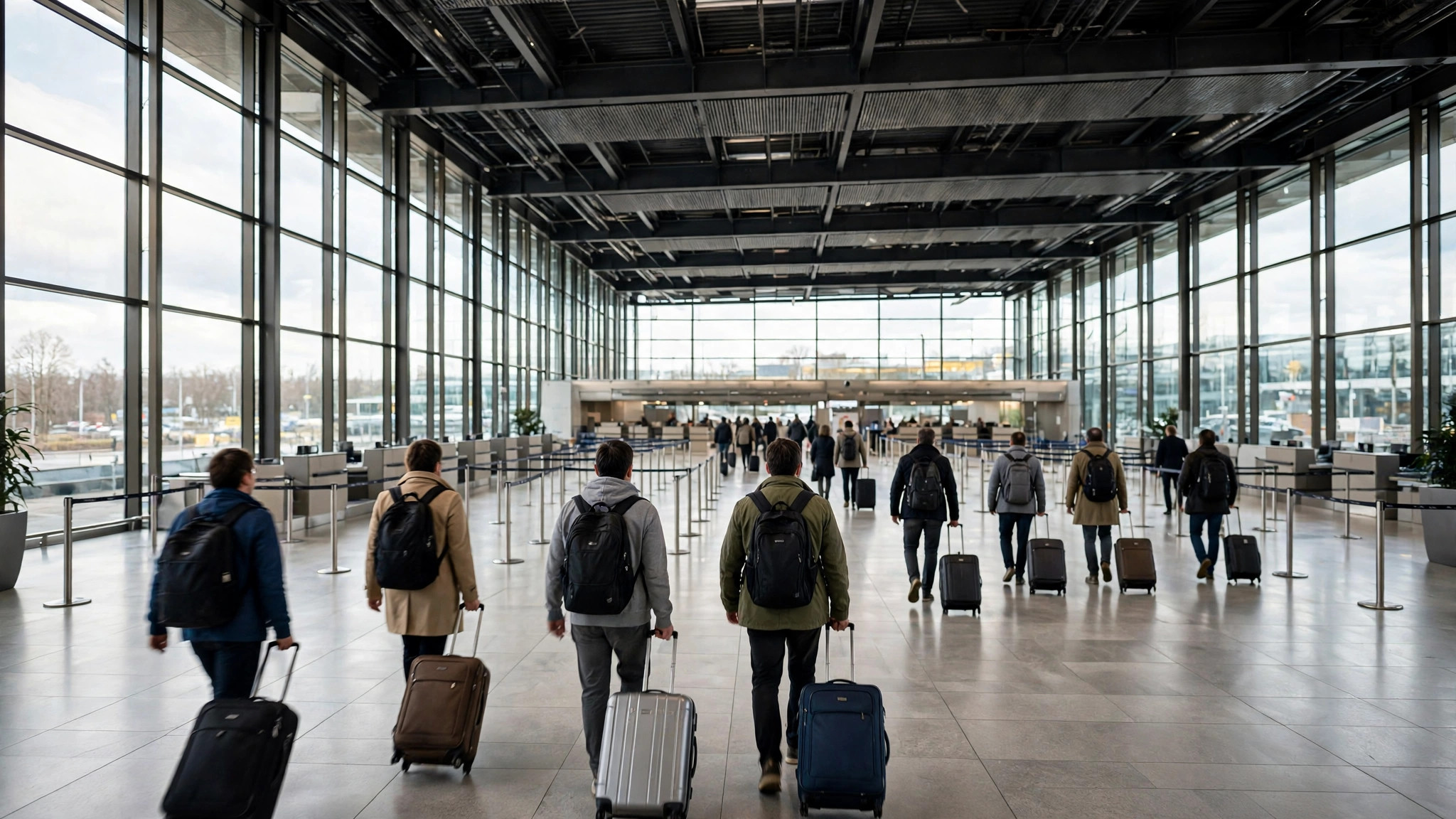
Airports run on banks of flights, and their crowds arrive in waves that are bigger, earlier and more anxious than any other transport crowd. So can you check how busy an airport is before you commit to a departure time from home? Yes — more completely than for almost any other place in this series, because airports offer three layers of crowd data at once: the terminal’s popular times graph on Google Maps, live busyness readings, and official security-wait information that no shop or station can match. This guide shows how to combine them, walks through the two most asked-about airports in the world, and answers the question every traveller actually means: how early should I really get there?
The habits here extend our transport series — railway station busiest hours and the live traffic check for the road to the airport, which is part of the same decision.
check how busy an airport is
Start with what exists. An airport on Google Maps is usually several listings, not one: the airport as a whole, individual terminals, and sometimes separate listings for departures, arrivals and specific concourses. Terminals matter, because crowds are terminal-specific — a hub’s international terminal can be in its morning bank while the domestic terminal next door is quiet. Where a terminal listing carries popular times, you get its historical curve by day and hour; where it carries live busyness, you get today’s reality on top.
Around the Maps data sits the official layer. Many large airports publish live or regularly updated security queue times on their own websites and apps, and aviation authorities in some countries aggregate them. Airlines add a third signal: your flight’s status, and the check-in deadline, frame the window in which the airport’s crowd becomes your crowd. No single layer is complete, but together they answer the question thoroughly.
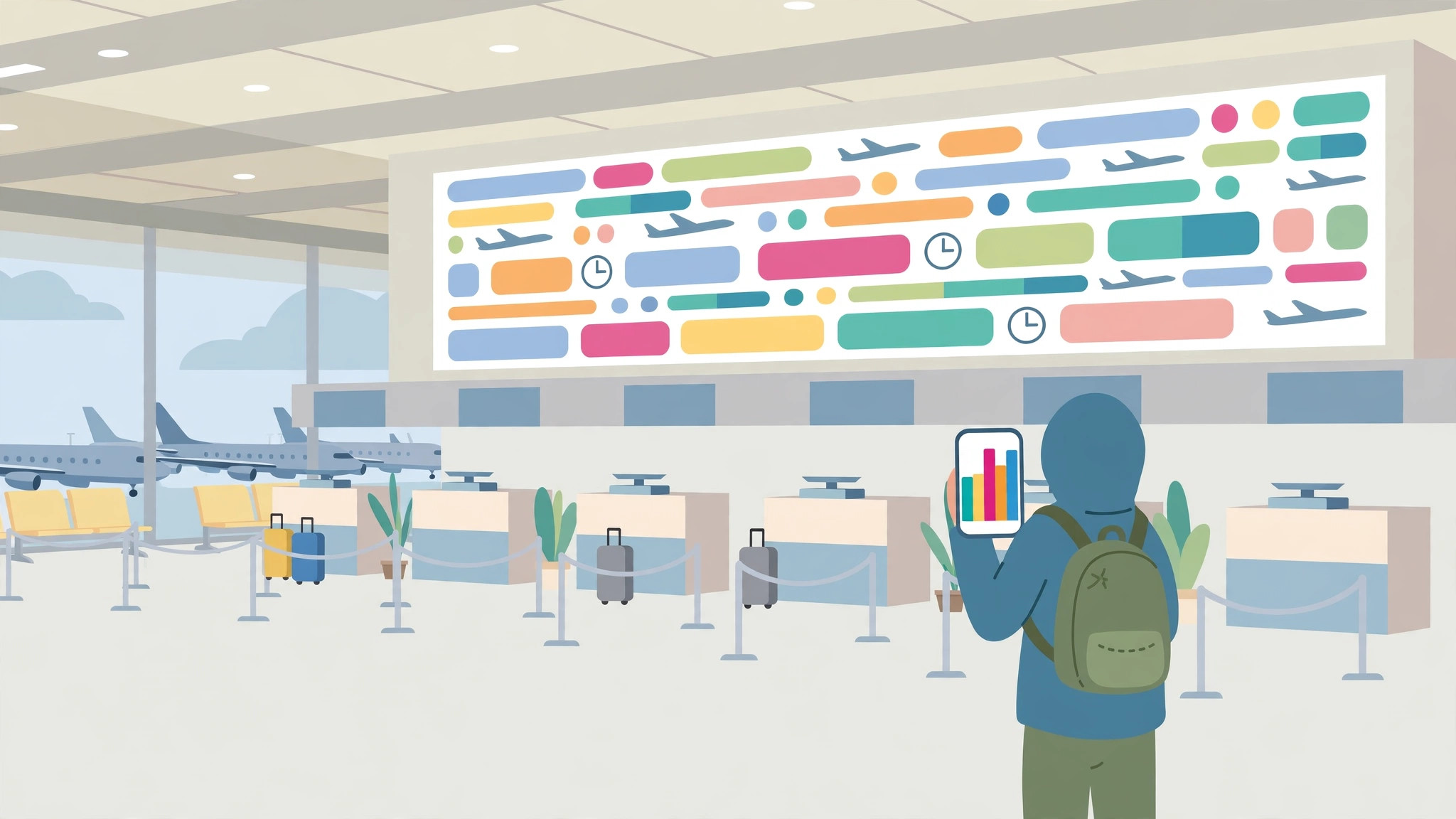
how to check how busy an airport is
The routine takes about two minutes, ideally the evening before and again before you leave:
- Open your terminal’s listing on Google Maps — the specific terminal, not the airport as a whole — and read its popular times curve for your travel day and your check-in hour.
- Check the live busyness reading on the day itself; holiday periods, weather and disruption days all push reality above the historical curve.
- Look up the official security wait for your airport, on the airport’s site or app, and note whether your terminal’s checkpoint is the slow one.
- Check your flight’s status and the airline’s check-in and bag-drop deadlines; a delayed flight reshapes your personal crowd completely.
- Finally, check live traffic on the airport approach roads — the airport crowd begins at the motorway exit, not at the terminal door.
The departure banks: when airports actually peak
Airport crowds follow the flight schedule’s banks. The first bank of the day is the most intense: early-morning departures, roughly 6 am to 9 am at most hubs, pull passengers into the terminal from 4 am onward, and check-in and security hit their daily maximum while the city is still asleep. A late-morning lull follows, then a midday bank at international hubs, and an afternoon-evening bank — roughly 4 pm to 8 pm — built from long-haul departures and the day’s last domestic waves.
Day of week bends the banks. Monday mornings and Friday afternoons carry the business peaks; weekends carry the leisure peaks; and the days around public holidays carry the year’s biggest crowds, when the first bank starts earlier and every bank runs full. This is pattern, not live data — the graph shows your airport’s version of it, and the live checks confirm which version of the day today is.
how busy is atlanta airport
The world’s busiest passenger airport, Hartsfield-Jackson Atlanta, is the extreme case of the hub pattern: banks of connecting flights arriving and departing in coordinated waves all day, so the central terminal areas peak again and again rather than once. Its domestic and international terminals have distinct rhythms, and the airport publishes security wait information that regulars check the way commuters check traffic. For a traveller, the lesson of Atlanta is to check at terminal level and to respect the connection banks — a departure timed inside a bank’s peak faces the airport at maximum pressure, while the lulls between banks are real and usable.
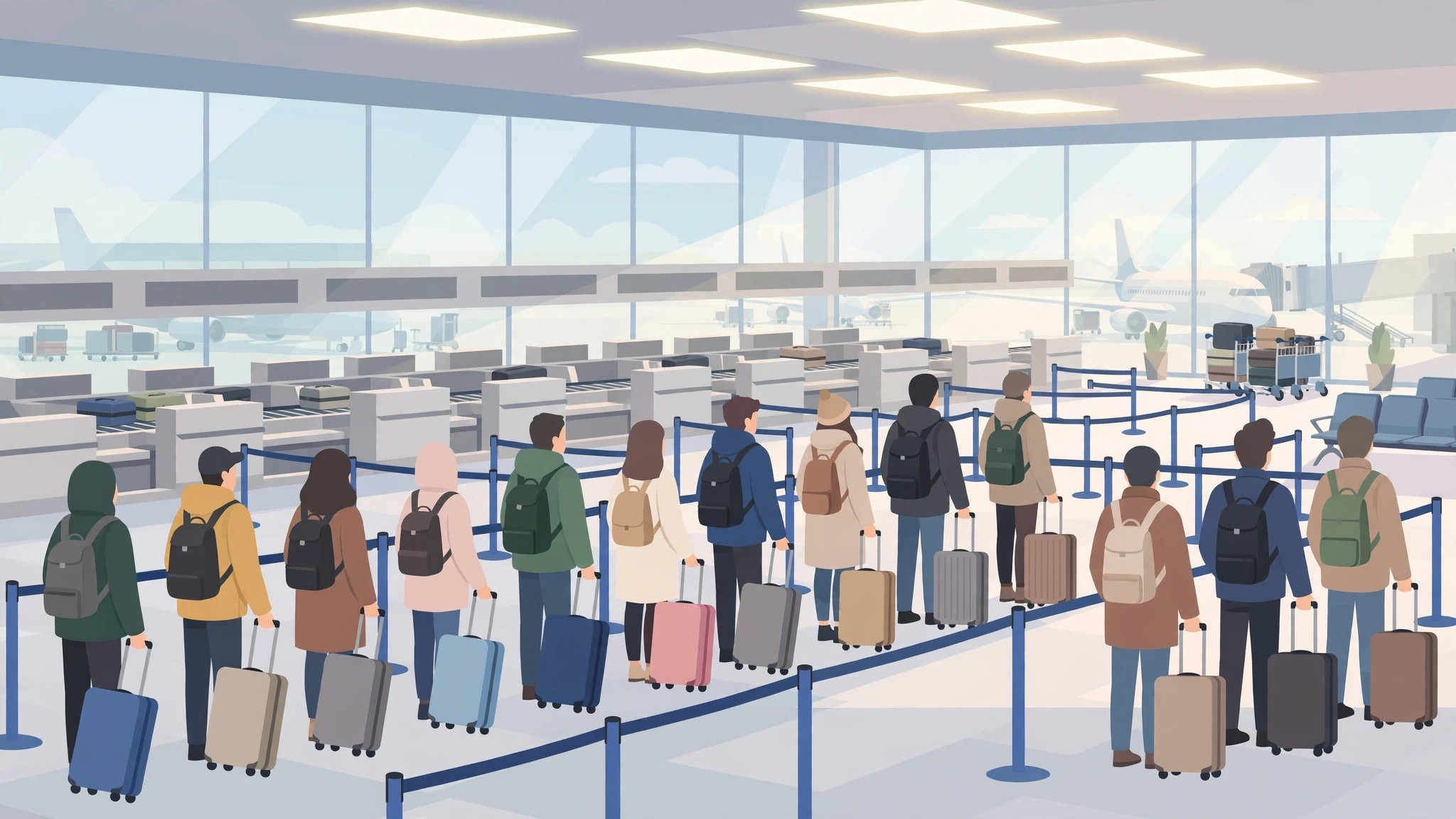
how busy is heathrow airport
London Heathrow runs four terminals with four personalities. The morning long-haul arrival bank fills the arrivals halls early; departures build through the morning; and each terminal’s curve reflects its airlines and routes — a terminal heavy with morning departures to one region peaks differently from the transatlantic terminal peaking toward midday and afternoon. Heathrow publishes live security wait times per terminal, and its slot-constrained schedule means peaks are sharp but predictable. As with Atlanta, the answer is never “Heathrow is busy” but “this terminal, this hour, this queue” — which is precisely what the combination of terminal graphs and official waits gives you.
how busy is my flight
The natural follow-up question is about the aircraft, not the airport — and here the honest answer is that Google Maps cannot tell you. Load factors are the airline’s data. What you can infer: flights in the peak banks and on peak days run fuller; the first flight of the day is the likeliest to depart on time, because the aircraft starts at your airport rather than arriving late from somewhere else; and the airline’s own app will tell you about seat maps, standby lists and rebooking options, which are the practical form of the question. An airport-crowd check plus the airline’s flight information covers everything a traveller can actually act on — and knowing the flight is full is, in the end, less useful than knowing its status.
How early should you really get to Orlando Airport (MCO)?
Orlando is the family-holiday airport, and its crowd has a signature: leisure passengers with more luggage, more children and less airport routine than the business hubs, arriving for the theme-park flight banks. Travellers’ reports from busy periods describe long, variable security queues, and the airport’s own standing advice for very busy periods is to arrive about three hours before a domestic departure — a buffer most airports do not ask for. The generalisable lesson from MCO is that “how early” is an airport-specific number, not a universal one: it depends on the passenger mix, the season — school holidays multiply Orlando’s peaks — and your own profile. A family with checked bags in August and a business traveller with a carry-on in February are visiting two different airports that share a code.
Build your arrival from the official advice for your airport, then adjust with the day’s live checks; our guide to busy areas near me covers finding the same data for the places around your trip.
Connections: the crowd between flights
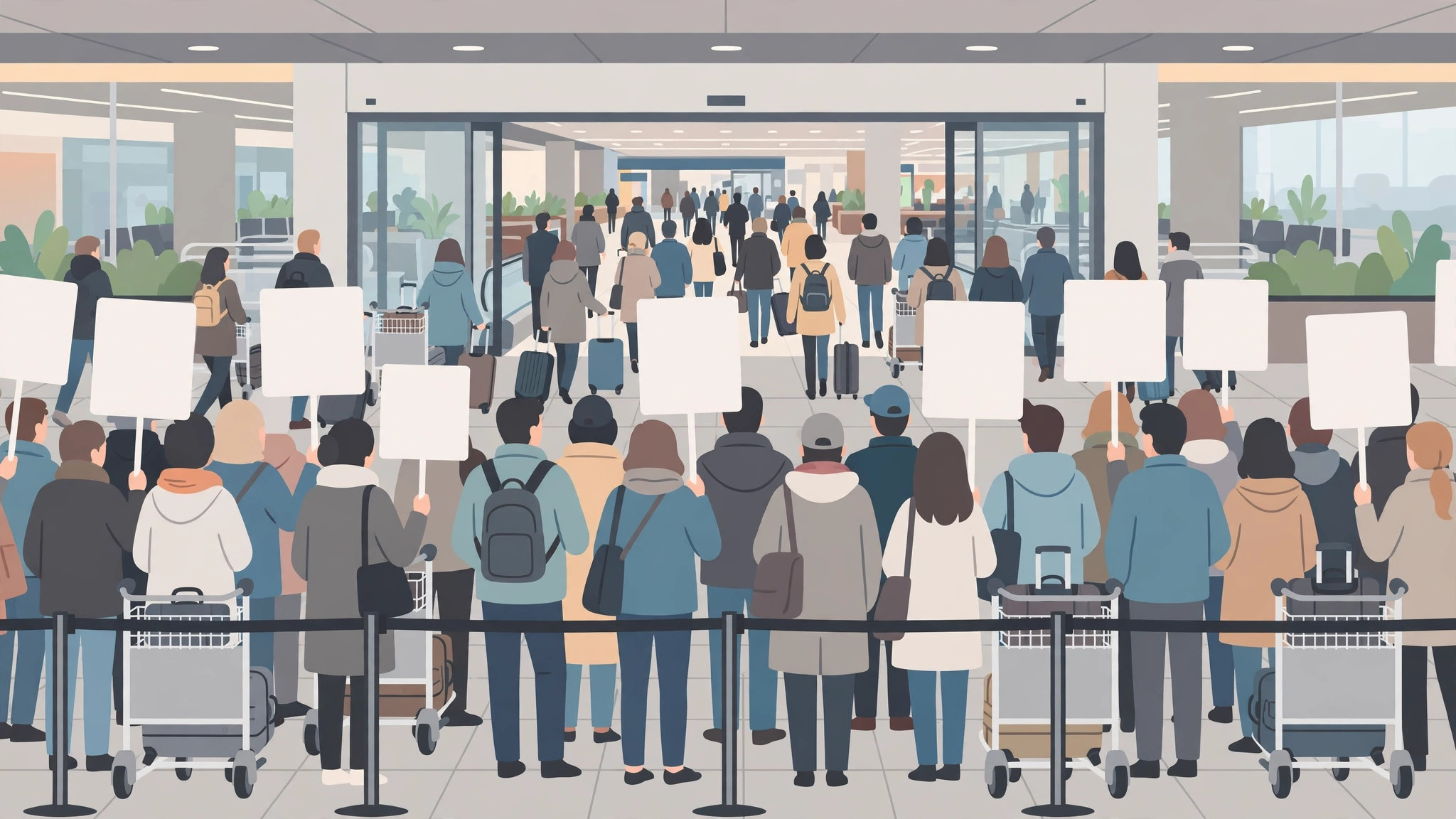
Hub airports add a crowd that neither departs nor arrives: the connecting passengers, who are airside for a few hours and invisible on any landside graph. Connection banks are the heartbeat of a hub — waves of flights land, their passengers flood the transfer corridors, food courts and departure gates, and the next wave takes off. This is why a hub terminal can feel packed at an hour when few local passengers are checking in: the crowd flew in. If you are connecting, your experience is set by the bank your flights sit in; a tight connection inside the same bank is a busy corridor but a short walk, while the terminal’s restaurants and seating peak exactly when you want them.
For originating passengers the connection wave matters at the shared points — security and immigration serve everyone at once. A departure timed just after a big arrival bank clears immigration faster than one timed inside it, a refinement the terminal graph hints at if you learn to read its double peaks.
Arrivals halls and the pick-up crowd
Departures get the attention, but arrivals write their own crowd story. The arrivals hall peaks in step with the landing banks, and its real bottleneck is outside: the pick-up kerb, the taxi queue and the car park exit, where every arriving passenger’s ride converges at once. Meeters and greeters multiply the hall’s crowd in leisure markets — in India, a single arriving passenger can be met by a family — and the pick-up wave for a big flight lasts about forty minutes from touchdown.
If you are being collected, the busyness logic runs in reverse: the kerb is calmest in the troughs between arrival banks, and a pick-up timed twenty minutes after landing — once your flight’s wave has drained — beats the scrum at the barrier every time. The airport-level graph, read for arrivals hours rather than departures, gives you those troughs.
Luggage, trolleys and the speed of the crowd
One reason leisure airports feel slower than their graphs is that their crowds move at trolley speed. Business hubs process passengers who travel light and know the choreography; holiday airports process families with buggies, oversized cases and grandparents, all moving through the same doors at half the rate. Two terminals with identical busyness bars can therefore produce very different security queues and check-in times. The busyness number counts people, not their luggage or their airport experience — which is why the buffer advice from family-heavy airports like Orlando runs long, and why your own travel profile, not the average passenger’s, should set your arrival time.

What Maps can’t tell you: the honest limits
Three things sit outside the busyness data entirely. Security queue length is related to terminal busyness but not identical to it — a terminal can be crowd-heavy in its restaurants while security flows, or quiet in the halls while one checkpoint crawls; that is why the official wait layer exists. Check-in queues belong to individual airlines and vary within the same terminal at the same hour. And disruption — weather, strikes, system failures — rewrites the day entirely, in ways only live status information captures. The US Transportation Security Administration publishes checkpoint information and travel guidance for US airports, and your airport’s own channels remain the authority on the day. The graph is for planning; the live layers are for travelling.
Conclusion
Can you check how busy an airport is? Yes — with the terminal’s graph for the plan, the live reading and official security waits for the day, and the airline’s information for your flight. Airports reward this homework more than any other destination in this series, because their crowds are the biggest and their penalties for bad timing — a missed flight — are the harshest. Read the banks, pick your buffer from the airport’s own advice, and the world’s busiest buildings become as predictable as a railway station.
