
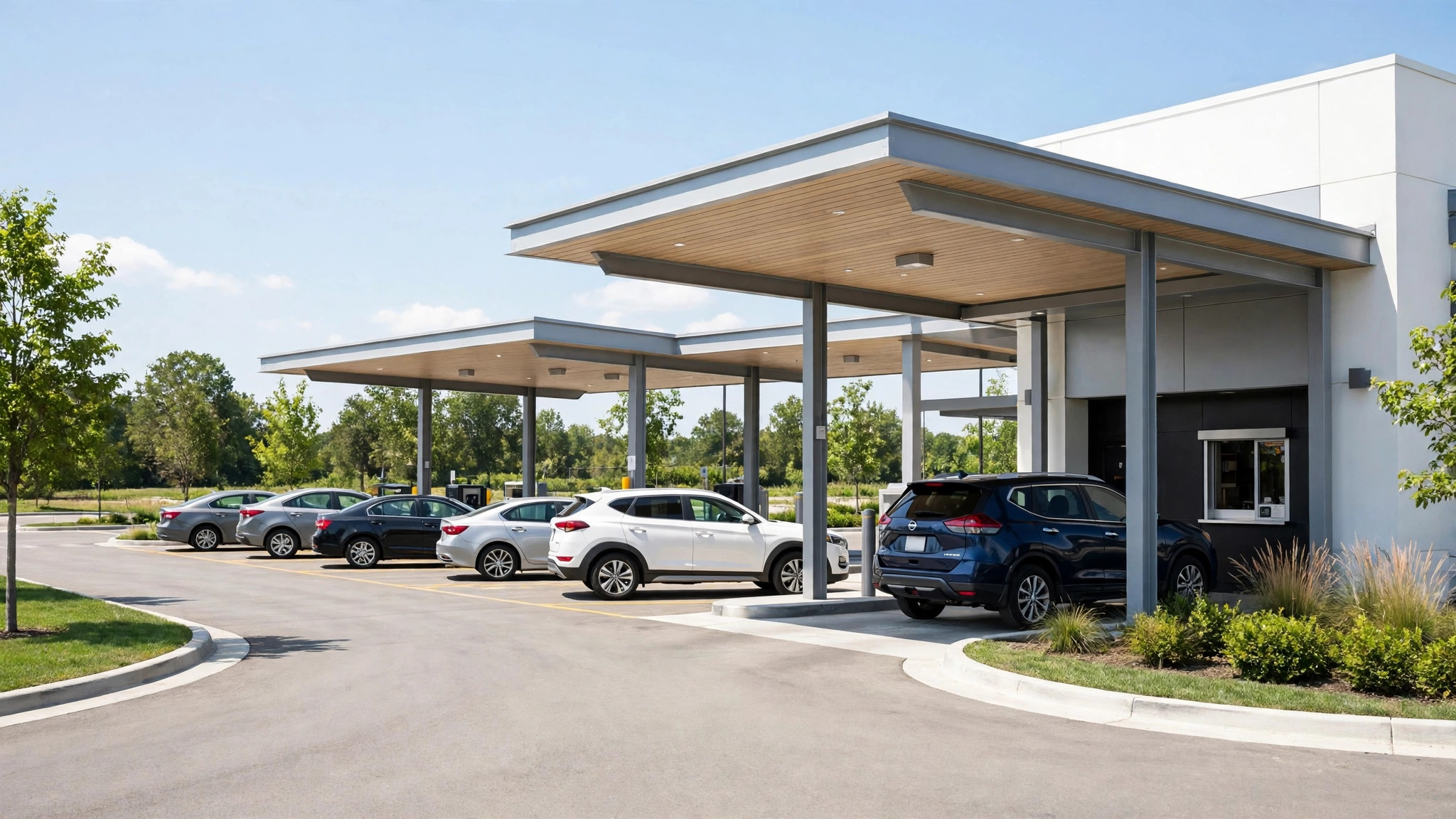
Fast food promises speed, and mostly delivers it — except for the ninety minutes a day when everyone arrives at once. Fast food lunch rush times are among the most predictable peaks in the world of busyness data: a sharp midday spike built by office lunch breaks, school schedules and the drive-thru queue, visible in advance on the Popular Times graph of every busy outlet. Know where the spike sits and you can order in the gap before it, or after it, and keep fast food fast.
This guide maps the lunch rush and its supporting peaks — the breakfast surge, the dinner wave and the late-night tail — and shows how to use Google Maps’ busyness signals and order-ahead apps to step around them. Patterns are typical; your local outlet’s graph, shaped by the offices, schools and roads around it, has the final say.
The lunch rush, hour by hour
The fast food lunch rush builds in three acts. The setup (11 AM–12 PM): early lunchers, shift workers and delivery drivers arrive in a steady stream. Queues are short, kitchens are fresh, and this is the last calm hour before the storm. The peak (12 PM–1:30 PM): the office lunch break lands all at once. Counters fill, the drive-thru wraps towards the road, and order times stretch to their daily maximum. In business districts the sharpest point is usually between 12:15 PM and 1 PM. The decay (1:30 PM–2:30 PM): the crowd halves, then halves again. By mid-afternoon most outlets are quiet enough that your food is cooked close to order.
Two amplifiers can stretch the peak. Outlets near schools absorb a second surge when students are released or allowed out at lunch, sometimes sharper than the office peak. Outlets on retail parks inherit the shopping crowd and peak later, blending lunch with the early-afternoon shoppers — the same crowd mechanics we map for mall food court busiest times, with faster turnover.
Why the drive-thru makes the rush worse
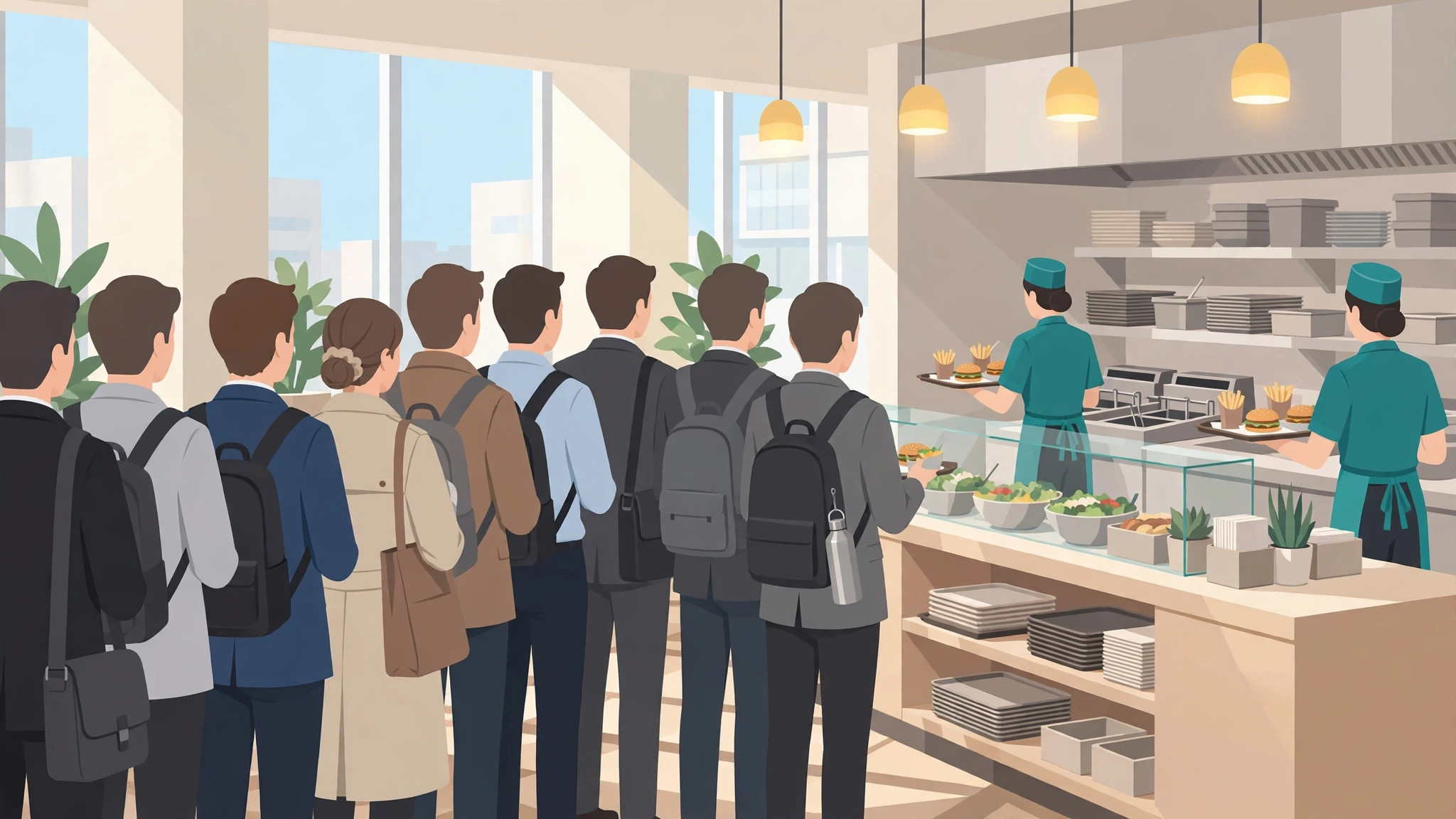
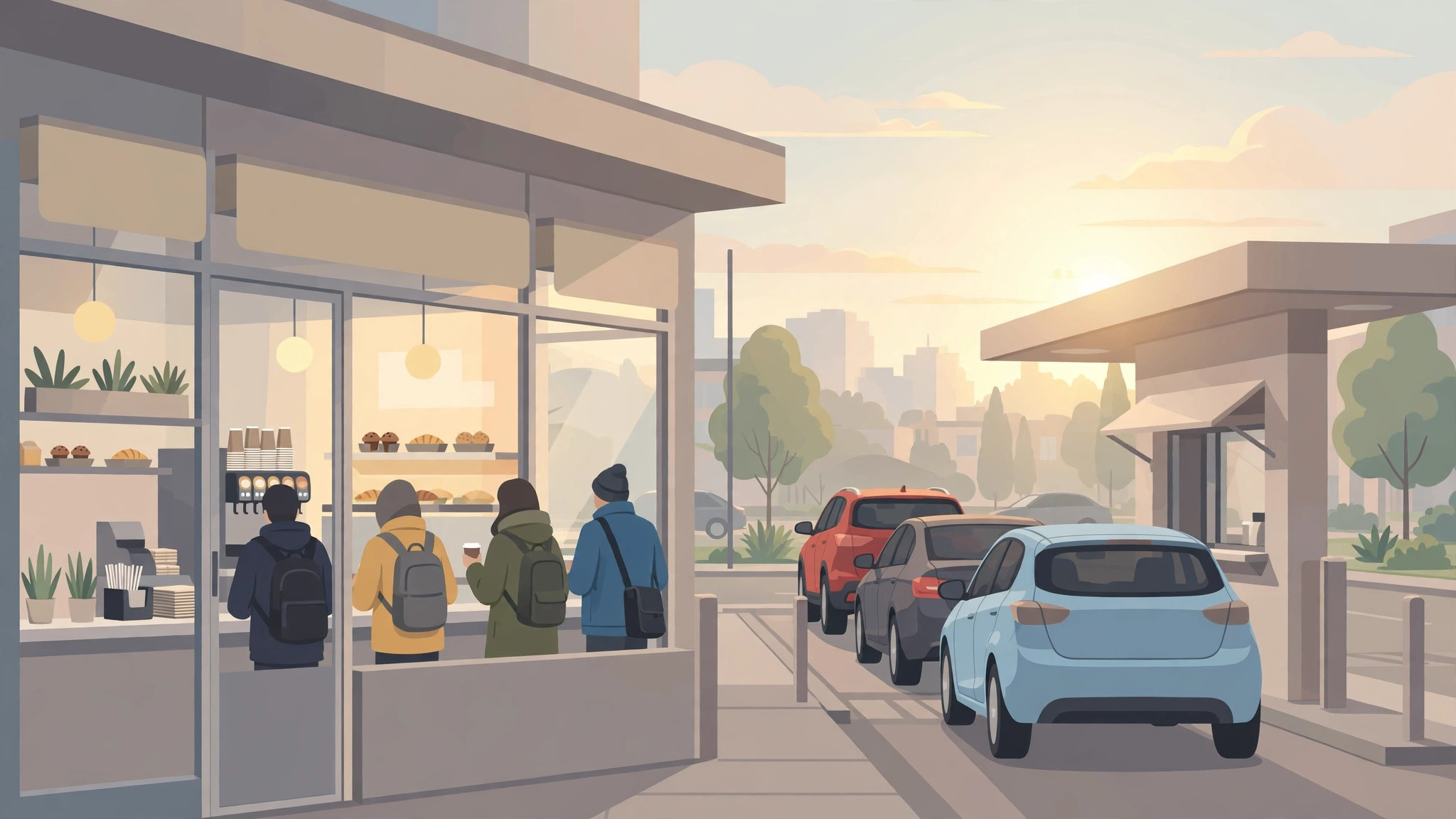
The drive-thru concentrates the rush into a single line of cars, and cars queue less efficiently than people. One large or slow order holds every car behind it; the line cannot split the way a counter crowd splits between tills and self-order kiosks. That is why the visible drive-thru queue at 12:30 PM can look catastrophic while the walk-in counter inside is merely busy.
Practical consequences follow. At the peak, walking in often beats driving through, even counting the walk from the car park. Self-order kiosks inside shorten the ordering step but not the kitchen step — your food still joins the same production queue. And the outlet’s Popular Times bar describes the location’s overall busyness, not each line separately, so at rush hour your own eyes on the two lines are data too. Park, look, then choose.
The other peaks: breakfast, dinner and late night
Lunch is the headline, but a fast food day has three supporting acts:
- Breakfast surge (roughly 7 AM–9 AM) at outlets with a breakfast menu — a commuter peak, sharp on weekdays, heavily drive-thru. It rarely matches the lunch maximum, but it surprises newcomers who assume mornings are quiet.
- Dinner wave (roughly 5:30 PM–7:30 PM) — families and commuters, broader and flatter than lunch, peaking on Fridays when cooking at home loses its appeal. In residential areas this can rival the lunch rush.
- Late-night tail — a long, low plateau rather than a peak, with mini-surges when cinemas, matches and nightlife empty. Outlets near entertainment districts feel these most.
Between the acts sit two golden gaps: mid-afternoon (2:30 PM–5 PM) and mid-evening (8 PM–10 PM) on weekdays — the hours when fast food is fastest, a pattern the graph of almost any outlet shows clearly. It is the same mid-afternoon lull that calms coffee shop busiest times, driven by the same workday clock.
Reading the graph for a fast food outlet
Fast food listings usually carry good busyness data because visit volumes are high. Three reading tips apply. First, compare the lunch bars across the week: the weekday spike and the weekend shape differ enough that Saturday’s “lunch rush” is really a shopping-day plateau. Second, use the live bar on event days — matches, concerts and school holidays bend the pattern, and the live reading catches it. Third, remember the graph reflects the whole location, including the restaurant seating: a full car park at 6 PM may be a dine-in family wave that barely touches the drive-thru, or the reverse. The background on how these signals are produced lives in our Busy Area pillar guide.
Order-ahead apps: skipping the line honestly
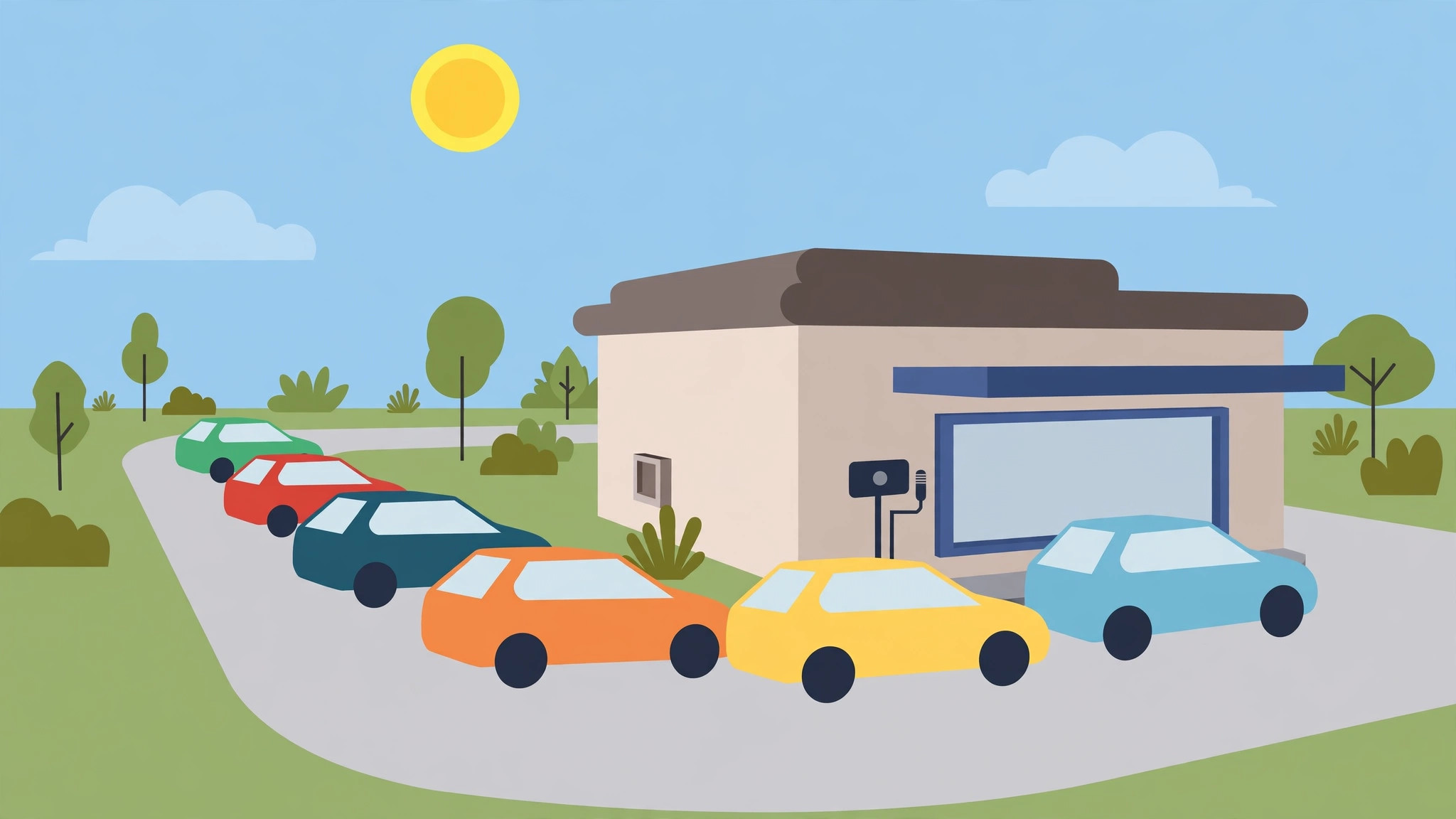
Every major chain’s app lets you order and pay before you arrive, and at rush hour this is the closest thing to a legal queue-jump — with one caveat. Your order enters the kitchen queue when it is placed (or when you check in nearby, depending on the chain), so ordering at 12:20 PM for a 12:30 PM pickup still puts your food behind the 12:20 PM rush. The skill is to order during the setup hour for pickup at the peak’s edge, or to trigger the order as the peak decays and arrive as it clears.
Delivery apps deserve a warning: at the lunch peak, your order competes with the counter, the drive-thru and every other delivery order, and courier availability tightens at exactly the same moment. Delivery at 12:30 PM on a weekday is the system’s maximum-stress point; ordering the same meal at 11:45 AM or 2 PM is a different, calmer product.
School-run and student outlets: a rush of their own
Outlets near schools and colleges run a private rush schedule that can dwarf the office pattern. Where students may leave at lunch, the peak compresses into the exact length of the lunch period and starts the minute the bell rings — a wall of arrivals rather than a build. Where they may not, the surge moves to the release hour, roughly 3 PM to 4 PM, when the same outlet that dozed through the afternoon suddenly runs a second lunch rush in miniature.
Term time versus holidays transforms these outlets. A location that is frantic at 12:30 PM in October can be sleepy at the same hour in the summer break, and its Popular Times graph — which averages both — will understate the term-time peak and overstate the holiday one. If your outlet sits near a school, weight the live bar more heavily than the graph during term time, and expect the first school week of the year to be the busiest of all, as new students discover it simultaneously.
Estimating the real wait from the queue
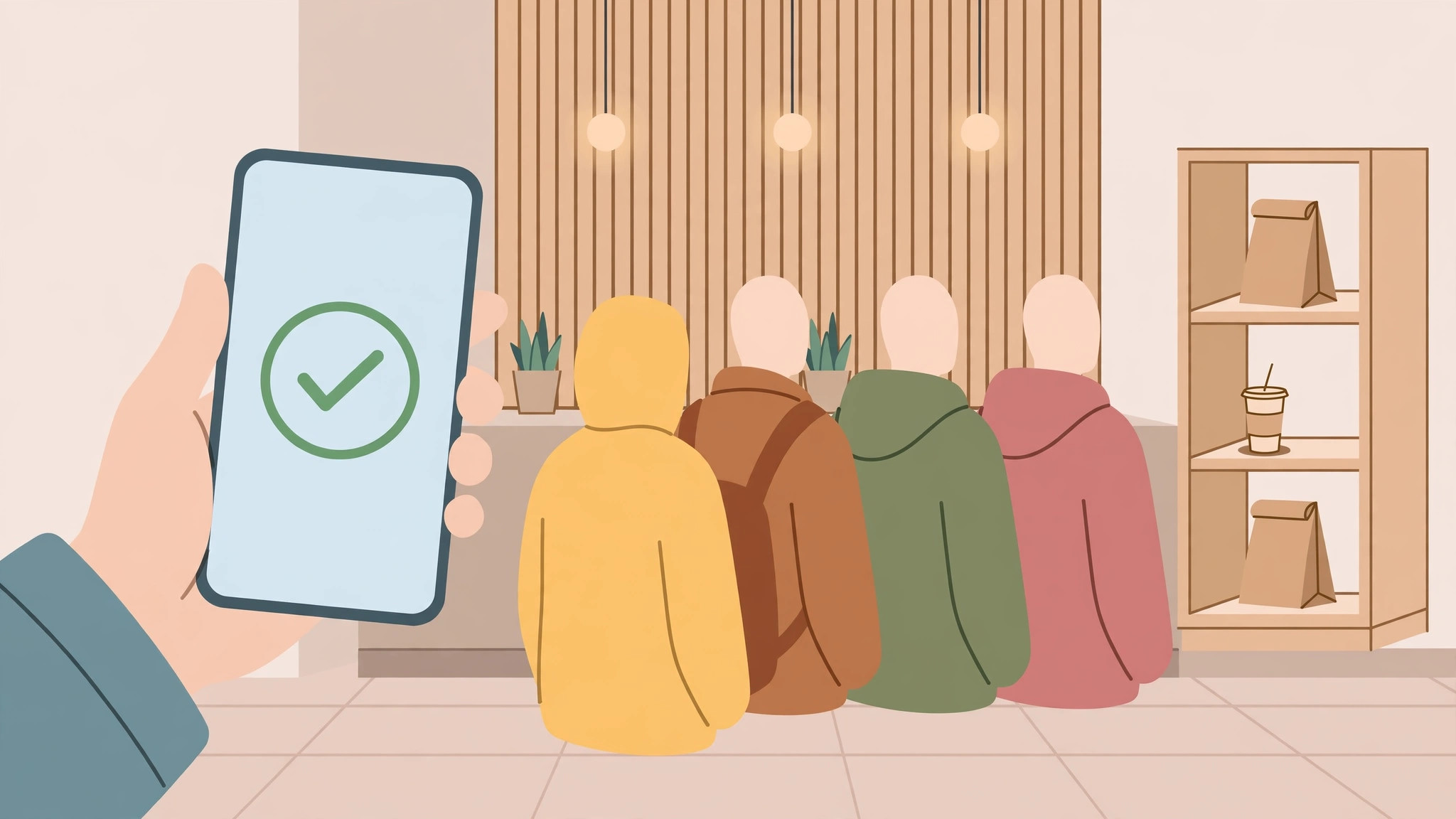
When you arrive without checking, you can still read the situation like a regular. The drive-thru line is the easiest to price: each car ahead of you represents an order, a payment and a handover, so a line that reaches the menu board or beyond during the peak is a serious commitment, while three cars at 2 PM is nothing. Inside, the better gauge is not the ordering queue but the collection crowd — the people waiting with receipts tell you how backed-up the kitchen is, which is the delay that matters after you have ordered.
Menu complexity stretches waits invisibly. A rush of simple orders moves fast; a rush containing large customised family orders moves slowly through the same headcount. This is why two visits with the same live label can feel different, and why your own peak-hour order — keep it standard, keep it ready — genuinely shortens your personal wait even when the room is full.
Finally, remember that the peak punishes indecision at the till more than anywhere else in daily life. The regulars you see sailing through a lunch rush are not lucky; they ordered the usual, paid contactless, and stepped aside. In a system built for throughput, being a high-throughput customer is the last honest shortcut.
The breakfast rush: the day’s first spike
Before the famous lunch rush, fast food runs a quieter first act. The breakfast window — roughly the two hours when commuters and school runs overlap — builds a sharp, short spike at outlets near stations, offices and school routes: coffee, breakfast wraps and hash browns ordered by people who are all, without exception, in a hurry. It clears as suddenly as it forms, leaving the mid-morning valley that lasts until the lunch build. Outlets on leisure routes skip it almost entirely, which is why two branches of the same chain can open to different worlds. If your morning stop is a commuter-corridor outlet, the same shoulder logic as lunch applies — ten minutes before the hour, not on it, is the difference between a queue and a counter.
Frequently asked questions
What is the single busiest fast food hour?
On weekdays in office areas, the hour from about 12:15 PM. Fridays add a dinner wave that can match it in residential areas.
Is the drive-thru always slower than going inside at lunch?
Not always, but usually at the peak — the single line of cars cannot split around a slow order the way a counter crowd can. Look at both lines before choosing.
Do fast food outlets show wait times on Google Maps?
Some show a busyness-based indication during busy periods, and most show Popular Times and live busyness. Google explains the thresholds for these features in Google Maps Help — the short version is that busy outlets qualify easily.
When is fast food genuinely fastest?
Weekday mid-afternoon and mid-evening. Your food is cooked nearest to order, the lines are shortest, and the graph will confirm it for your outlet.
A note for shift workers and crews
One group experiences the rush from the other side of the counter, and their habits are worth copying. Crew members eat their own meals in the setup hour or the decay, never at the peak, and they plan breaks around the graph their store actually follows rather than the one the rota assumes. If you work shifts near an outlet — hospital staff, drivers, retail workers — the same logic applies to your breaks: a meal taken at 11:40 AM or 2:10 PM is calmer, hotter and faster than the identical meal at 12:40 PM, and your break is short enough that the difference is the meal.
Conclusion
Fast food lunch rush times are a spike you can set your watch by: building from 11 AM, peaking between noon and 1:30 PM, gone by mid-afternoon. Read the graph, respect the drive-thru’s single-line trap, order ahead into the edges of the peak, and use the golden gaps on either side. The food is identical at 11:50 AM and 12:30 PM — only the wait is different.
