

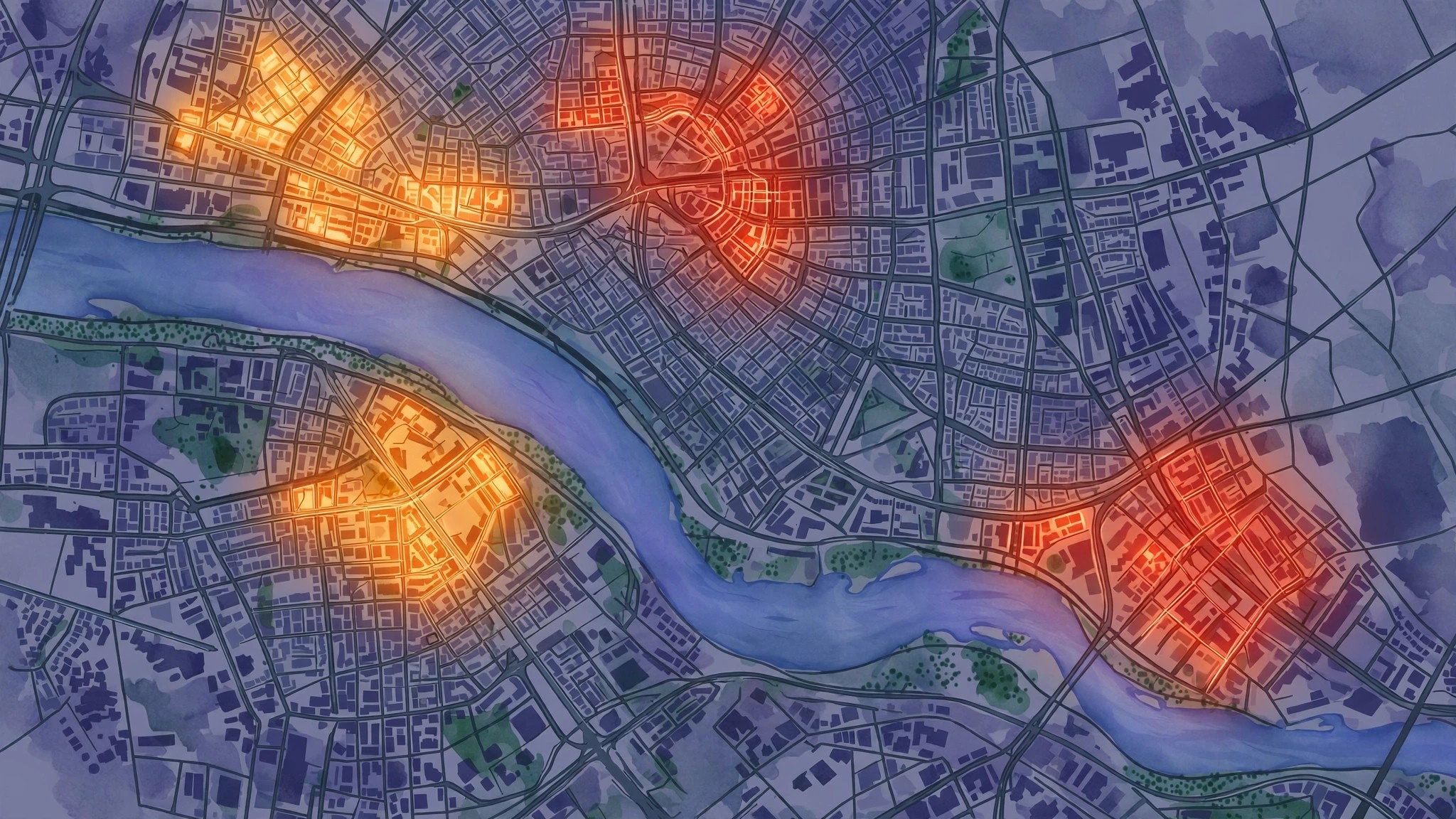
Sometimes the question is not about one shop but about the whole map around you. Where is the city alive right now? Which market district is buzzing, which streets are calm, and where should a visitor head — toward the crowd or away from it? Google Maps answers at the neighbourhood level with its area busyness feature, outlining the busiest zones in orange and naming them with a “Busy Area” label.
This guide shows you how to find busy areas around you, how to read the label correctly, and — just as usefully — how to invert the search and locate the quiet pockets the crowds have missed. Most readers arrive with one plain query — busy areas near me — and the sections below turn that query into a routine you can run anywhere, at any hour. It builds on our pillar guide to the Busy Area feature on Google Maps, adding the practical, near-me routines: discovery, comparison and escape.
busy area
A “busy area” in Google’s vocabulary is a small geographic cluster — a market, a high street, a food district, a station quarter — whose many places are simultaneously at or near their busiest. No single shop creates it; it is the collective hum of dozens of listings’ live data crossing a threshold together. When that happens, Maps draws a soft orange boundary around the cluster and attaches the label, turning an invisible pattern into something you can plan around.
The boundary is approximate by design. It traces the streets where footfall concentrates, not a legal district line, and it breathes through the day: a market district may earn the outline from 11 a.m. to 2 p.m., lose it in the afternoon lull, and win it back for the evening shopping wave. Treat the label as a weather system on the map — real, useful, and always in motion.
Tapping the label opens a summary of the area: its name, how busy it is now, and the popular places within it, each of which leads down to its own listing and Popular Times graph. That drill-down — area first, listing second — is the core skill this article practises.
busy area near me
To find the busy areas nearest you, open Google Maps, centre the map on your location, and zoom to the level where neighbourhoods, not the whole city, fill the screen. At that zoom, any district currently buzzing shows its orange outline and label. Pan slowly in each direction: in a large Indian metro at midday you might find a shopping district flagged to the north, a food street glowing to the east, and nothing at all to the west — a live map of where the city’s day is happening.
Two practical notes. First, timing: the search only works in the present tense. At 8 a.m. almost nothing is labelled; repeat the same pan at 1 p.m. or 7 p.m. and the map lights up. Second, zoom discipline: too far out and the labels surrender to city names; too far in and you are reading individual streets. The sweet spot is the zoom where you can see roughly two to four square kilometres.
If nothing near you is labelled, that is information too — your surroundings are below the buzz threshold right now, which for errands is usually good news.
busy near me
Most “busy near me” searches are really one of two opposite searches wearing the same words. The buzz-seekers — visitors, event-goers, street-food hunters, new café owners scouting locations — want the city’s energy and use the label as a recommendation engine: where locals gather is where the food is good, the shopping is serious and the evening will be lively.
The buzz-avoiders — parents with toddlers, elderly shoppers, anyone with a hospital visit or a tight schedule — run the identical search to build an exclusion map. A labelled district means parking scarcity, pavement crowds and queues spilling out of popular shops. Their winning move is to shop one district over, in the unlabelled streets where the same chains run the same stores at half the crowd.
Decide which searcher you are before you open the map. The label itself is neutral; your itinerary gives it a sign.
busy areas
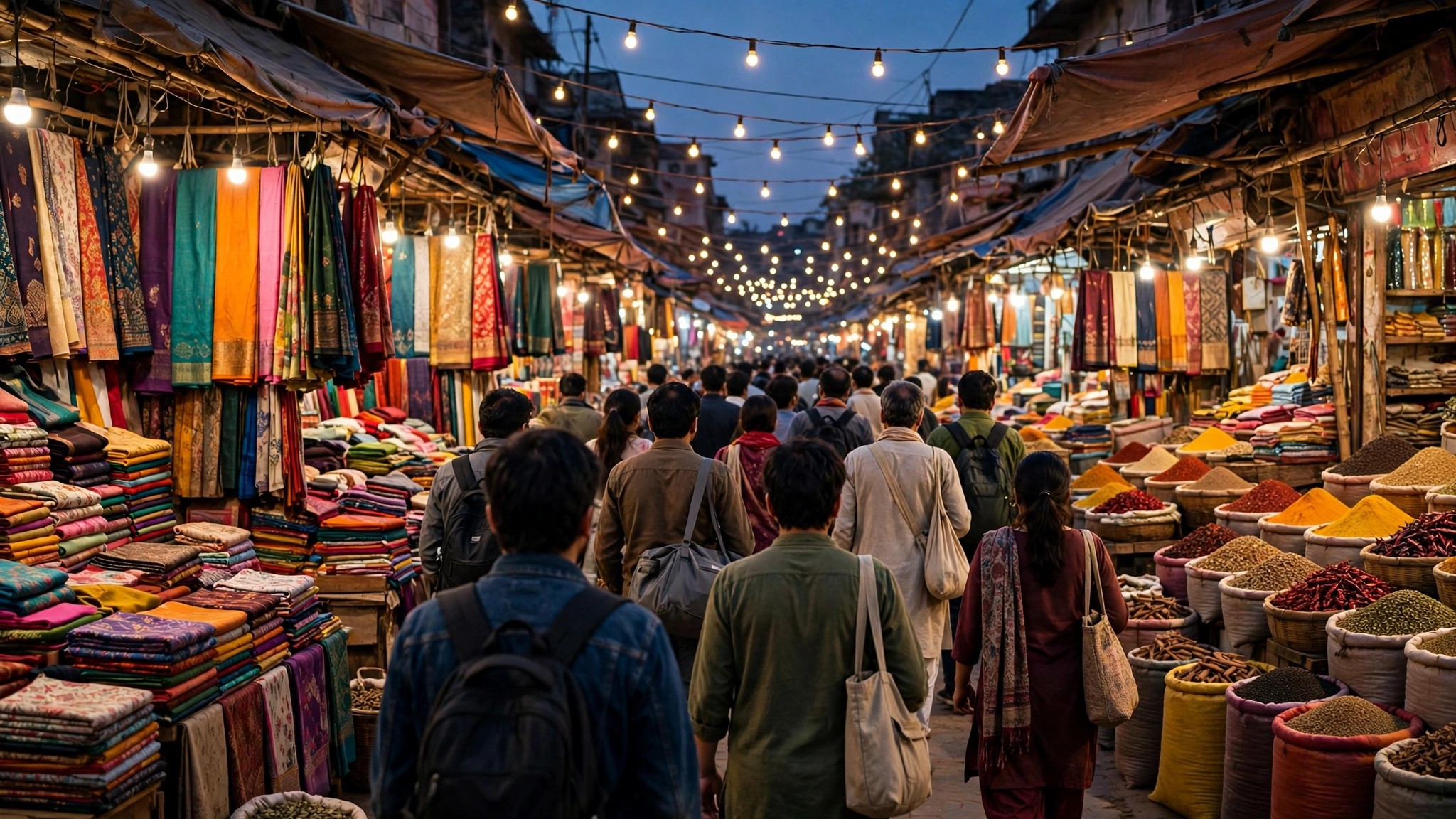
Read across a whole city, the busy areas form a diary of its day. Transport quarters flare at the commuter peaks and go dark by mid-morning. Market districts own the middle of the day, peaking brutally on weekends and festival eves. Office districts spike at lunch and die at dusk, while entertainment districts do the opposite, earning their outlines only after dark. Temple and pilgrimage quarters keep their own calendar, blazing on festival mornings that the rest of the city treats as ordinary weekdays.
Learning your own city’s diary is a genuine life upgrade. You start to route the weekly shop against the market peak, schedule the bank visit inside the office district’s dead hour, and meet friends in the food street just before its label appears, when tables are free but the kitchens are already firing. The map has been publishing this diary for years; regular readers plan by it without thinking.
The diary also scales with the city. In a metro, half a dozen districts may hold labels simultaneously at 7 p.m., and the skill is choosing between competing centres of gravity. In a mid-size city, one commercial heart does nearly all the buzzing, and the label’s appearance and disappearance track that single district’s rhythm like a tide table. In a small town, the label may ignite only on market day or during a festival — which makes those rare appearances the most informative of all, because they mark the days the town’s ordinary patterns are genuinely suspended.
busy places
Inside any busy area, the crowd is never evenly spread — a handful of anchor places generate most of it. Tapping the area summary surfaces them: the anchor supermarket, the famous mithai shop, the multiplex, the station entrance. Each carries its own live bar and typical graph, and checking the top two or three tells you whether the area’s buzz is a broad hum or a single magnet’s doing.
That distinction changes your tactics. A one-magnet area is easy to enjoy: visit anything except the magnet and the district feels lively but manageable. A broad-hum area — a festival street, a sale weekend at the mall cluster — has no quiet interior; if you want calm, you must leave the outline, not negotiate with it.
When the magnet is your destination, its own graph rules your timing, and the area label demotes to a parking forecast. Our explainer on the busy area icon on Google Maps shows how these summaries and magnets are presented when you tap through.
crowded areas
Not every crowded area earns the label, and knowing the exceptions sharpens your judgement. The feature needs enough instrumented places reporting live data, so a dense but digitally quiet neighbourhood — an old-city bazaar of tiny shops with thin listing coverage, say — can be genuinely packed while showing nothing on the map. Crowds also concentrate in single venues: a stadium emptying 40,000 people into quiet streets creates a surge no area label captures, because the surrounding places are closed or calm.
Construction zones, protest routes and festival processions create moving crowds that no static outline describes. For these, the traffic layer and local reports outperform the busyness layer. Use the label as the city’s ambient crowd meter, and keep your eyes for the exceptions — that combination is what locals actually do.
find busy areas google maps
The complete discovery routine, compressed:
- Open Maps and centre on the area you care about — yours, or the district you are travelling to.
- Set the neighbourhood zoom (a few square kilometres on screen).
- Pan in a slow grid, noting every orange outline and label.
- Tap each label for the area summary: current status plus its busiest places.
- Drop into the two or three listings that matter to you and read their graphs and live bars.
- Choose: enter the buzz, skirt it, or schedule around its hours.
Travellers can run the same routine from another city entirely — the labels describe the destination’s present, not yours — which makes hotel-neighbourhood selection and evening planning remarkably concrete from a thousand kilometres away.
how to find busy areas on google maps
Troubleshooting, briefly, for when the routine finds nothing. Confirm you are in the Maps app or full desktop site — embedded or lite map views omit the layer. Confirm the hour: labels are creatures of peaks, so an early-morning search legitimately returns an empty map. Confirm the zoom: repeat the pan one level closer in. And confirm the district’s nature: purely residential suburbs, industrial estates and sparse rural stretches rarely qualify at any hour — the feature lives where shops, eateries and attractions cluster.
If all four check out and the map is still blank at a peak hour, you have learned something true and useful: right now, your corner of the city is calm. Plan accordingly — and enjoy being the only one who checked. For how the whole label system is calculated and when it triggers, our comparison of area busyness vs Popular Times goes one level deeper, and Google’s own Business Profile Help documentation describes the visit data underneath it all.

Finding the quiet pockets instead
Everything above inverts beautifully. The same map that flags the buzz also certifies the calm: districts with no outline at a peak hour are, by the feature’s own strict threshold, genuinely below their buzzing point. For a quiet working café, look one district beyond the label’s edge — close enough to feel the city’s energy, far enough that the lunch wave breaks before it reaches you. For a peaceful weekend shop, find the chain store whose neighbourhood never earns the label at all, and make it your branch.
Errand-runners can chain the trick: order your stops so the unavoidable busy-area visit happens at the start of its peak rather than the middle, then retreat to unlabelled districts for everything else. Photographers and flâneurs run the opposite chain, arriving at each district just as its label ignites. The map does not care which game you are playing. It simply shows you the crowd’s geography, live — the rest is itinerary.
Frequently asked questions
Why does my friend’s map show a Busy Area where mine shows nothing?
Usually zoom or timing — the label appears only within a zoom band and only while the area is at peak. Match zoom levels and check at the same moment and the maps will agree.
Can I get notified when an area becomes busy?
Maps does not offer busyness alerts for areas. The habit substitute is simple: check the map at the same peak hour on a similar day before your trip.
Do busy areas show in every city?
They appear wherever enough qualifying places cluster and report live data — all major Indian metros and most large cities worldwide, thinning out in smaller towns.
So the next time you type busy areas near me into your phone, remember what the map is really offering: not a trivia answer, but the city’s live geography of crowds, drawn from the crowd itself. Whether you run toward the orange outlines or deliberately around them, you are planning with information your fellow travellers mostly never look at — and that small edge, repeated weekly, is worth hours.
