
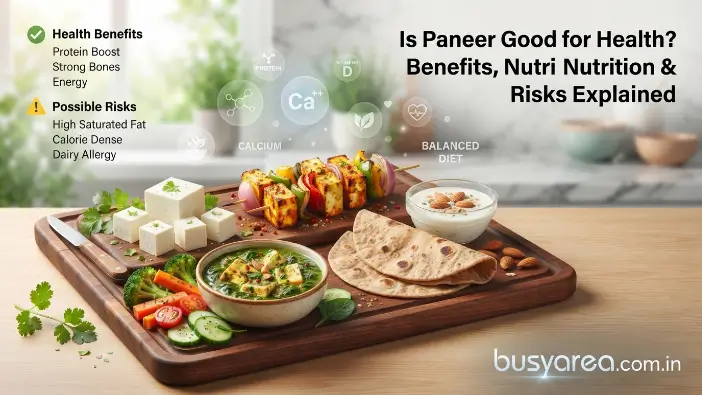
Welcome to Busy Area. If you’ve ever wondered “is paneer good for health,” you’re not alone. Paneer is one of the most popular dairy products in Indian cuisine and is widely appreciated for its rich taste, versatility, and nutritional value. From traditional curries to grilled snacks and healthy salads, paneer is a staple in many households. However, with growing awareness about healthy eating, many people are curious whether this beloved vegetarian protein truly deserves a place in a balanced diet. Understanding its nutritional profile and health effects can help you make smarter dietary choices.
The good news that paneer is good for health is a question with a largely positive answer when paneer is consumed in moderation and prepared in healthy ways. It is naturally rich in paneer protein, calcium-rich foods, vitamin B12, and other essential nutrients that support muscle growth, bone strength, and overall well-being. At the same time, because paneer contains saturated fat and calories, factors such as portion size, cooking method, and individual health conditions also matter. In this guide, you’ll learn everything about paneer nutrition, its health benefits, possible drawbacks, and the best ways to include it in your diet for maximum health benefits.
What Is Paneer?
Before understanding that paneer is good for health, it’s important to know what paneer actually is. Paneer is a fresh, non-aged cheese made by curdling milk with a natural acid such as lemon juice or vinegar. Unlike many other cheeses, it does not require fermentation or rennet, making it suitable for most vegetarians. Its soft texture, mild flavor, and impressive paneer nutrition make it a staple ingredient in Indian cuisine. Because it is rich in vegetarian protein, calcium, and other essential nutrients, paneer has become a popular choice for people looking to enjoy nutritious and satisfying meals.
How Paneer Is Made
Paneer is traditionally prepared by heating fresh milk until it reaches a gentle boil and then adding an acidic ingredient such as lemon juice, vinegar, or citric acid. This causes the milk to separate into solid curds and liquid whey. The curds are collected in a cheesecloth, rinsed to remove any acidic taste, and pressed under a heavy weight to form a firm block. Once cooled, the paneer is cut into cubes and is ready to be used in a variety of dishes.
One of the biggest advantages of homemade paneer is that it contains no artificial preservatives or additives. You can also control its nutritional value by choosing whole, low-fat, or skimmed milk depending on your dietary needs. This simple preparation method helps retain valuable nutrients, making paneer a wholesome addition to a balanced diet. If you’re wondering is paneer is good for health, the way it is made is one of the reasons it is considered a healthy and minimally processed dairy food.
Nutritional Profile
Paneer is well known for its impressive nutritional value, making it one of the most nutrient-dense dairy products available. It is naturally rich in paneer protein, healthy fats, calcium, phosphorus, vitamin B12, riboflavin, selenium, and potassium. These nutrients work together to support muscle repair, bone strength, nerve function, and overall health. Since paneer is relatively low in carbohydrates, it also fits well into many balanced and high-protein eating plans.
In addition to being an excellent source of protein, paneer contains casein, a slow-digesting milk protein that provides a steady release of amino acids throughout the day. This makes it especially beneficial for active individuals, growing children, and older adults who need consistent protein intake. The combination of calcium-rich foods and high-quality protein is one of the main reasons nutrition experts often recommend paneer as part of a healthy diet, further supporting the answer to ” Is paneer good for health.
Why Is Paneer Popular Among Vegetarians?
Paneer is one of the most valuable vegetarian protein sources because it provides all nine essential amino acids that the body cannot produce on its own. Many plant-based foods contain incomplete proteins, but paneer offers a complete protein profile, making it an excellent choice for vegetarians looking to meet their daily protein requirements. It is also a natural source of vitamin B12, a nutrient that is commonly lacking in vegetarian diets.
Another reason paneer is so popular is its incredible versatility in the kitchen. It absorbs the flavors of herbs and spices while maintaining its shape during cooking, making it suitable for curries, salads, sandwiches, wraps, stir-fries, and grilled dishes. Whether your goal is weight management, muscle building, or simply following a balanced diet, paneer can easily fit into a wide variety of meals. Its nutritional benefits, convenience, and delicious taste all contribute to why so many people searching for ” is paneer good for health discover that it is one of the best dairy-based protein options available.
Read Also: is dragon fruit good for health
Is Paneer Good for Health?

The simple answer to is paneer is good for health is yes; for most people, paneer can be a nutritious addition to a balanced diet when eaten in moderation. It is packed with high-quality protein, calcium, healthy fats, and essential vitamins that support overall well-being. However, like any food, its health benefits depend on factors such as portion size, cooking method, and individual health conditions. Understanding both its advantages and limitations can help you enjoy paneer nutrition while maintaining a healthy lifestyle.
What Makes Paneer Nutritious?
One of the biggest reasons paneer is good for health and receives a positive response is its impressive nutritional composition. Paneer is a rich source of high-quality protein, which contains all nine essential amino acids required for muscle repair, tissue growth, and overall body function. It is also packed with calcium and phosphorus, two minerals that work together to build strong bones and teeth while supporting healthy muscle contractions and nerve function.
Beyond protein and minerals, paneer contains important nutrients such as vitamin B12, riboflavin, selenium, and healthy fats that contribute to energy production, brain health, and immune function. Because paneer is naturally low in carbohydrates, it fits well into many balanced eating patterns, including high-protein and lower-carbohydrate diets. Its combination of essential nutrients makes it one of the most valuable vegetarian protein options available.
When It May Not Be the Healthiest Option
Although is paneer good for health is generally answered with a yes, there are situations where paneer may not be the healthiest choice. Traditional paneer made from whole milk contains a significant amount of saturated fat and calories. Consuming large portions regularly or eating paneer prepared with butter, cream, or excessive oil may contribute to weight gain and higher saturated fat intake, particularly if your overall diet is already high in calories.
People with certain medical conditions should also consume paneer carefully. Individuals with high cholesterol, heart disease, chronic kidney disease, or dairy allergies may need to limit or avoid paneer based on their healthcare provider’s advice. Choosing low-fat paneer, controlling portion sizes, and using healthier cooking methods such as grilling, baking, or air-frying can help maximize its nutritional benefits while minimizing potential health risks.
Nutritional Value of Paneer
Understanding the nutritional composition of paneer is essential when deciding is paneer is good for health. Paneer is a nutrient-dense dairy product that provides an excellent balance of paneer protein, healthy fats, vitamins, and minerals. It is particularly valued for its high protein and calcium content, making it a popular choice among vegetarians, fitness enthusiasts, and people looking to maintain strong bones and muscles. The exact nutritional values may vary depending on whether the paneer is made from whole milk, toned milk, or low-fat milk, but it remains one of the most nutritious vegetarian protein sources available.
Nutritional Value of Paneer Per 100 g
| Nutrient | Approximate Amount | Health Benefit |
| Calories | 265 kcal | Provides energy for daily activities and body functions. |
| Protein | 18 g | Supports muscle growth and tissue repair, and keeps you feeling full. |
| Total Fat | 21 g | Supplies energy and helps absorb fat-soluble vitamins. |
| Saturated Fat | 13 g | Should be consumed in moderation as part of a balanced diet. |
| Carbohydrates | 3–4 g | Low carbohydrate content makes paneer suitable for many eating plans. |
| Calcium | 450–500 mg | Strengthens bones and teeth while supporting muscle and nerve function. |
| Vitamin B12 | 0.8–1.2 mcg | Helps maintain healthy nerves, brain function, and red blood cell production. |
| Phosphorus | 300 mg | Works with calcium to maintain strong bones and supports energy production. |
| Potassium | 100–120 mg | Supports healthy blood pressure and proper muscle function. |
| Riboflavin (Vitamin B2) | 0.2–0.3 mg | Helps convert food into energy and supports healthy skin and eyes. |
| Selenium | 8–12 mcg | Acts as an antioxidant and supports immune and thyroid health. |
Health Benefits of Paneer
If you’re wondering is paneer is good for health, its wide range of nutritional benefits provides a clear answer. Paneer is a powerhouse of protein, calcium, phosphorus, and essential vitamins that support overall health and well-being. Regular consumption in moderation can contribute to stronger muscles, healthier bones, improved satiety, and better energy levels. As one of the best vegetarian protein sources, paneer fits well into balanced diets for children, adults, athletes, and older individuals. Choosing healthier cooking methods and appropriate portion sizes allows you to enjoy its nutritional advantages while maintaining a healthy lifestyle.
- Excellent source of protein: Paneer provides complete protein containing all essential amino acids needed for muscle repair, tissue growth, and overall body maintenance daily.
- Supports muscle growth: Regular paneer consumption helps build lean muscle mass, improves recovery after exercise, and supports strength training when combined with workouts.
- Strengthens bones and teeth: Rich calcium and phosphorus content helps maintain bone density, supports healthy teeth, and reduces osteoporosis risk with regular consumption.
- Keeps you full longer: The combination of protein and healthy fats slows digestion, controls hunger, reduces cravings, and supports healthy weight management naturally.
- Supports weight management: Moderate portions of paneer preserve lean muscle, promote satiety, and help maintain metabolism during calorie-controlled weight-loss diets effectively.
- Provides essential vitamins: Paneer contains vitamin B12 and riboflavin, supporting brain function, nerve health, energy production, and healthy red blood cell formation.
- Promotes healthy metabolism: High-quality protein and essential nutrients help the body convert food into energy while supporting normal metabolic functions efficiently every day.
- Supports heart health in moderation: Choosing low-fat paneer and healthy cooking methods helps reduce saturated fat intake while providing valuable nutrients for overall wellness.
- Suitable for vegetarians: As a premium vegetarian protein, paneer helps meet daily protein needs while supplying calcium, phosphorus, and other essential nutrients naturally.
- Easy to include in meals: Paneer works well in salads, curries, wraps, stir-fries, sandwiches, and grilled dishes, making healthy eating convenient and delicious.
Is Paneer Good for Weight Loss?
Many people trying to lose weight often ask is paneer is good for health and whether it can be included in a weight-loss diet. The answer is yes, provided it is eaten in moderation and prepared using healthy cooking methods. Paneer is rich in protein, which helps increase fullness, preserve lean muscle mass, and reduce unnecessary snacking. While it is higher in calories than many plant-based foods, its nutritional benefits make it a valuable addition to a balanced weight-loss plan when paired with nutrient-rich foods and appropriate portion sizes.
High Protein Benefits
One of the biggest reasons paneer is recommended for weight loss is its high protein content. Protein takes longer to digest than refined carbohydrates, helping you stay full for a longer time and reducing the urge to snack between meals. This increased feeling of fullness can naturally lower your daily calorie intake, making it easier to maintain a calorie deficit required for healthy weight loss.
Another advantage of protein is its role in preserving lean muscle mass while losing body fat. During weight loss, inadequate protein intake can lead to muscle loss, which may slow your metabolism over time. Including paneer as part of a balanced diet helps support muscle maintenance, making is paneer good for health an important consideration for anyone aiming to lose weight without sacrificing strength.
Portion Control
Although paneer is nutritious, portion control is essential because it is relatively high in calories and fat compared to many vegetables. Eating excessive amounts can increase your daily calorie intake and make weight loss more challenging. For most adults, a serving of around 75–100 grams of paneer per meal is sufficient to enjoy its nutritional benefits without consuming excess calories.
Measuring portions instead of eating directly from a large serving dish can help prevent overeating. Choosing low-fat paneer is another effective strategy for reducing saturated fat and calorie intake while still benefiting from its high protein and calcium content. Practicing portion control allows you to include paneer in your diet without compromising your weight-loss goals.
Best Cooking Methods
The way paneer is prepared significantly affects its nutritional value and calorie content. Healthy cooking methods such as grilling, baking, air-frying, or lightly sautéing require very little oil while preserving the protein and essential nutrients. These methods enhance flavor without adding unnecessary calories, making paneer a healthier option for regular consumption.
On the other hand, deep-fried paneer dishes or recipes prepared with butter, cream, and rich gravies can greatly increase fat and calorie content. If your goal is weight management, limit these preparations and opt for simple homemade recipes instead. Using herbs, spices, and fresh vegetables can add flavor without relying on heavy sauces, further supporting that paneer is good for health in a weight-loss diet.
Foods to Pair with Paneer
Pairing paneer with the right foods creates a balanced meal that promotes fullness and provides a wide range of nutrients. Vegetables rich in fiber, such as spinach, broccoli, bell peppers, cauliflower, and tomatoes, complement paneer by adding vitamins, minerals, and antioxidants while keeping the meal relatively low in calories. Whole grains like brown rice, quinoa, and whole-wheat roti can also provide sustained energy and improve meal balance.
Avoid pairing paneer with highly processed foods, refined carbohydrates, or sugary sauces, as these can reduce the overall nutritional quality of your meal. Instead, combine paneer with healthy protein sources, legumes, fresh salads, and fiber-rich vegetables to create satisfying meals that support weight management. Smart food combinations help maximize the nutritional value of paneer while making it good for health, an easy question to answer for those following a healthy lifestyle.
Is Paneer Good for Muscle Building?
For anyone focused on building strength and increasing muscle mass, is paneer good for health is a common question. The answer is yes, as paneer is one of the best vegetarian protein sources available. It provides high-quality protein, essential amino acids, calcium, and phosphorus, all of which play an important role in muscle growth, recovery, and overall physical performance. When combined with regular strength training and a balanced diet, paneer can help support lean muscle development and improve recovery after exercise.
Protein Quality
Paneer is highly valued because it contains paneer protein with all nine essential amino acids required for muscle protein synthesis. These amino acids are the building blocks that repair damaged muscle fibers after exercise and help the body develop stronger, leaner muscles over time. Since the body cannot produce these essential amino acids on its own, consuming complete protein sources like paneer is important for optimal muscle health.
Another advantage of paneer is that it contains casein, a slow-digesting milk protein that releases amino acids gradually into the bloodstream. This steady release helps reduce muscle breakdown and provides continuous nourishment to muscles for several hours. These qualities make paneer an excellent dietary choice for athletes, bodybuilders, and fitness enthusiasts looking to maximize the benefits of is paneer for health.
Post-Workout Meals
After an intense workout, your muscles need protein and carbohydrates to recover effectively. Including paneer in a post-workout meal helps replenish amino acids needed for muscle repair while supporting recovery and reducing muscle soreness. Pairing paneer with complex carbohydrates also helps restore glycogen stores that are depleted during exercise.
Healthy post-workout meal ideas include grilled paneer with brown rice, paneer salad with quinoa, whole-wheat wraps filled with paneer and vegetables, or paneer bhurji served with multigrain roti. These balanced meals provide a combination of high-quality protein, fiber, vitamins, and minerals that promote faster recovery and sustained energy, making paneer an excellent addition to a fitness-focused diet.
Daily Protein Goals
Meeting your daily protein requirements is essential for muscle growth, recovery, and maintaining lean body mass. While individual protein needs vary based on age, activity level, and fitness goals, physically active adults generally require more protein than sedentary individuals. Paneer offers a convenient and delicious way to increase your daily protein intake while supplying other valuable nutrients like calcium and vitamin B12.
For best results, spread your protein intake evenly throughout the day instead of consuming it all in one meal. Including moderate servings of paneer at breakfast, lunch, dinner, or as a healthy snack can help maintain a steady supply of amino acids for muscle repair. Combined with regular resistance training and a balanced diet, paneer supports healthy muscle development and reinforces why paneer is good for health is often answered positively by nutrition and fitness experts.
Paneer vs Tofu – Which Is Healthier?
When comparing paneer and tofu, many people ask which one is the healthier choice and how each fits into a balanced diet. If you’re wondering is paneer is good for health, the answer depends on your nutritional needs and health goals. Paneer is rich in paneer protein, calcium, and vitamin B12, making it an excellent choice for vegetarians seeking high-quality protein. Tofu, on the other hand, is lower in calories and saturated fat while being completely plant-based, making it suitable for vegans and individuals aiming to improve heart health. Both foods are nutritious and can be included in a healthy diet, but the better option depends on factors such as weight management, muscle-building goals, dietary preferences, and existing medical conditions.
Compression Table
| Feature | Paneer | Tofu |
| Source | Dairy (Milk) | Soybeans |
| Calories | ~265 kcal | ~80–145 kcal |
| Protein | ~18 g | ~8–15 g |
| Total Fat | ~21 g | ~4–9 g |
| Saturated Fat | Higher | Very Low |
| Carbohydrates | 3–4 g | 2–4 g |
| Calcium | 450–500 mg | 200–350 mg* |
| Vitamin B12 | Naturally Present | Usually Not Present (unless fortified) |
| Cholesterol | Present | None |
| Lactose | Small Amount | Lactose-Free |
| Fiber | None | 1–2 g |
| Suitable For | Vegetarians | Vegans & Vegetarians |
| Best For | Muscle building, bone health | Heart health, weight management |
| Taste & Texture | Creamy, firm, mild flavor | Soft to firm, neutral flavor |
| Cooking Uses | Curries, grills, salads, wraps | Stir-fries, soups, curries, salads |
Note: The calcium content of tofu varies depending on the coagulant used during manufacturing. Calcium-set tofu generally contains significantly more calcium than other varieties.
Best Ways to Eat Paneer for Maximum Health Benefits
If you’re wondering is paneer is good for health, the answer depends not only on how much you eat but also on how you prepare it. Healthy cooking methods help preserve paneer protein, vitamins, and minerals while keeping excess calories and unhealthy fats under control. Choosing fresh homemade paneer, grilling or air-frying instead of deep frying, and pairing it with fiber-rich vegetables can significantly improve its nutritional value. By following smart cooking practices and balanced meal planning, you can enjoy paneer regularly while supporting weight management, muscle growth, and overall health.
Health Benefits
- Choose grilled paneer: Grilling preserves paneer protein, enhances flavor naturally, requires minimal oil, and creates a healthy, delicious meal for everyday consumption.
- Try air-fried paneer: Air-frying produces crispy paneer using very little oil, reducing calories while maintaining texture, taste, and important nutritional value effectively.
- Prefer homemade paneer: Homemade paneer contains fewer preservatives, less sodium, and allows better control over fat content using your preferred milk type.
- Pair with vegetables: Combine paneer with spinach, broccoli, bell peppers, tomatoes, and cauliflower for added fiber, vitamins, antioxidants, and balanced nutrition every meal.
- Avoid deep frying: Deep-fried paneer absorbs excess oil, increasing calorie and saturated fat intake while reducing its overall health benefits significantly over time.
- Use healthy cooking oils: Cook paneer with olive, mustard, or groundnut oil in small amounts to improve flavor without excessive unhealthy fat consumption.
- Control portion sizes: Consume about 75–100 grams per serving to enjoy nutritional benefits while managing calorie intake and maintaining healthy body weight effectively.
- Add whole grains: Pair paneer with brown rice, quinoa, or whole-wheat roti to create balanced meals containing protein, fiber, and sustained energy daily.
- Limit rich gravies: Reduce cream, butter, and excessive cheese in paneer dishes to lower saturated fat while preserving the meal’s nutritional quality.
- Include paneer regularly: Eat paneer two to four times weekly as part of a balanced diet to support muscles, bones, and overall wellness naturally.
Common Mistakes People Make When Eating Paneer
Although is paneer good for health has a positive answer for most people, the way paneer is consumed can greatly influence its health benefits. Paneer is rich in paneer protein, calcium, and essential nutrients, but common dietary mistakes can turn this healthy food into a source of excess calories, saturated fat, and sodium. Understanding these mistakes and learning how to avoid them will help you enjoy paneer as part of a balanced, nutritious diet while maximizing its health benefits.
Eating Excessive Quantities
One of the most common mistakes people make is assuming that because paneer is healthy, they can eat unlimited amounts. While paneer is highly nutritious, it is also relatively high in calories and fat, especially when made from whole milk. Consuming large portions regularly can increase your daily calorie intake and may contribute to unwanted weight gain over time.
A moderate serving of about 75–100 grams is generally sufficient for most adults as part of a balanced meal. Pairing paneer with vegetables, whole grains, and other healthy protein sources helps create a more nutritious meal while preventing excessive calorie consumption. Practicing portion control is one of the easiest ways to benefit from is paneer good for health without overindulging.
Deep Frying
Deep frying is another mistake that significantly reduces the nutritional value of paneer. During frying, paneer absorbs a considerable amount of oil, increasing its calorie and fat content. Frequent consumption of deep-fried paneer dishes such as pakoras or heavily fried appetizers may contribute to excessive saturated fat intake and make weight management more difficult.
Instead of deep frying, choose healthier cooking methods such as grilling, baking, air-frying, or lightly sautéing with minimal oil. These techniques preserve the paneer protein and essential nutrients while keeping the dish lighter and healthier. Small changes in cooking methods can make a significant difference in maintaining the nutritional quality of paneer.
Heavy Cream Gravies
Many restaurant-style paneer dishes are prepared with generous amounts of butter, cream, and ghee to enhance their richness and flavor. While these gravies taste delicious, they also add a substantial amount of calories, saturated fat, and cholesterol, reducing the overall healthfulness of the meal.
A healthier alternative is to prepare paneer using tomato-based, onion-based, or spinach-based gravies with limited oil and cream. Adding herbs and spices instead of heavy dairy ingredients can create flavorful dishes without unnecessary calories. This approach allows you to enjoy the benefits of paneer while supporting your overall health goals.
Ignoring Overall Calorie Intake
Another common mistake is focusing only on paneer while overlooking the total calories consumed throughout the day. Even nutritious foods can contribute to weight gain if your overall calorie intake consistently exceeds your body’s energy requirements. Paneer should always be considered as one component of a balanced diet rather than the sole focus of healthy eating.
Combining paneer with fiber-rich vegetables, whole grains, and moderate portions of healthy fats creates satisfying meals without excessive calorie intake. Paying attention to your complete dietary pattern is far more effective than judging the healthiness of a single food. This balanced approach reinforces why is paneer good for health depends on your overall eating habits.
Choosing Processed Varieties with Excess Sodium
Not all paneer available in the market offers the same nutritional quality. Some commercially processed varieties contain added preservatives and high amounts of sodium to improve shelf life and flavor. Excess sodium intake may contribute to high blood pressure and increase the risk of cardiovascular problems in susceptible individuals.
Whenever possible, choose fresh homemade paneer or high-quality minimally processed options with lower sodium content. Reading nutrition labels before purchasing packaged paneer can help you make healthier choices. Selecting fresh paneer while maintaining balanced portions ensures you receive the maximum benefits of paneer nutrition without unnecessary additives or excess salt.
Expert Tips to Make Paneer Healthier
If you’re asking is paneer is good for health, following a few expert recommendations can help you enjoy its nutritional benefits while avoiding unnecessary calories and unhealthy fats. Paneer is naturally rich in paneer protein, calcium, and essential nutrients, but its overall health impact depends on portion size, preparation methods, and the foods you eat alongside it. Choosing low-fat varieties, using healthy cooking techniques, storing paneer correctly, and creating balanced meals can maximize its benefits, making it an excellent addition to a healthy and well-rounded diet.
- Follow recommended portions: Eat 75–100 grams of paneer per meal to enjoy nutrition without consuming excessive calories or saturated fat regularly.
- Choose low-fat paneer: Select low-fat paneer made from toned or skimmed milk to reduce calorie and saturated fat intake effectively.
- Plan balanced meals: Pair paneer with vegetables, whole grains, legumes, and healthy fats for complete nutrition and sustained energy throughout the day.
- Use healthy cooking methods: Grill, bake, steam, or air-fry paneer instead of deep frying to preserve nutrients while minimizing added fat intake.
- Limit creamy gravies: Prepare paneer using tomato, spinach, or onion-based sauces instead of butter- and cream-heavy gravies for healthier meals.
- Include fiber-rich vegetables: Add broccoli, spinach, bell peppers, carrots, and cauliflower to increase fiber, vitamins, antioxidants, and overall meal quality naturally.
- Season with herbs and spices: Enhance flavor using turmeric, cumin, coriander, garlic, ginger, and herbs instead of excessive salt or rich sauces.
- Store paneer properly: Refrigerate fresh paneer in an airtight container or in clean water and consume within two to three days for freshness.
- Avoid highly processed varieties: Choose fresh or homemade paneer over processed options containing preservatives, excess sodium, and unnecessary food additives whenever possible.
- Maintain dietary variety: Alternate paneer with healthy protein sources like tofu, lentils, beans, yogurt, and eggs for balanced long-term nutrition
Frequently Asked Questions
Is paneer good for health?
Yes, paneer is good for health, and has a positive answer when paneer is eaten in moderation as part of a balanced diet. It provides paneer protein, calcium, and essential nutrients.
Can I eat paneer every day?
Yes, you can eat 75–100 grams of paneer daily if it fits your calorie and protein needs and is prepared using healthy cooking methods.
Is paneer good for weight loss?
Yes, its high-quality protein helps keep you full, supports muscle maintenance, and may aid weight loss when portions are controlled.
Is paneer healthier than tofu?
Paneer contains more protein and calcium, while tofu is lower in calories and saturated fat. The healthier choice depends on your dietary goals.
What is the healthiest way to eat paneer?
Grilled, baked, or air-fried paneer served with vegetables and whole grains is one of the healthiest ways to enjoy its nutritional benefits.
Conclusion
Is paneer good for health? is a question that can be answered with a confident yes for most people. Paneer is a nutrient-rich dairy food packed with paneer protein, calcium, vitamin B12, and other essential nutrients that support muscle growth, bone strength, and overall well-being. When enjoyed in moderation and prepared using healthy cooking methods such as grilling, baking, or air-frying, paneer can be a valuable part of a balanced diet.
However, portion control and preparation matter. Choosing low-fat paneer, pairing it with vegetables and whole grains, and avoiding deep-fried or cream-heavy dishes will help you maximize its health benefits. Whether your goal is weight management, muscle building, or simply improving your daily nutrition, paneer can be a delicious and wholesome addition to your meals when consumed as part of a healthy lifestyle.
