
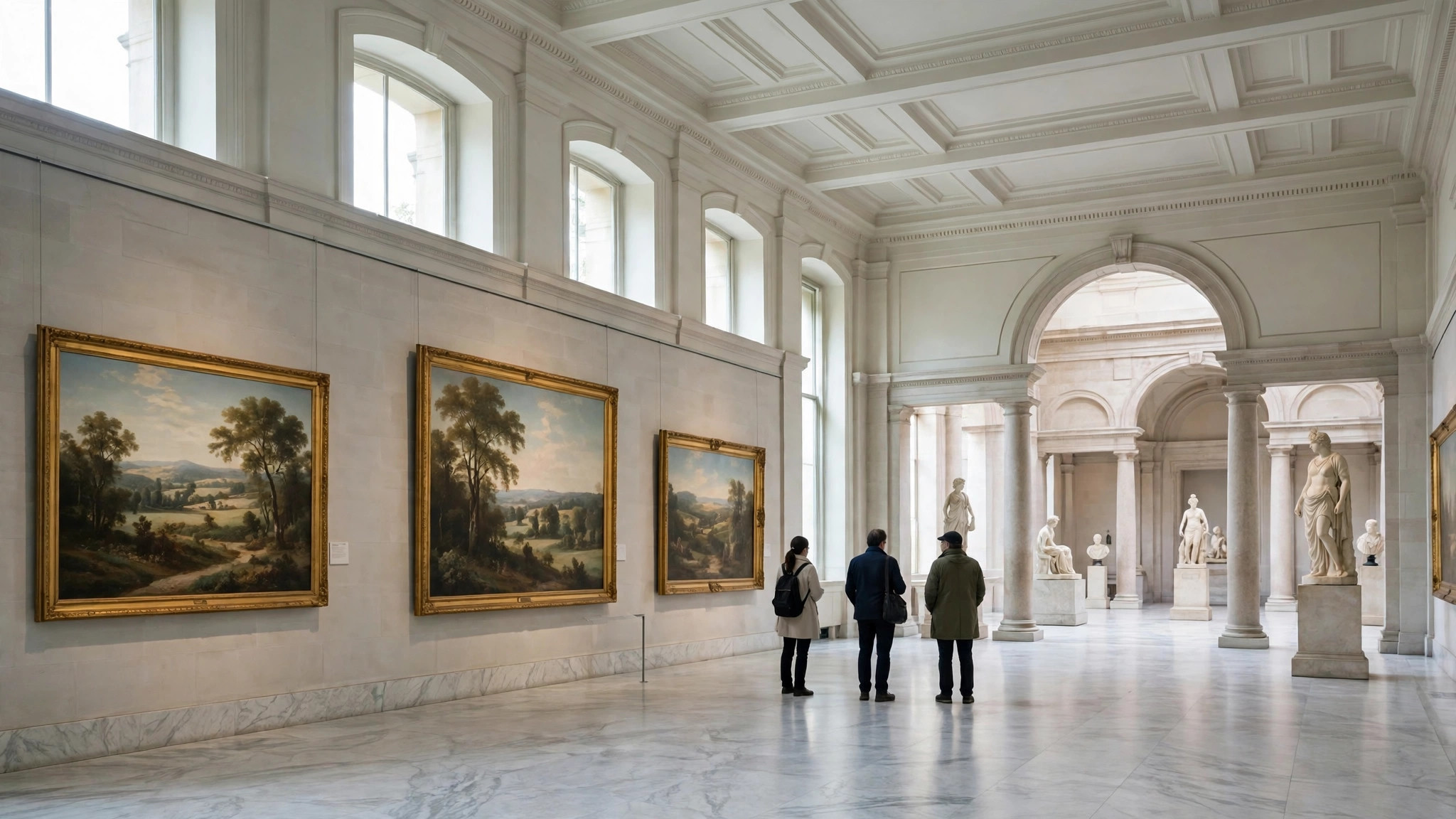
A great museum at the wrong hour is a shuffle past other people’s shoulders. The same museum two hours earlier can feel like a private viewing — empty galleries, benches free, and time to stand in front of the famous pieces as long as you like. Museum crowds are not random: they follow school calendars, tour-bus schedules, weather and the simple fact that most visitors arrive in the same late-morning wave. Finding museum least crowded times is mostly a matter of stepping one step sideways from that wave.
This guide sets out the patterns that govern museum attendance — the quietest days of the week, the calmest hours of the day, the seasonal swings, and the special traps like exhibition openings and free-entry days. It finishes with how to check a specific museum’s own curve on Google Maps before you plan the visit.
The quietest days of the week
At most museums, Tuesday through Thursday are the calm days, and the reason is structural. Tour groups and school trips do happen midweek, but the general visitor — the person deciding “let’s do the museum this week” — defaults to the weekend. Saturday is almost everywhere the busiest day, with late morning to mid-afternoon as the peak block. Sunday runs a close second, though Sunday mornings often start slowly before families arrive.
Monday is the interesting case. Many museums close one day a week, and it is very often Monday — which concentrates the week’s demand into the remaining days and makes the day after a closed day busier than it would otherwise be. Where a museum does open on Monday, it is frequently one of the quietest days of all, because visitors assume it is closed. Checking the listing’s hours rather than assuming is a genuinely useful habit.
Friday sits in the middle: mornings are moderate, and museums with late-evening openings see a second, smaller crowd after work — usually a calmer, adult crowd, and often a pleasant time to visit if you do not mind a shorter window.
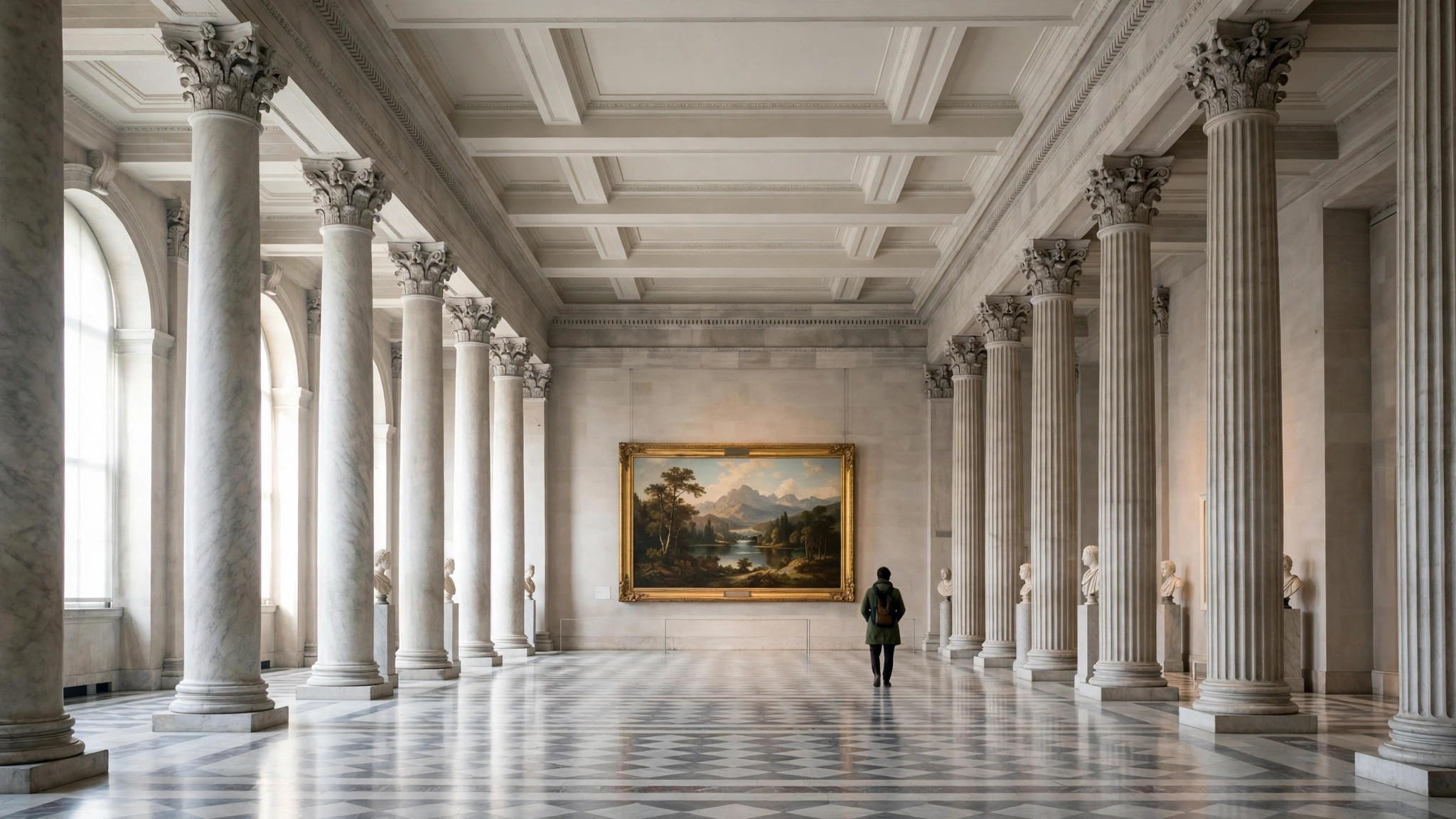
Museum Least Crowded Times Within the Day: Opening and the Late Fade
Within any day, museum crowds follow an arrival wave. Most visitors plan to arrive “in the morning” and, in practice, arrive between about 10:30 a.m. and noon. That single fact creates the two best windows of the museum day.
The first is opening time itself. Being inside in the first thirty to forty-five minutes means walking the headline galleries before the wave lands. The standard tactic works because it is true: go straight to the most famous room first, while everyone else is still at the ticket desk, then work backwards through the quieter sections as the crowd builds behind you.
The second window is the late-afternoon fade, roughly the last ninety minutes before closing. Day visitors drift out, tour groups have left, and the galleries thin noticeably. It suits visitors who prefer one or two sections done properly over a whole museum done at a shuffle. The risk is real but manageable: special exhibitions sometimes close entry earlier than the museum itself, so check the last-entry time for the exhibition, not just the building’s closing time.
Lunchtime deserves a mention too. Between about 1 p.m. and 2 p.m., a share of the morning crowd is in the café or outside at lunch, and the galleries dip — a smaller, less reliable version of the late-afternoon window.
The traps: free days, new exhibitions, school holidays and rain
Four situations reliably overwhelm the normal pattern. The first is free-entry days. When a museum waives admission — a monthly free day, a national museum day, a festival tie-in — attendance can double or more, and the queue forms before opening. A free day is a bargain only if your time is worth less than the ticket; visitors paying to enter on a normal quiet Tuesday often get the better experience per hour.
The second trap is a blockbuster exhibition’s opening weeks and its closing weeks. Both ends surge: the opening because of publicity and members’ previews spilling into public days, the closing because everyone who postponed finally goes. The middle of a long exhibition run, on a weekday, is the connoisseur’s slot.
The third is school holidays, which add families all day, every day, plus organised holiday programmes in the children’s sections. The fourth is weather: a rainy Saturday pushes every undecided visitor in a city indoors at once, and museums, malls and aquariums absorb them together. Conversely, the first glorious weekend after a wet spell empties museums, as everyone chooses the outdoors.
School groups and tour buses: the moving crowd
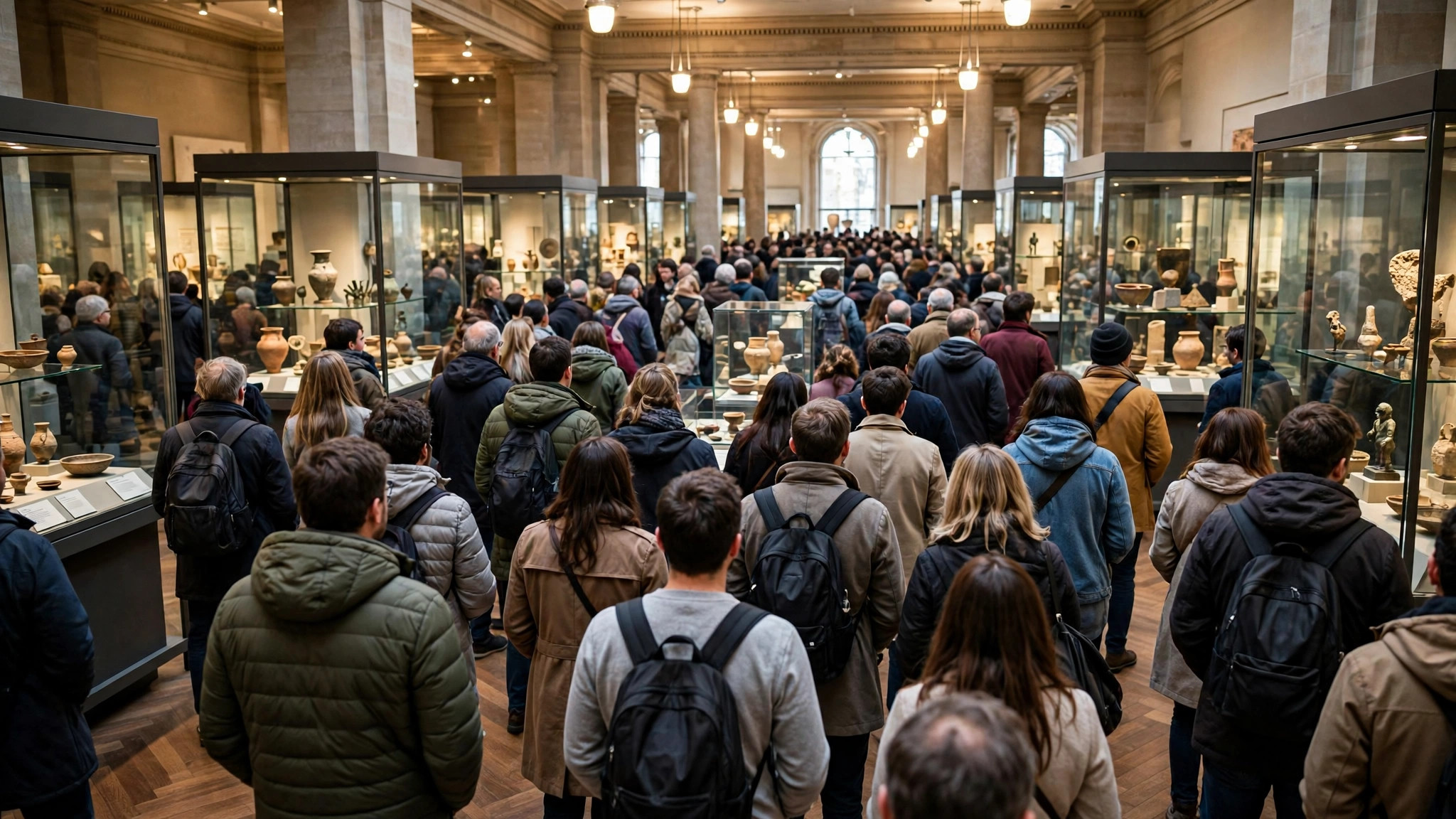
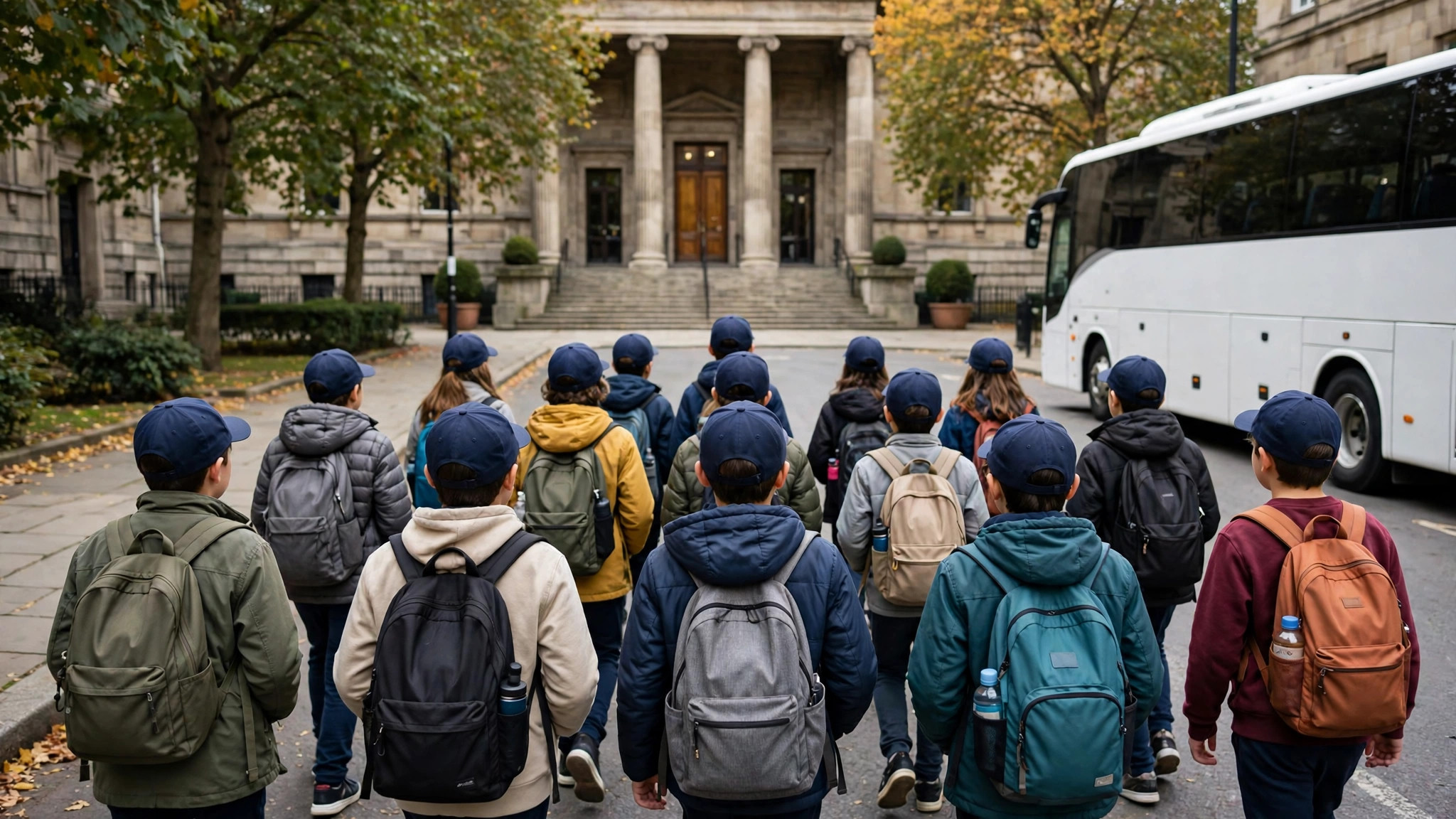
Even on a quiet day, a museum contains moving pockets of density. School groups cluster in the late morning and concentrate in the interactive and headline galleries; they are also, usually, gone by early afternoon. Tour buses arrive on their own timetable, often mid-morning, and their groups move through the greatest hits in a block of forty-five to ninety minutes.
You do not need to avoid these groups so much as flow against them. If a group enters the famous gallery, take the side rooms first and return in twenty minutes — the block will have moved on. Museum fatigue works in your favour too: crowds thin with distance from the entrance, so the far galleries and upper floors of a big museum are calmer at almost every hour of the day.
Museums in India: the school-trip calendar and the winter season
Indian museums follow the same weekly logic with a local calendar layered on top. Government and state museums receive a steady flow of school excursions on weekday mornings during term — buses arrive mid-morning and the groups concentrate in the science, history and children’s galleries until early afternoon. If your visit coincides with a school party, the practical move mirrors the tour-bus advice: take the quieter permanent galleries first and let the group block pass.
The tourist season adds a second layer. In north India, the October-to-February season brings domestic and international tourists to the big museums of Delhi, Jaipur, Agra and Kolkata, and weekend curves in those months sit visibly higher than in the summer. Summer itself splits opinion: the crowds thin, but in non-air-conditioned heritage buildings the midday heat is its own admission price, which is why the opening window matters even more from April to June. Monsoon weeks in Mumbai and Kolkata push visitors indoors in the same way rainy Saturdays do everywhere.
Science centres and planetariums peak differently again: show timings create pulses rather than a smooth curve, with the galleries busiest in the half hour before and after each show. Checking the day’s show schedule is the planetarium equivalent of checking a museum’s Popular Times graph.
A quiet-visit plan, step by step
Putting the patterns together, a low-crowd museum visit usually looks like this:
- Pick a Tuesday, Wednesday or Thursday outside school holidays, and outside the opening and closing weeks of any special exhibition.
- Check the museum’s Popular Times graph the day before, and note its closed day, last-entry time and any free-entry day you want to avoid.
- Arrive at opening and walk straight to the headline gallery while the ticket queue is still forming behind you.
- Take the far and upper galleries in the late morning, when the entrance floors are at their busiest.
- Use the lunch dip for the café or the special exhibition, then finish with the sections near the entrance as the afternoon crowd drifts out.
- If you can only visit on a weekend, choose Sunday opening time and the same route in reverse order of popularity.
None of these steps costs money or membership. They are simply the crowd’s own pattern, used in the visitor’s favour instead of against them.
Checking your museum’s own curve
Big museums have Popular Times graphs on their Google Maps listings that show all of this at a glance: the Saturday peak, the opening-hour gap, the closed day. The overview of how those graphs work is in the explainer on Google Maps Popular Times. Google displays this data only for listings that receive enough visits, as Google’s documentation on popular times and visit data explains, and many large museums also show a live busyness bar during the day.
Use the graph comparatively: pick your candidate days and read their curves against each other, rather than trusting any single number. Then plan the inside route — headline gallery first at opening, or far galleries first at midday — around the pattern you found. Museums reward this planning more than almost any other attraction, because they combine fixed capacity, timed exhibition entry and highly predictable arrivals. Planning a full day of attractions around each venue’s curve is the subject of sightseeing with Popular Times, and families splitting a day between a museum and animals will find the matching pattern in zoo and aquarium busiest times.
Frequently asked questions
What is the least crowded day to visit a museum?
Usually a Tuesday, Wednesday or Thursday outside school holidays. If the museum opens on Mondays, that can be quietest of all, because many visitors assume it is closed.
Is it better to arrive at opening time or late in the day?
Both work. Opening time gives you the headline galleries empty if you go to them first; the last ninety minutes give you a thinner whole museum but a shorter visit and possible earlier last entry for exhibitions.
Are free-entry days worth it?
For the ticket saving, yes; for the experience, often no. Free days are typically the most crowded days of the month. A paid weekday visit usually delivers more museum per hour.
What is the worst time to visit a museum?
Saturday between late morning and mid-afternoon, especially during school holidays, exhibition opening or closing weeks, or on a rainy day.
Do timed-entry tickets change the crowd pattern?
Yes, at museums that use them. Timed slots flatten the entrance queue but move the crowding indoors: the galleries fill in pulses as each slot’s visitors enter together. The quietest slots are usually the first of the day and the last two of the afternoon, and booking them a few days ahead matters more than booking early slots on the day, when the remaining choice is often only the midday peak.
One last pattern is worth knowing: members’ previews, press days and school-holiday programme launches can make a single weekday busier than the Saturday beside it. A two-minute check of the museum’s own “what’s on” page before you finalise the day catches nearly all of them.
The bottom line
Museum least crowded times come from stepping off the main wave: midweek days, the first forty-five minutes after opening, the last ninety minutes before closing, and the middle weeks of an exhibition run. Avoid free days, school holidays and rainy Saturdays when you can, check the museum’s own Popular Times curve before you go, and the quiet gallery version of the museum — the one locals know — is the one you will get.
