
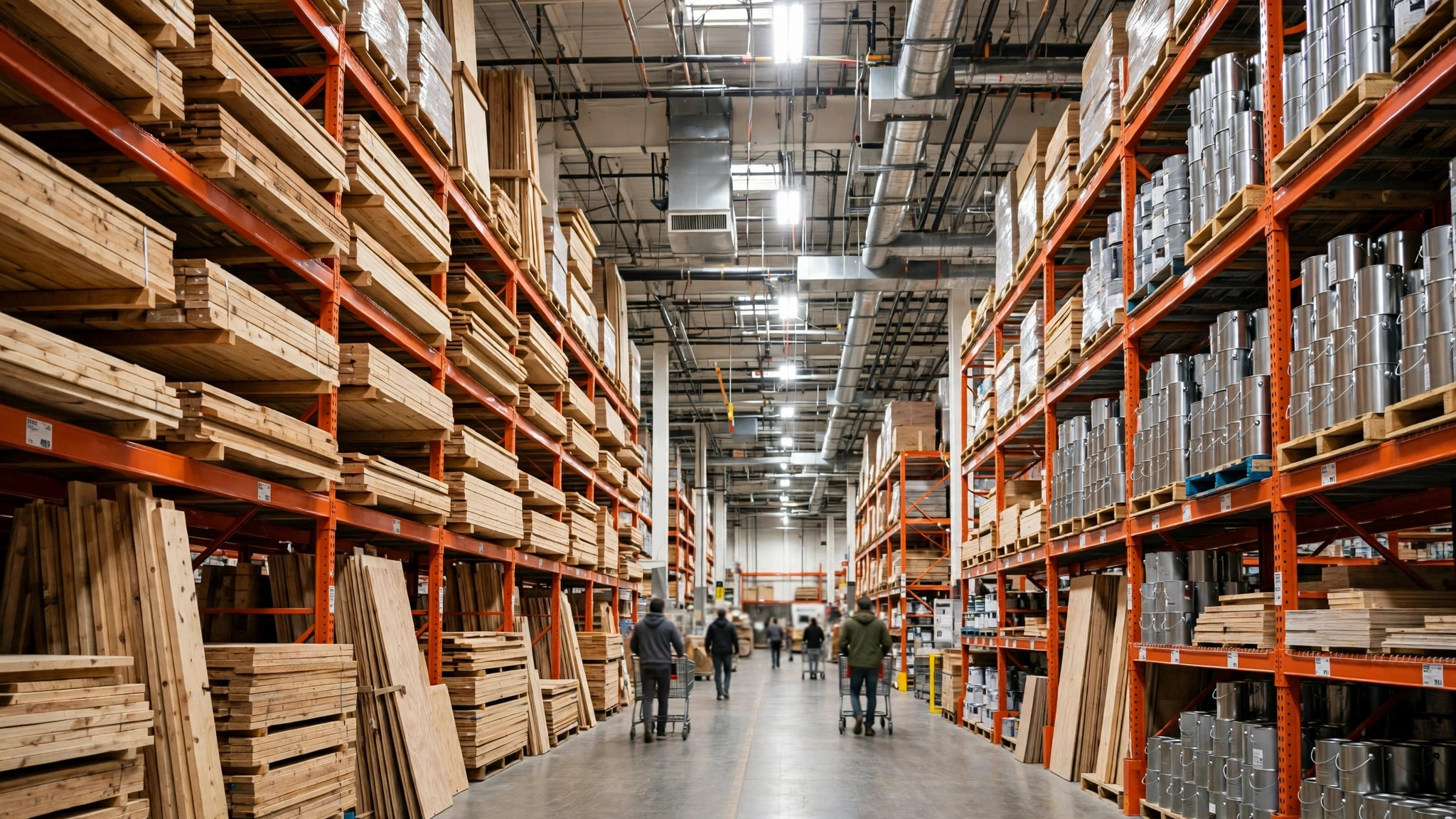
Every DIY store runs two businesses in one building: a weekday trade counter for professionals, and a weekend project store for everyone else. Home Depot busiest times belong firmly to the second business — the Saturday-morning rush of homeowners with a list, a borrowed pickup, and a project that absolutely has to finish this weekend. If your trips keep colliding with that rush, this guide shows you the pattern, the quiet windows hiding inside it, and how to confirm both on your own store’s Google Maps listing before you drive over.
Like every place type on this site, the starting point is how Maps turns real visits into busyness information — the busy area explainer covers the mechanics. DIY stores give that data a very distinctive shape, because their customers’ weeks are so predictable.
Home Depot busiest times: the shape of the week
Read across enough DIY store listings and the same weekly curve keeps appearing:
- Saturday peaks, late morning. The single busiest window of the week, typically building from about 9 am and cresting late morning into early afternoon.
- Sunday follows, slightly softer. Projects that started Saturday spill into Sunday for the forgotten fitting, the wrong size, the one-more-bag-of-mix run. The peak arrives a little later and fades a little earlier.
- Weekday mornings belong to the trade. Contractors and regular tradespeople arrive early — often near opening — load fast, and leave. The store can look busy at 7 am on a Tuesday yet feel completely different from Saturday: aisles are brisk, not crowded, and staff are set up for it.
- Weekday evenings carry a modest bump. Homeowners stopping on the way home for one item, plus the after-work start of small projects.
- Weekday mid-mornings and early afternoons are the valley. The quietest reliable stretch in the DIY week.
Your store’s own graph is the authority for its version of this curve — a store beside a big suburb of young homeowners peaks differently from one in a retirement area — but the skeleton above rarely changes.
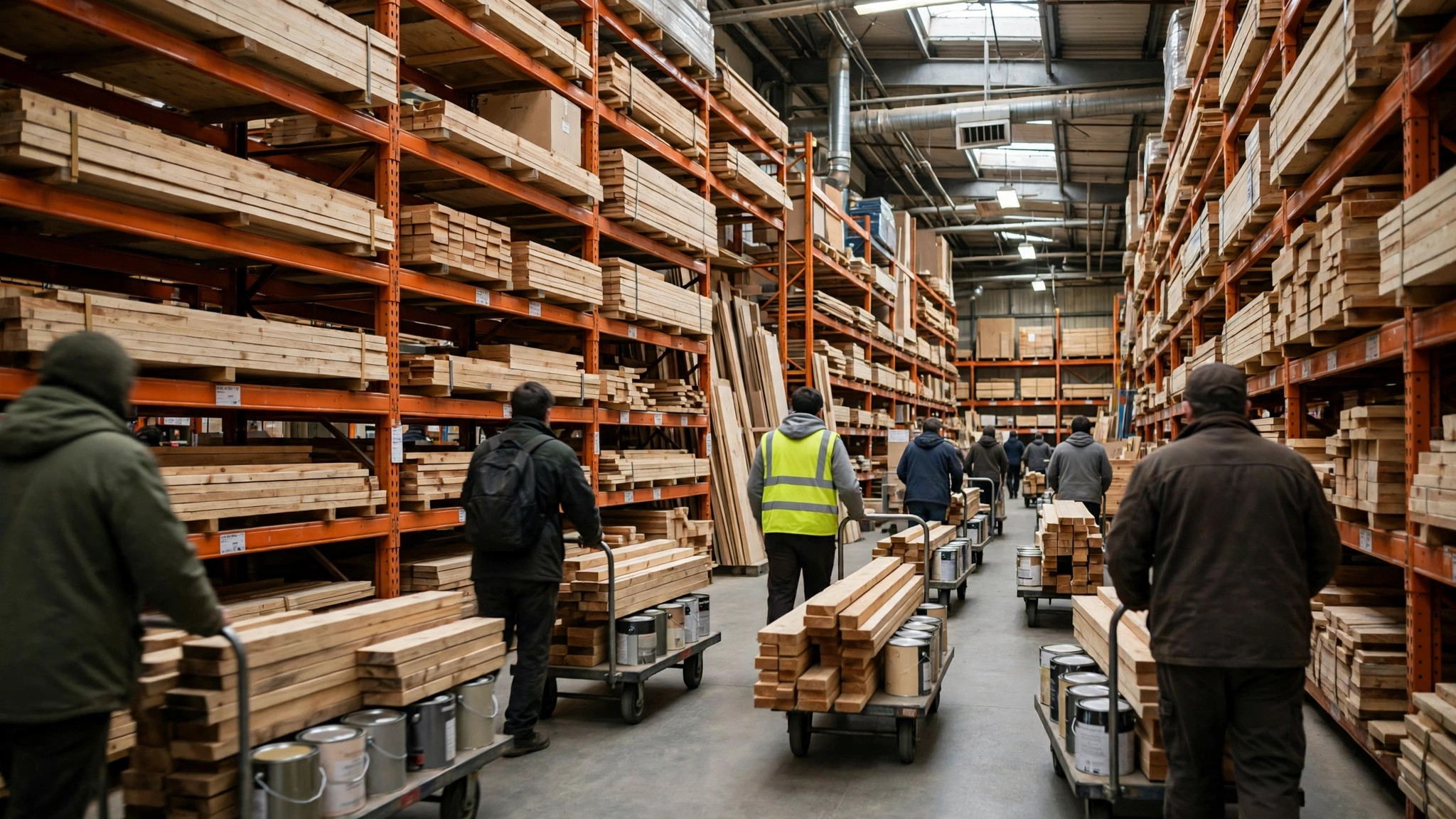
The Saturday-morning project rush, explained
Why does everyone arrive at once? Because DIY is scheduled around jobs and daylight. The weekend project has a deadline — guests coming, a tenant moving in, a fence to finish before Monday — and Saturday morning is when the deadline pressure and the available hours meet. Three ingredients stack the crowd into the same few hours:
- List shopping with decisions attached. Paint colours, tile quantities, timber lengths — Saturday shoppers are choosing, not just grabbing, which keeps them in the aisles longer and makes the store feel fuller than the headcount alone suggests.
- The rental and loading bottleneck. Tool hire counters, panel saws and loading bays all queue at the same time, and those queues spill into the car park.
- Visit duration stretches. Google’s “people typically spend” line for big DIY stores is already generous on weekdays; on Saturday the browsing, queuing and loading push real visits longer still, so arrivals overlap more.
None of this is a reason to avoid Saturday entirely — sometimes the project demands it. But it explains why shifting even ninety minutes, to Saturday at opening or late Saturday afternoon, changes the trip so much.
Trade hours: why weekday mornings feel different
New DIY shoppers often check the graph, see a weekday 7 am bar nearly as tall as Saturday’s, and assume the store is equally packed. It usually is not — and the difference teaches an important lesson about reading busyness data. The bar measures how busy the store is relative to its own pattern, and the morning trade peak is a real peak in visits. But the character differs in ways that matter:
- Trade customers move with purpose, buy from lists, and use the pro checkout — they generate visits without generating browsing crowds.
- Forklifts and pallet moves make the store feel industrious rather than congested.
- Advice queues are shorter: the paint and electrical staff are serving fewer browsers per hour.
For a homeowner, a weekday-morning trip during the trade window is often the best of both worlds — the store fully staffed and stocked, the aisles workmanlike rather than jammed. It is one of the genuine bargains hidden in the graph, and it generalises to rival chains and independent builders’ merchants alike.

Seasonal surges: when the whole curve lifts
DIY demand is seasonal in a way grocery demand never is. Expect your store’s graph to sit higher — and its peaks to start earlier — during:
- Spring. The year’s great awakening: gardens, fences, decking and exterior paint. In many regions this is the single biggest surge, lasting several weekends in a row.
- Early summer. Outdoor projects continue; paint and garden centres stay loaded.
- Autumn tidy-up. Roofing, guttering, heating preparation and weatherproofing before winter.
- Pre-holiday repair season. The guest-room effect — bathrooms and spare rooms fixed in the weeks before family visits.
- Emergency weather windows. Before and after storms, floods or freezes, DIY stores see sharp, ungraphable spikes: generators, pumps, tarpaulins, plumbing fittings. These are event crowds, like launches — the typical graph cannot see them coming, but live busyness on the day tells the truth.
India’s pattern rhymes rather than matches: pre-monsoon waterproofing and repair work, and the pre-festival home-refresh season, lift hardware and paint stores in much the same way. Wherever you are, the local version of “everyone fixes the house now” exists — your store’s graph will show it.
The quietest windows at a DIY store
Pulling the threads together, the windows that serve homeowners best are remarkably consistent:
- Weekday mid-morning (roughly 9:30–11:30 am) — trade rush done, lunch bump not started.
- Weekday early afternoon — the deepest valley of the week at many stores.
- Saturday at opening — you share the store with the organised few rather than the late-morning many.
- Saturday late afternoon and Sunday late afternoon — the rush burning out; fine for planned purchases, risky for scarce items that may sell through.
- The first rainy hour of a weekend — outdoor-project shoppers postpone; indoor-project shoppers have not yet switched plans. Live busyness confirms it on the day.
Combine the window with the errand logic from our guide to ordering an errand run by crowd curves: put the DIY store at its valley and let the less flexible stops take the peak slots.
One store, several crowds: read the graph by department
A DIY superstore is really several shops sharing a roof, and their peaks do not coincide. The single graph on the listing averages them, which is why a “moderately busy” reading can still mean a ten-deep queue at the one counter you need.
- The garden centre peaks earliest on fine weekend mornings and collapses in bad weather; its crowd is weather-sensitive in a way the rest of the store is not.
- Paint and decorating peaks mid-morning, once shoppers have measured up at home and arrived with room sizes and phone photos of existing colours.
- Lumber and building materials follow the trade rhythm — heavy early, lighter once the professionals have loaded and gone.
- The hire desk and tool rental peak at both ends of Saturday: collections in the morning, returns in the late afternoon.
- Kitchens and bathrooms (design desks) peak when couples can come together — weekends and evenings — and their queues are appointment-shaped rather than walk-in.
Use the graph for the store’s overall wave, then add your department’s offset. A paint trip at Saturday opening beats the paint peak entirely; a garden-centre trip on a drizzly Saturday morning can feel like a private viewing. This department logic also explains the visit-duration line: a store where design-desk consultations are common shows longer typical visits, whatever the hour.
The same stacking effect appears at the shopping centres these stores anchor — the mall next door fills as the DIY store does, which our guide to shopping mall busiest times maps out for the days you plan to visit both.

The big-project run: stacking your trip in the right order
For a major project, the smartest crowd move is ordering the trip itself. Collect the cut-to-size and hire items first, while those counters are at their calmest and your energy is highest; browse the decision-heavy aisles (tiles, taps, lighting) second; and leave heavy loading to the end so the trolley stays manageable and the car is loaded once.
If the project spans two trips — it usually does — make the first a weekday reconnaissance: measure, photograph, price and shortlist without buying. The second trip, the buying run, can then land in a narrow quiet window with a fixed list, the way trade customers shop. Two calm trips beat one heroic Saturday almost every time, in both minutes and mistakes.
How to check your store before a project run
Ninety seconds on the listing beats a wasted trip across town:
- Open your store’s Google Maps listing and check live busyness first if you are leaving within the hour.
- Read the Popular Times graph for today’s day of the week — confirm the valley you are aiming at actually exists at this branch.
- Note the visit duration line and budget honestly; a full project shop with cutting and hire queues is rarely the quick trip we imagine.
- If two branches serve your area, compare their live bars — the one beside the newer housing estate usually peaks harder on Saturday.
- Before a big seasonal weekend, sanity-check stock-sensitive items by phone; busyness data describes people, not shelves.
The figures behind these panels come from aggregated, anonymised visits, as Google explains in its guide to popular times, wait times and visit duration data — which is also why small independent merchants sometimes lack a graph entirely: not enough visits to publish one safely.

Frequently asked questions
What is the single busiest time at Home Depot?
Saturday late morning is the peak at most stores — the heart of the weekend project rush. Sunday late morning is the runner-up, and spring Saturdays are the highest of the year.
Is Home Depot busy first thing in the morning on weekdays?
Yes, but with trade customers rather than browsers. It is a working busy — fast-moving and purposeful — and many homeowners find it a perfectly good time to shop.
What is the quietest day to visit a DIY store?
Tuesday to Thursday are typically the calmest days overall, with mid-morning and early afternoon the quietest hours. Your store’s own graph confirms its exact valley.
Why does the graph look different in spring?
Because the whole pattern genuinely lifts: more projects, longer visits, earlier peaks. Popular Times averages recent months, so the graph visibly re-shapes as the season turns.
The bottom line
Home Depot busiest times are a deadline wearing a graph’s clothing: Saturday late morning, when every weekend project in the neighbourhood starts at once. You rarely need to join it. Weekday mid-mornings, opening time on Saturday, or the late-afternoon fade give you the same store with a fraction of the crowd — and two minutes with the listing’s live bar and weekly graph will tell you which window your own branch is offering today.
