
Open-air markets do not follow shop hours, and that is exactly why understanding busy markets and bazaars peak times matters before you dive into one. A bazaar can be peacefully browsable at 10 in the morning, a shoulder-to-shoulder crush by 6 in the evening, and a completely different place again during a festival week. Wholesale markets run even earlier — much of their trade is finished before most retail shops have opened their shutters.
This guide breaks down the daily and weekly rhythm of wholesale markets, street markets and traditional bazaars, explains what Google Maps can and cannot show you for open-air places, and shares the timing tricks experienced shoppers use to get space to browse, room to haggle and first pick of the stock. Patterns vary by city and season, so treat the timings below as typical patterns and confirm the character of your specific market with the tools described here.
Wholesale markets: the market before the market
Wholesale markets — the mandis, bulk produce markets and trade bazaars that supply retailers — peak earlier than almost any other kind of place. Their day typically starts in the small hours, when trucks arrive, lots are auctioned or unloaded, and retailers buy for the day ahead.
The typical wholesale curve looks like this:
- Pre-dawn to early morning (roughly 3 am–8 am): the true peak. This is trade time — porters, handcarts, buyers and sellers all moving at once. Casual visitors should simply stay away; you will be in everyone’s way.
- Mid-morning: the market empties fast once retailers leave. Remaining stock is cleared, prices on perishables soften, and the lanes become walkable.
- Late morning to afternoon: a long quiet tail. Some wholesale markets effectively close by early afternoon; others convert into semi-retail markets selling to the public at slightly higher prices.
For shoppers, the lesson is simple: if a market has a wholesale function, its busiest hours are hours you never want, and its “quiet” afternoon can be a perfectly good time to buy — as long as the stalls you need are still trading.

Retail bazaars and street markets: the two-peak day
Retail bazaars — the permanent market lanes of old city quarters, weekly haats, and street markets — usually follow a two-peak pattern shaped by weather and work.
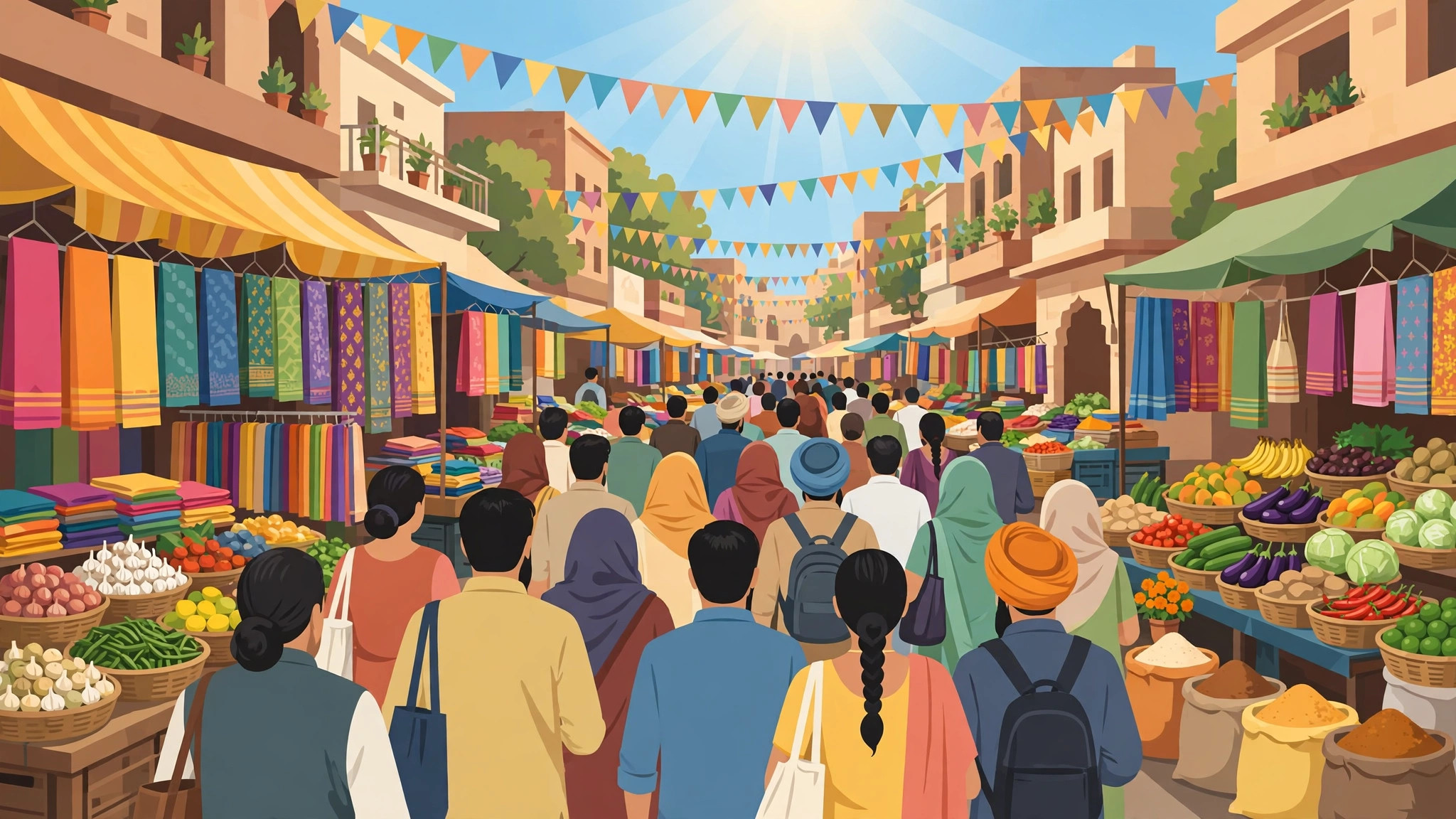
The morning build (opening to about noon). Stalls open progressively, and the first serious crowd builds through mid-morning: home shoppers buying fresh goods, early tourists in famous bazaars, and delivery and restocking movement in the lanes. In hot climates this morning window is the main event, because the afternoon heat empties the lanes.
The midday dip. In much of India and other warm regions, bazaars sag noticeably in the early afternoon. Some stallholders rest or close for a few hours. This is the quietest browsing window of the day — but also the one with the fewest stalls open, so it suits specific errands better than a full market tour.
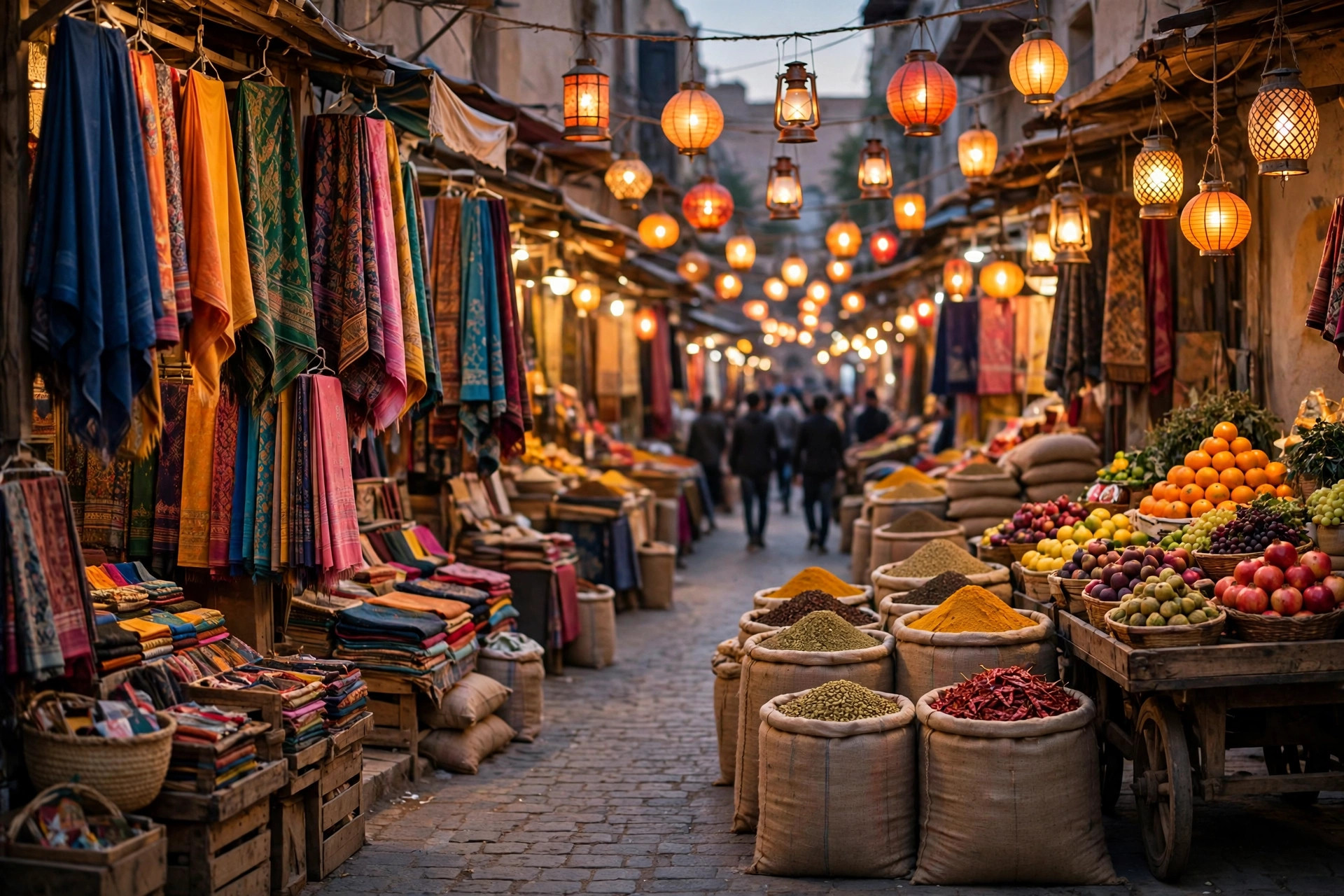
The evening peak (roughly 4 pm–9 pm). This is the big one. Office workers stop on the way home, food stalls fire up, lights come on, and the bazaar becomes as much a social outing as a shopping trip. In famous market districts the evening peak can be the most crowded the lanes ever get outside festival season. If you enjoy the atmosphere, go in the evening; if you want space and unhurried haggling, do not.
Weekends, weekly market days and festival surges
Three calendar effects sit on top of the daily rhythm.
Weekends. Retail bazaars peak on Saturday and Sunday, usually from late morning through the evening, with the evening session the heaviest. Stallholders know it and staff for it; prices also tend to firm up when the lanes are full.
Weekly market days. Many towns have a designated weekly haat or bazaar day when outlying traders join the permanent stalls. That day — not the weekend — is the market’s true weekly maximum, and the lanes can be dramatically busier than on any other day. Ask locally or check whether the market’s listing mentions a specific market day.
Festival and season surges. In India, the weeks before Diwali and Eid, and the wedding season, transform shopping bazaars: evening peaks start earlier, last later and spill onto surrounding streets. Tourist bazaars have their own season — the high tourist months — when mid-morning tour groups add a crowd layer that locals avoid by shopping early or late.
What Google Maps can show you for a market
Open-air markets are a special case for busyness data, and it helps to know what to expect:
- A market’s own listing may have no Popular Times graph. Popular Times needs enough recorded visits to a defined place; sprawling, multi-entrance market areas sometimes fall below the threshold, or the “place” is spread across many individual shops. A missing graph does not mean the market is quiet.
- Individual anchor shops usually do have graphs. A famous shop, sweet store or restaurant inside the bazaar often shows its own Popular Times and live bar — a good proxy for the lanes around it.
- Area busyness helps at district level. The orange-shaded “busy area” label on the map shows how busy the surrounding district is compared with usual, which is genuinely useful for market quarters. Our guide to the busy area icon on Google Maps explains how to read that label.
- Reviews carry timing clues. Recent reviews frequently mention queues, crowds and the best visiting hours — search them for words like “crowd”, “rush” and “weekend”.
For the underlying mechanics of how these labels and graphs are produced, the Busy Area pillar guide on this site is the place to start.
Busy markets and bazaars peak times: timing tricks for shoppers
When you go changes what you get, not just how crowded it feels:
- For first pick of fresh stock: arrive in the first trading hour of the retail morning, after the wholesale rush has cleared but before the lanes fill.
- For end-of-day bargains on perishables: shop in the last hour, when sellers would rather discount than carry stock back — a long-standing bazaar pattern, strongest at food and flower markets.
- For haggling room: quieter periods genuinely help. A stallholder with no queue behind you has time to bargain; the same negotiation in the evening rush will be cut short.
- For photography and atmosphere: the evening peak, lights on, is unbeatable — just keep valuables secure in the crush.
- For bulk buying: go on a non-market weekday morning, when wholesalers’ retail counters are open, stock is fresh from the morning trade, and the lanes are calm.
Compare this rhythm with enclosed retail: a shopping mall’s busiest times follow shop hours and air-conditioning logic, peaking neatly on weekend afternoons, while a bazaar’s curve is bent by weather, trade customs and the calendar. Knowing which kind of place you are visiting tells you which curve to expect.
A market week at a glance
To pull the patterns together, a typical permanent bazaar’s week looks something like this. Monday opens quietly, with stallholders restocking after the weekend and a thin morning crowd — often the calmest full-market session of the week. Tuesday and Wednesday stay moderate, with the usual morning build and evening peak but nothing extreme. Thursday begins the climb as weekend buying starts early in some households. Friday’s evening session is frequently the second-busiest of the week, swollen by wage-day shopping in many towns. Saturday and Sunday are the peak — full lanes from late morning, the heaviest evening crush, and the firmest prices.
Layer the wholesale clock underneath: every one of those days began with the pre-dawn trade peak, invisible to retail shoppers but decisive for what stock reaches the stalls. And layer the calendar on top: a weekly haat day, a festival week or peak tourist season can lift any single day above the weekend maximum. When you plan a visit, check all three layers — the day of the week, the wholesale or retail character of the market, and whatever the local calendar is doing — and the crowd you meet will rarely surprise you.

Staying comfortable in a crowded bazaar
A few practical habits make peak-hour market trips far easier. Carry small cash notes so you are not waiting for change in a crush. Keep your phone and wallet in a front pocket or cross-body bag — pickpocketing thrives in the densest lanes, and Google explains in its Google Maps Help pages how to save the market’s location offline, which helps when the network crawls in a crowded district. Agree meeting points at the market’s edge in case your group gets separated, and for large purchases, note the lane and shop number — bazaar lanes look remarkably similar once you are three turns in.
Frequently asked questions
What is the busiest time in a typical bazaar?
For retail bazaars, the evening session — roughly 4 pm to 9 pm — and weekend late mornings. Wholesale markets are busiest before most people wake up, in the pre-dawn and early-morning trade hours.
Why does Google Maps show no Popular Times for my local market?
Open-air markets often lack a single defined footprint or enough recorded visits for a graph. Check anchor shops inside the market instead, and use the area busyness label for the district.
Is it cheaper to shop at a bazaar in the morning or evening?
Fresh stock and full choice favour the morning; end-of-day discounts on perishables favour the last hour. For non-perishables, quiet weekday periods give you the most haggling room.
When should tourists visit a famous bazaar?
Early in the morning session beats the tour-group hours and the heat, and gives you the market as locals use it. Go back in the evening only if you want the spectacle — and the crowd that comes with it.
Weekly market days: the peak that moves with the calendar
Many bazaars are not daily at all. Across India, the weekly haat rotates between districts on a fixed day — a Tuesday market here, a Friday market there — and the same logic applies to flea and farmers markets elsewhere. On market day the curve has one shape: a steady build from opening, a long saturated plateau, and a sharp close. There is no quiet window inside market day itself.
So for a weekly market, the question is not which hour but whether your trip falls on market day at all. Need the permanent shops around the square? Go on a non-market day. Want the market itself? Arrive in the first hour for first pick, or the last hour for end-of-day prices on perishables.

How weather moves the market crowd
Open-air markets are the most weather-sensitive listings on Google Maps. A Saturday peak can collapse within an hour of heavy rain, then rebound harder the next day as postponed trips stack up. Heat flattens the midday plateau and stretches the evening surge later. The historical graph shows none of this — it averages typical weeks.
Read the graph for the shape of the day, then check the live reading — the market’s own live bar, or an anchor shop’s — for today’s reality. Rainy-day rebounds also jam the approach roads, so glance at the traffic layer before assuming a quiet market means a quiet journey.
Conclusion
Busy markets and bazaars peak times are really three clocks running at once: the wholesale clock that peaks before dawn, the retail clock with its morning build and evening surge, and the calendar clock of weekends, weekly market days and festivals. Work out which clock governs the market you are visiting, use Google Maps’ area busyness and anchor-shop graphs to check the day, and pick your window — first pick in the morning, bargains at the close, space in the midday dip, and atmosphere in the evening crush.
