
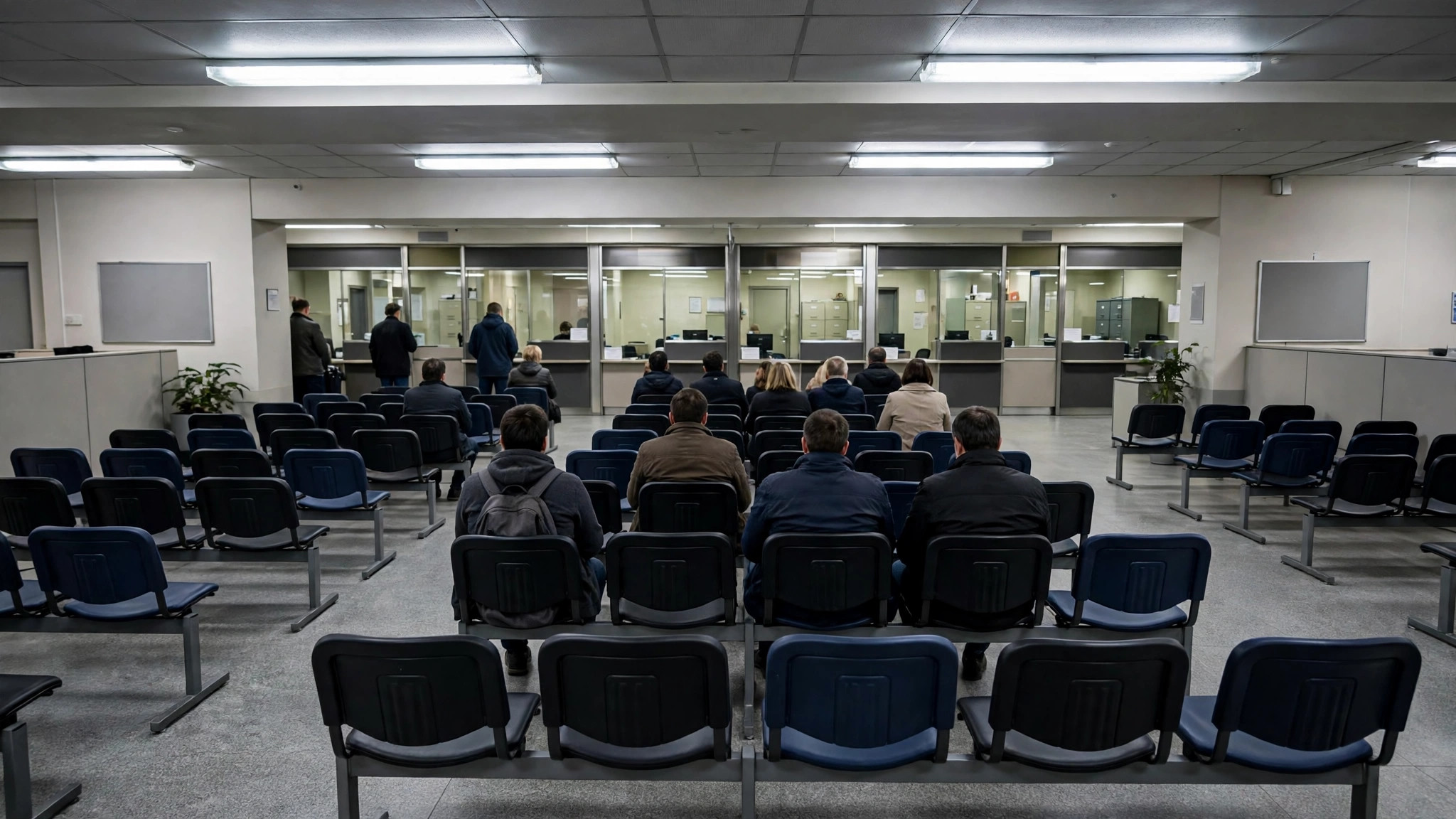
Few errands have a worse reputation than the licence office, and few deserve it more when you pick the wrong slot. The difference between the best and worst times to go to the DMV is not a few minutes — it is the difference between walking up to a counter and spending half a day in a plastic chair. The crowd at a DMV or licensing office is not random. It is manufactured by deadlines, lunch breaks and the universal habit of leaving renewals until the last possible day, and most offices now show a popular times graph on Google Maps that makes the pattern visible before you live it.
This guide ranks the days and hours from worst to best, explains the monthly renewal cycle underneath them, and compares appointments with walk-ins. The same civic-office logic shapes our guides to passport offices and RTOs in India, post office busiest times and bank branch peaks — government queues everywhere rhyme.
How the DMV crowd builds through the day
A licence office day has a recognisable shape. It opens to a queue that formed before the doors did: people who took the morning off work and want to be served first. That opening surge is large but fast-moving, because every counter is staffed and fresh. Mid-morning calms down, then the lunch period does its usual damage — visitors arrive on their own lunch break while counter staff rotate through theirs, so demand rises as service capacity falls.
The afternoon splits in two. Early afternoon can be surprisingly calm at many offices, the product of everyone else assuming it is busy. The last hour before closing collects the day’s final rush: people racing a deadline, people whose morning attempt failed, and people who simply ran out of day. Of all the hours, that closing rush is the worst bet, because a transaction that cannot be finished today becomes tomorrow’s problem too.
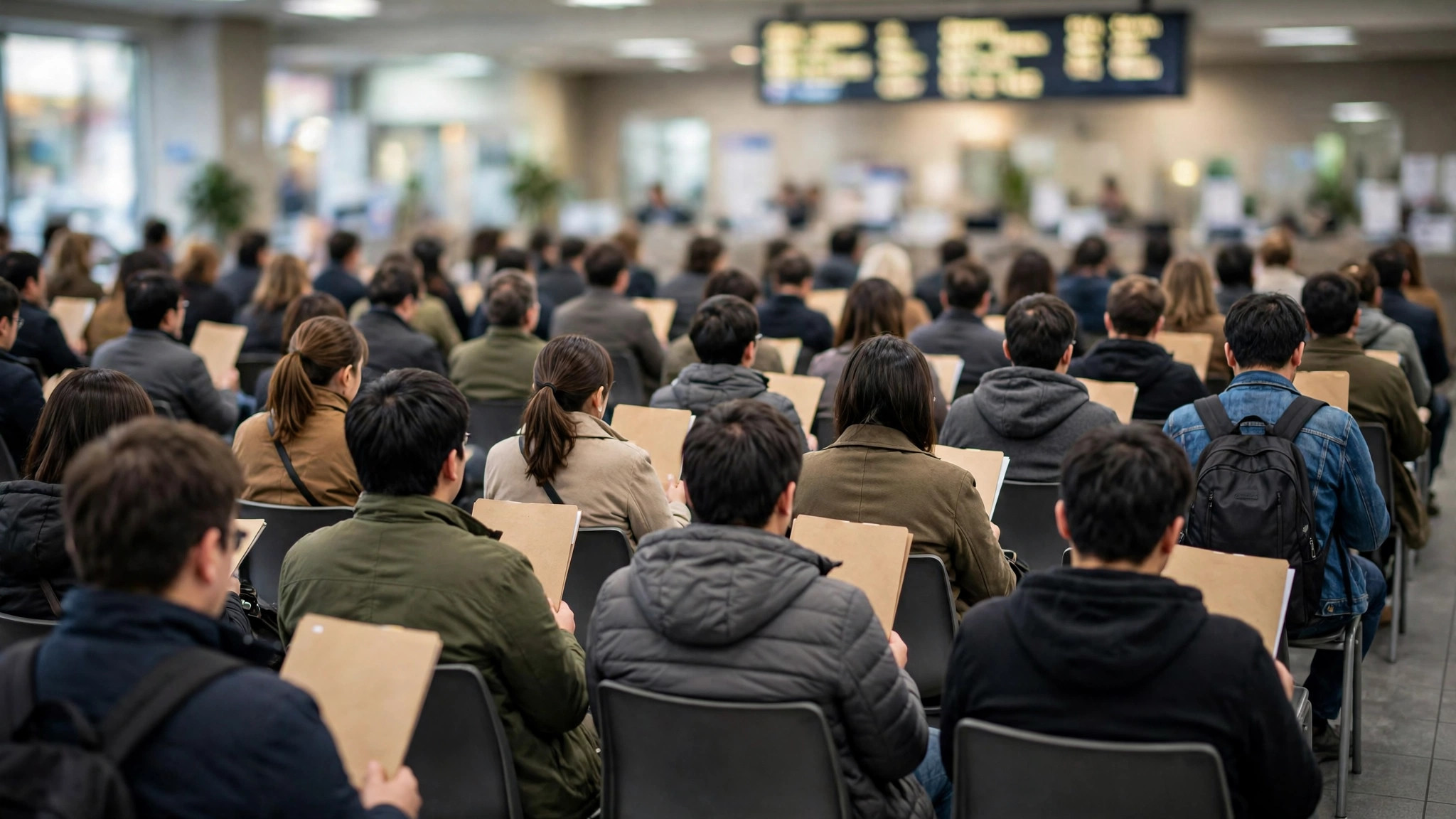
When is the DMV least crowded?
The least crowded DMV hours sit in two windows. The first is mid-morning on a midweek day — after the opening surge clears and before the lunch crunch, roughly the 10 am to 11:30 am stretch at a typical office. The second is the early-to-mid afternoon window after lunch service restores full staffing and before the closing rush, roughly 2 pm to 4 pm where offices stay open that long.
Day of week matters as much as hour. Tuesday, Wednesday and Thursday are the calm plateau almost everywhere. Monday inherits the weekend’s accumulated problems — failed tests rebooked, vehicles bought over the weekend needing registration, questions that built up over two closed days. Friday carries deadline energy, as people try to close their business before the weekend. Layer the two together and the single best slot in the week is usually a Wednesday in one of the two windows above.
What is the best time to go to the DMV?
The honest answer combines the hour, the day and the month. The best time to go to the DMV, for a flexible errand, is mid-morning or mid-afternoon on a Tuesday, Wednesday or Thursday in the middle of the month. Every element of that answer removes one crowd: midweek removes the Monday backlog and Friday deadline rush, mid-month removes the renewal cycle (explained next), and the shoulder hours remove the opening surge, the lunch crunch and the closing race.
There is one exception worth naming: if you cannot choose your day because a deadline owns you, then the strategy flips — arrive before opening and be at the front of the first surge. The opening queue looks intimidating but it is the fastest-moving crowd of the day, and being twentieth in it beats being fifth in the closing rush, because the morning office has its full day ahead of it and the evening one does not.
The monthly cycle: the best and worst times repeat every month
Licences, registrations and permits expire on dates, and human beings renew them at the last minute. That single fact manufactures the DMV’s monthly rhythm: a surge in the last days of the month as expiries bite, and a second surge in the first days of the next month as the latecomers arrive. Offices that handle renewals by birth month or plate number smooth this slightly, but the edge-of-month bulge survives almost everywhere.
Mid-month is the valley. Between roughly the 10th and the 20th, no deadline is close enough to panic anyone, and the graphs show it. If your renewal window allows any choice at all, spending it mid-month is the highest-value decision in this entire guide — worth more than any choice of hour. The same advice, in reverse, explains the worst slot on the calendar: the last working day of the month, at lunch, is where every bad pattern overlaps.

Walk-in vs appointment: which queue is real?
Many licensing systems now run a hybrid: appointments for tests and complex services, walk-ins for simple ones. An appointment does not abolish waiting — offices overrun, earlier cases overrun into yours — but it converts an unknown wait into a bounded one and, crucially, it guarantees you are served that day, which a walk-in ticket late in the day may not.
Two appointment tactics matter. First, book further ahead than feels necessary: appointment slots near deadlines vanish exactly when the walk-in queue is worst. Second, check for released slots early in the morning; cancellations often reappear then. Where no appointment system exists, the walk-in equivalent is the pre-opening queue — unglamorous, but first-come systems reward the front of the line all day. Official appointment rules and required documents for US motor vehicle services are collected at USA.gov’s motor vehicle services pages — check your document list there or with your state office before you travel, because an incomplete file is the one queue outcome worse than a long wait.
Reading your licence office on Google Maps
Most DMV and licensing offices have listings with popular times, and the graph deserves a closer look than most listings get:
- Check the graph for the specific weekday you plan to go; DMV curves differ more between weekdays than most business types.
- Read the visit-duration figure: long average visits signal an office heavy on tests and complex cases, where queues move slowly even at moderate busyness.
- Use the live bar on the day itself during edge-of-month weeks, when real crowds run ahead of the historical curve.
- If your office shows no graph, a neighbouring office of the same agency is a reasonable timing proxy — the calendar forces are identical even if the absolute crowds differ.
The India parallel: RTOs run on the same clock
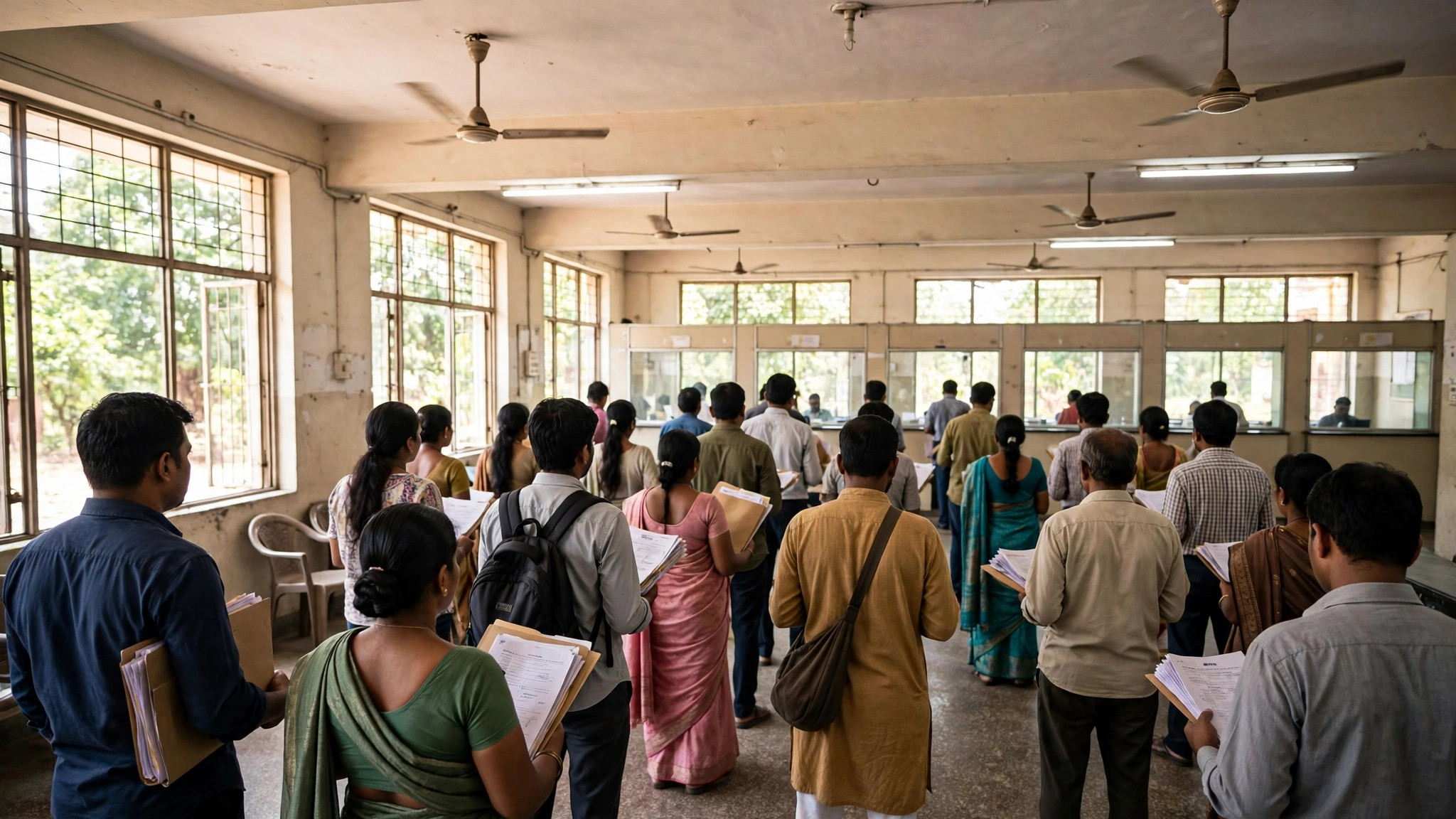
India’s Regional Transport Offices follow the same pattern with local seasoning. The morning token rush is fiercer, the agent ecosystem adds its own flow of files to the counters, and learner’s-licence test slots create their own appointment calendar. Festival weeks empty the offices; the days after long holidays behave like double Mondays. Our dedicated guide to passport office and RTO crowd timing covers the Indian offices in depth — but the master rule travels unchanged across both systems: midweek, mid-month, mid-morning.

Driving-test days: a second calendar inside the office
Offices that conduct driving tests run a second calendar on top of the counter calendar. Test days concentrate candidates, instructors and their vehicles into the morning, and the test crowd spills into every other service: the car park fills, the enquiry desk backs up, and counter staff get pulled into test administration. If your office publishes test days, treat them like mini month-ends — an errand that could be done on a non-test day should be.
Candidates themselves have no such choice, but they have one lever: the first test slot of the day. Early candidates face examiners on schedule; every later candidate inherits the accumulated delays of the day, and a morning of small overruns can push an afternoon test back by an hour or more. Arriving early for a test is not eagerness, it is queue mathematics.
Preparing your file: the wait you control
The cruellest DMV waits are the self-inflicted ones: reaching the counter after ninety minutes and being sent away for a missing photocopy. Every licensing system publishes its document requirements, and the pattern of failures is always the same — proof of address in the wrong format, a photograph the wrong size, a form signed in the wrong place, an original left at home.
Treat the visit as two queues: the one at the office, which this guide helps you time, and the one at the counter itself, which preparation eliminates. Build your file the night before, with originals plus copies, photographs plus spares, and the exact fee in an accepted payment form. Offices also increasingly let you start applications online and upload documents in advance; doing so can move you from the general queue to a verification counter, which is the closest thing a licensing office has to a fast lane.
Saturdays, school holidays and other squeezes
Where licensing offices open on Saturdays, the half-day squeeze applies with full force: a week’s worth of people who cannot come on weekdays compresses into a few morning hours, and the graph’s Saturday peak is often the highest of the week relative to its length. Arrive before opening or expect the week’s worst queue per hour.
School holidays bend the curve the other way for some services and towards it for others. New-driver tests and first licences surge when students are free, so test calendars fill and candidate crowds grow; general counter traffic, by contrast, can soften in holiday weeks as offices and businesses slow down. The lesson is to ask which of the office’s publics you belong to. The graph shows the blend; your errand belongs to one ingredient of it, and that ingredient’s calendar — students, businesses, deadline-holders — is the one to time against.
A note on agents and intermediaries
In many licensing systems, a share of the counter crowd is not applicants at all but agents carrying files for several clients at once. Their presence lengthens particular queues — an agent’s file bundle takes longer per turn — and concentrates at the offices and hours where their clients’ deadlines cluster. You cannot schedule around them directly, but recognising that the longest counter queue is often the agents’ queue, not yours, helps you choose the right line when an office separates services by counter.
Conclusion
The best and worst times to go to the DMV are separated by everything at once: month-edge deadlines, Monday backlogs, Friday urgency, lunch-hour staffing and closing-time races all stack onto the worst slots, and all absent themselves from the best ones. Pick a mid-month Wednesday in a shoulder hour, book ahead where bookings exist, arrive with a complete document file, and check the graph before you leave. The licence office will never be fun — but it can be twenty minutes instead of a day.
