
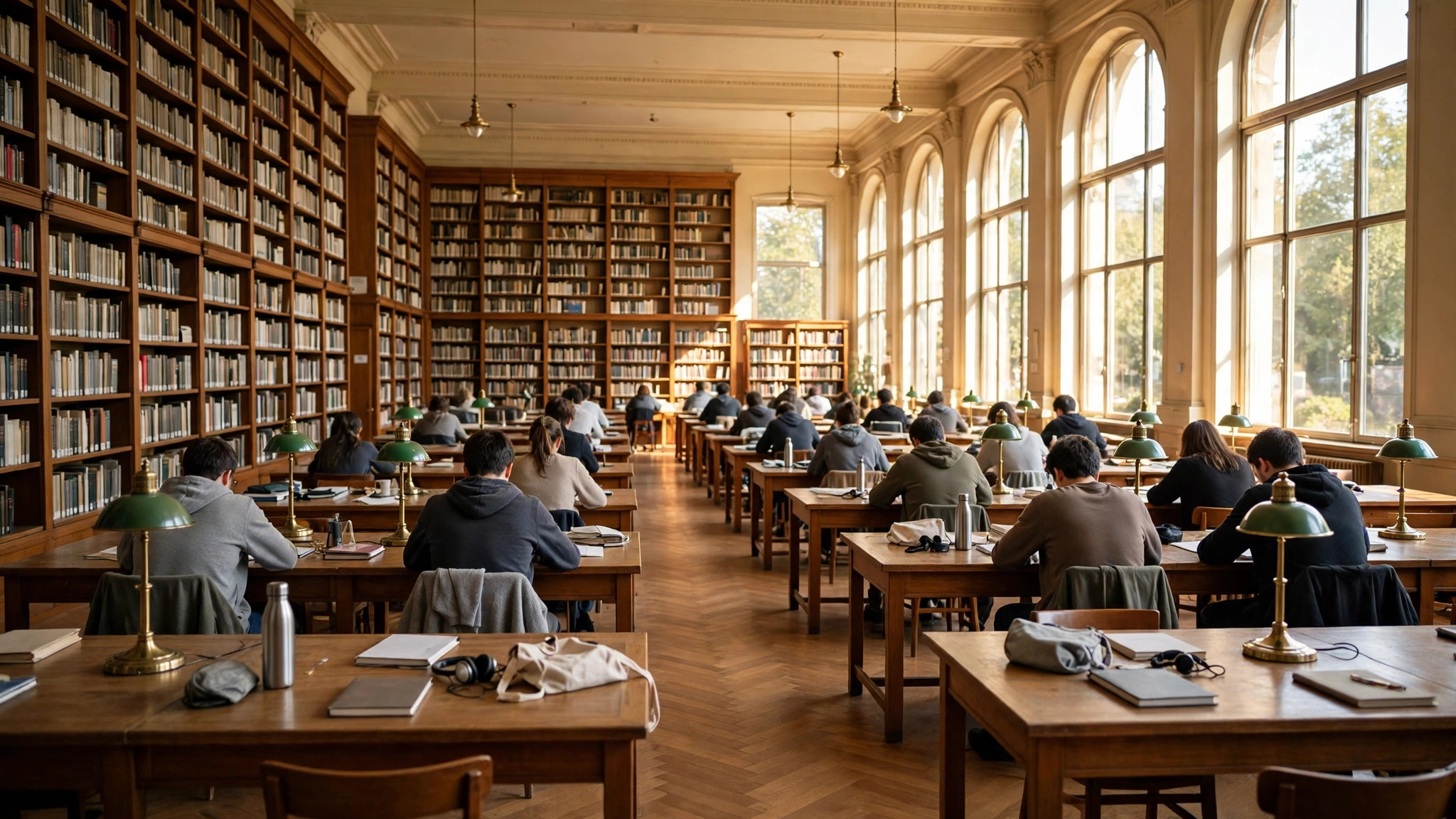
A public library looks like the calmest building in the neighbourhood — until you arrive at 4 p.m. during exam season and every reading-room seat is taken, the computer terminals have a waiting list, and the children’s section sounds like a school playground. Libraries run on the rhythms of school timetables, exam calendars and working weeks, which makes public library busiest times some of the most predictable crowd patterns of any public place.
This guide breaks down when libraries fill up and when they empty out: the after-school surge, the exam-season peak, weekend family hours, and the quiet windows in between. It also shows how to read a library’s Popular Times graph on Google Maps so you can check the pattern for your own branch before you set out.
The after-school surge: the daily peak you can set your watch by
On school days, most public libraries experience their sharpest rise between about 3 p.m. and 6 p.m. Students arrive straight from school to finish homework, use computers, print assignments and meet group-project partners. In India, the pattern intensifies around coaching-class hours: libraries near tuition hubs fill with students who study at the library between school and their evening classes.
This surge has a texture of its own. Seat demand is highest in the reading room and at computer terminals, while the book stacks stay relatively calm. Noise rises too, because the after-school crowd is younger and more social. If your goal is quiet reading or focused work, the after-school block is the window to avoid on weekdays — or to embrace, if you are bringing children to a library that runs homework clubs and activities in exactly those hours.
By early evening the crowd turns over. Students leave for home or coaching, and a smaller wave of working adults arrives to return books, read newspapers or use the library after office hours. Branches that close by 8 p.m. usually see a gentle final bump in the last hour.
Exam season: when libraries become study halls
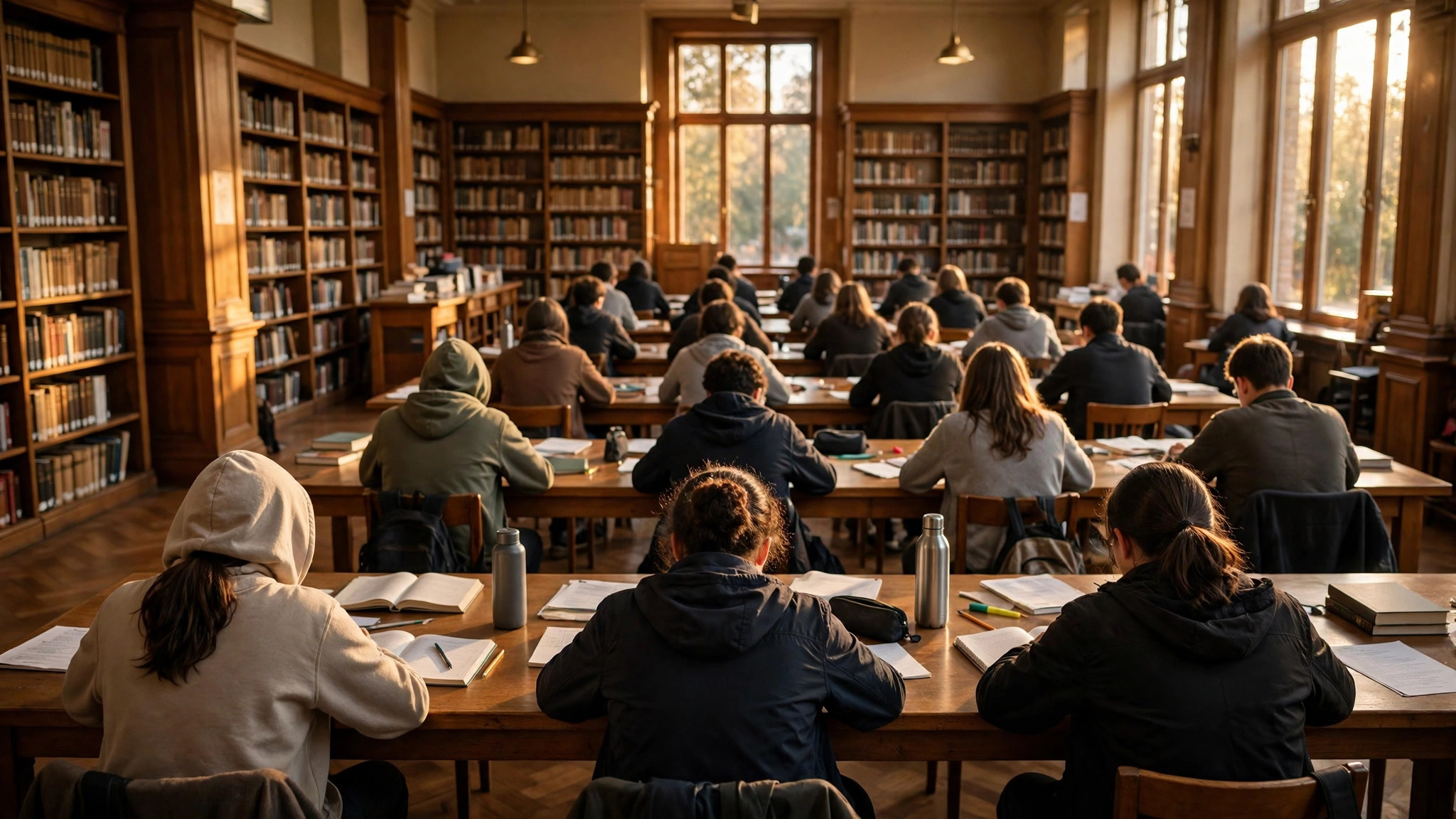
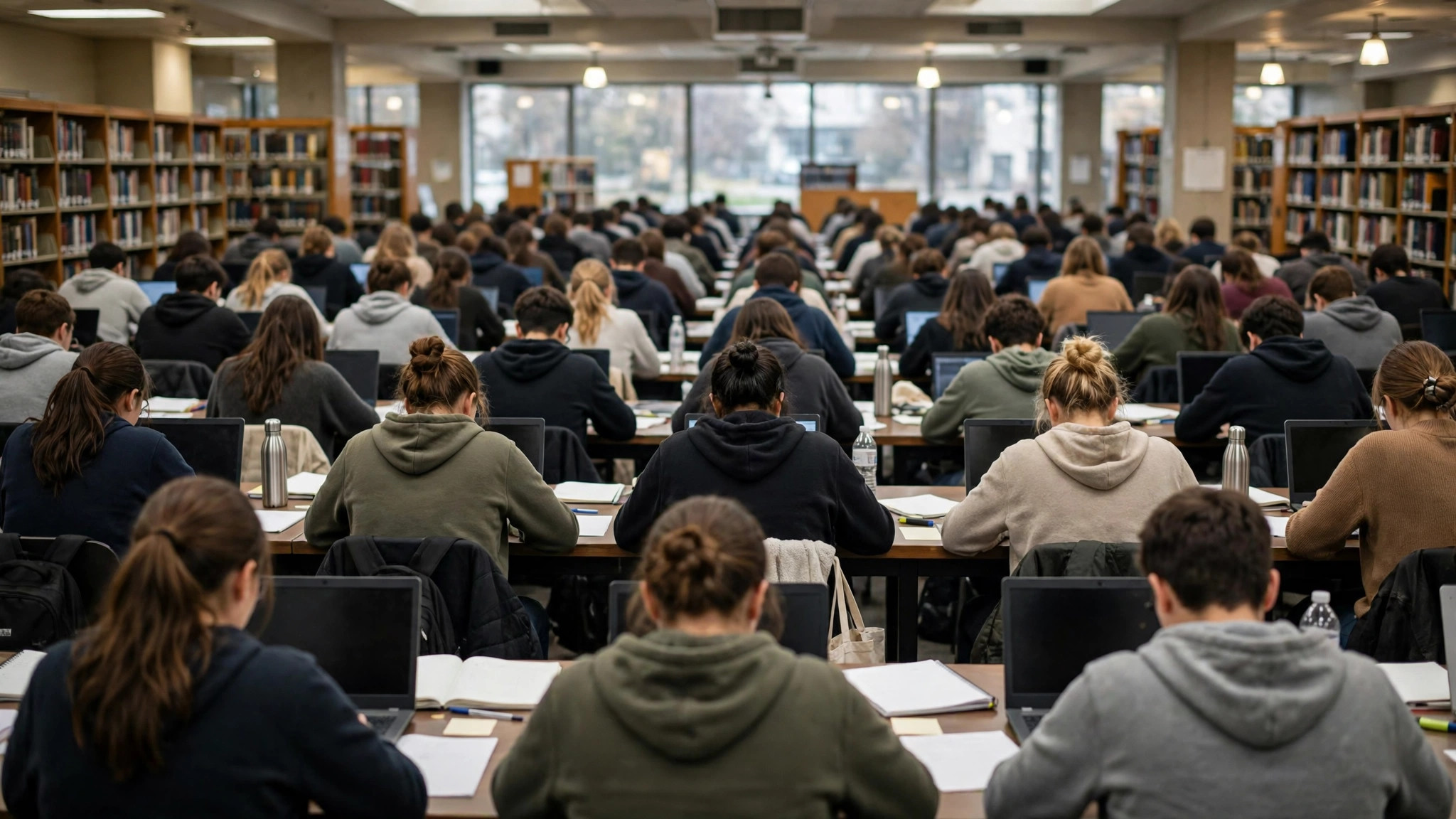
The single biggest crowd driver in the library year is examinations. In India, board exams, university semesters and competitive-exam cycles — UPSC, SSC, banking and state service exams — turn district and public libraries into full-time study halls for weeks at a time. Serious aspirants arrive at opening time to claim seats, and popular libraries develop an informal seat culture: regulars, waiting lists for the reading room, and queues before the doors open.
During exam season, three things change. First, the peak stretches: instead of a two-hour surge, the reading room can stay near-full from morning to closing. Second, weekday and weekend patterns flatten, because aspirants study seven days a week. Third, the quietest window shrinks to the first hour after opening and the last hour before closing — and even those fill at the best-known branches.
If you are a casual reader, exam season is the time to lean on the library differently: borrow and return quickly rather than planning long reading sessions, or shift your visits to the morning. If you are an aspirant yourself, the strategy is the opposite — arrive before opening, because seat allocation in most public libraries is first-come, first-served.
In India, many public libraries also sell or issue reading-room memberships separately from book borrowing, and the membership desk has its own mini-season: counters bunch in the weeks before major exams, when new aspirants register. If you need a reading-room pass, apply in a quiet month rather than in the fortnight before board or SSC exams, when the administrative queue can be as long as the seat queue.
Weekends and holidays: the family pattern
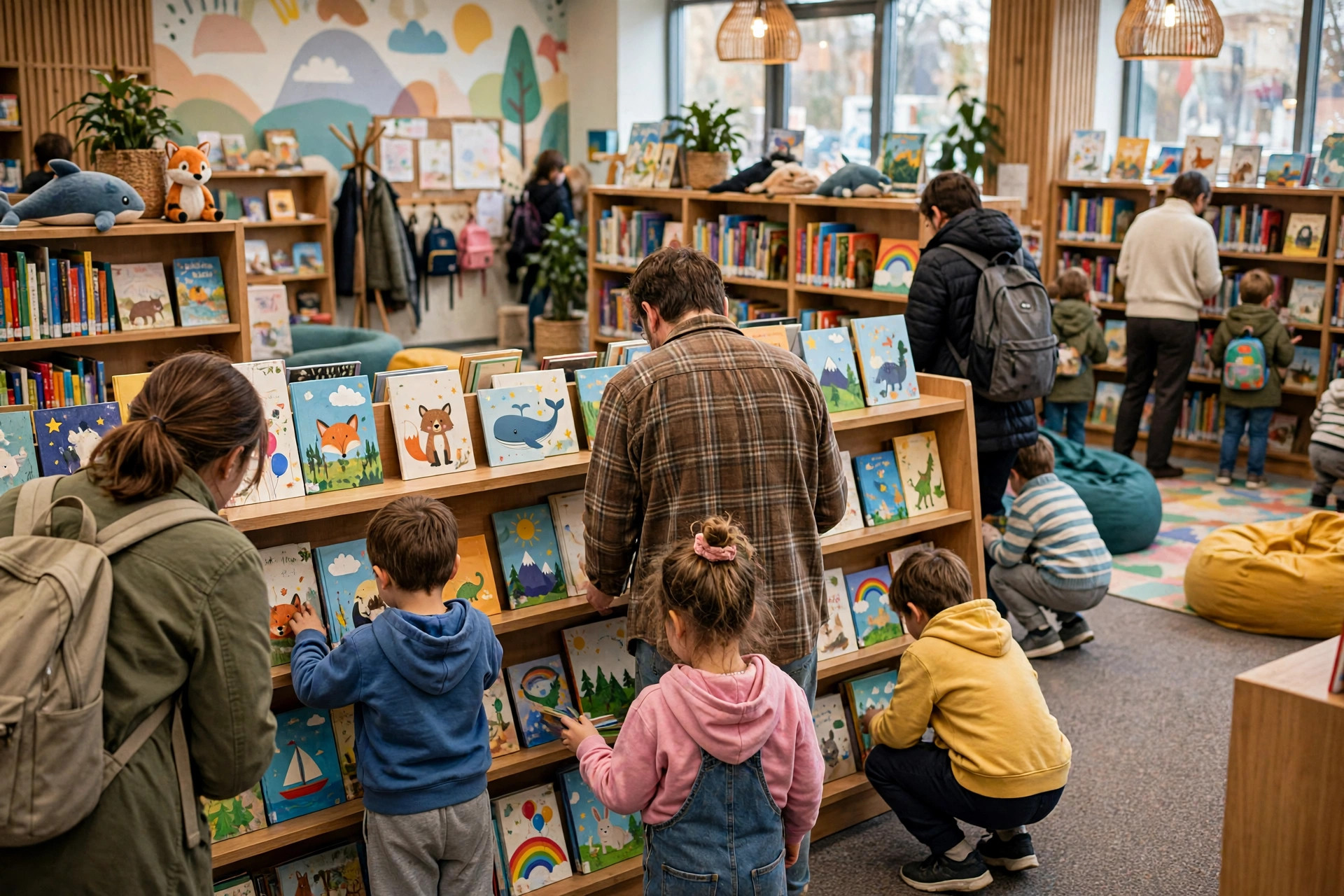
Weekend crowds follow a different logic. Saturday late morning is typically the family peak: parents bring children for the kids’ section, story hours and weekend activities, and general borrowers combine a library trip with market errands. Google’s own Maps-data reporting has found parks peak on Saturday afternoons, and libraries follow a similar weekend shape, with Saturday busier than Sunday at most branches.
School holidays amplify whatever pattern is running. Summer holidays fill the children’s section all day rather than just after school, and libraries that run holiday workshops or reading challenges see their highest footfall of the year. Public holidays themselves often mean closure, so a quick check of the listing’s holiday hours saves a wasted trip.
The practical read: for a quiet weekend visit, Sunday morning at opening time is usually the calmest slot a library offers all week. For families, Saturday’s bustle is a feature, not a bug — that is when the activities run.
The quiet windows: when libraries are at their calmest
Across the week, a few windows are reliably calm at most public libraries:
- Weekday mornings after opening — the reading room belongs to a handful of regulars and newspaper readers until late morning.
- Early weekday afternoons — the gap between the lunchtime trickle and the after-school surge, roughly 1 p.m. to 3 p.m., is the emptiest stretch of a school day.
- Sunday mornings — before the family pattern builds, branches are quiet and staff have time to help with searches and references.
- Rainy and extreme-weather days — casual visits drop sharply, although committed exam aspirants still come.
These windows are also when library staff can give you the most help: inter-library loans, archive requests, membership paperwork and research questions all move faster when the desk is not managing a queue.
Different corners of the library peak at different times
“Busy” inside a library is not one thing. The reading room, the children’s section, the computer terminals and the issue-return counter each follow their own curve, and knowing which corner you need sharpens your timing.
The reading room peaks with study demand: after school on weekdays and all day in exam season. The children’s section peaks on weekend mornings and school-holiday afternoons, when activities and story sessions run. Computer and printing terminals spike twice a day — in the after-school block, and again in the early evening when working adults print forms, tickets and applications. The issue-return counter has short, sharp queues at opening time and in the final half hour before closing, when borrowers squeeze a visit around other errands.
Membership and administrative work — new cards, renewals, book-bank deposits for students — has its own season, bunching at the start of the school year and the start of each exam cycle. If your errand is administrative, a mid-morning weekday visit outside those seasons is usually a two-minute job.
Planning a study routine around library crowds
Regular students treat crowd timing as part of their timetable. A workable routine starts with claiming the calm windows: arrive at opening on weekdays to secure a reading-room seat before the late-morning build, and treat the after-school surge as a natural break point rather than the start of a session. During exam season, shift earlier still — the queue for seats can form before the doors open at popular branches, and the first hour is the only reliably quiet study block of the day.
It also helps to match tasks to crowd levels. Deep-focus work belongs in the morning windows; lighter tasks — returning books, photocopying notes, browsing new arrivals — fit the busier blocks when concentration matters less. And when your own branch is full, remember that the pattern is local: a smaller branch two neighbourhoods away often runs an hour behind the flagship library’s curve, a difference you can see by comparing both listings’ graphs side by side.
Reading the Public Library Busiest Times Graph for Your Branch
Most established public libraries have a Google Maps listing with a Popular Times graph and, often, a live busyness indicator. Google displays this data only for listings that receive enough visits, as Google’s documentation on popular times and visit data explains, which is why big central libraries almost always show a graph while tiny branches may not. The graph shows the typical pattern for each day, and comparing your planned day against the week exposes the after-school block and the Saturday peak at a glance. The live indicator, when present, tells you whether today is running busier or quieter than the typical curve — useful during exam season, when real demand runs ahead of the historical pattern.
If your branch shows no graph, the patterns in this guide are a solid default, and the deeper explainer on Google Maps Popular Times covers how the graphs are built and why some listings never show them. Students comparing study options will also find the pattern overlaps with the one in coffee shop busiest times, since both venues absorb the same after-school study crowd — and the guide to quiet cafes for remote work lists what to look for when the library reading room is full.
How the pattern differs between big and small libraries
A large central or district library and a small neighbourhood branch run on the same calendar, but the intensity differs. Central libraries draw students and aspirants from across the city, so their reading rooms hit capacity early and stay there longer; they are also the branches most likely to show a strong live busyness signal on Google Maps, because more visits feed the data. Neighbourhood branches serve a walkable catchment, so their crowds track the local school timetable more tightly and their peaks are shorter and softer.
Exam season inverts one thing: smaller branches with a loyal aspirant base can feel fuller than the central library, because their seat count is low even when absolute demand is modest. If your nearest branch is full by 10 a.m. in February, the branch one area over — same system, fewer regulars — may still have seats at noon. Comparing two or three nearby listings before you leave is a two-minute habit that regular library users swear by.
Children’s libraries and dedicated children’s sections follow the family pattern almost purely: school-holiday mornings, weekend activity hours and the after-school block, with long calm stretches on weekday mornings when their audience is in class.
Frequently asked questions
What is the busiest time at a public library?
On school days, the after-school window from about 3 p.m. to 6 p.m. is usually the peak. Across the year, exam season is the busiest period, when reading rooms can stay full all day.
When is a library quietest?
Weekday mornings and early afternoons outside exam season, plus Sunday mornings, are typically the calmest times at most branches.
Do libraries really fill up during exam season?
Yes. In India, board, university and competitive exams drive weeks of high demand, and popular libraries see queues for reading-room seats before opening time.
Can I check a library’s busyness before going?
Usually, yes. Open the branch’s Google Maps listing and look for the Popular Times graph and live busyness indicator; smaller branches may not have enough data to show them.
The bottom line
Public library busiest times are driven by school bells and exam calendars: after-school surges on weekdays, family peaks on Saturday, and an all-day study-hall pattern during exams. Aim for weekday mornings, early afternoons or Sunday opening time for quiet, check the branch’s Popular Times graph before you leave, and exam season becomes the only crowd you still have to plan around.
